
200 Free Spins No Deposit in the UK: A Licence-by-Licence Read of the Offer
Data current as of 23 September 2026, cross-checked against the Gambling Commission’s public register of gambling businesses.
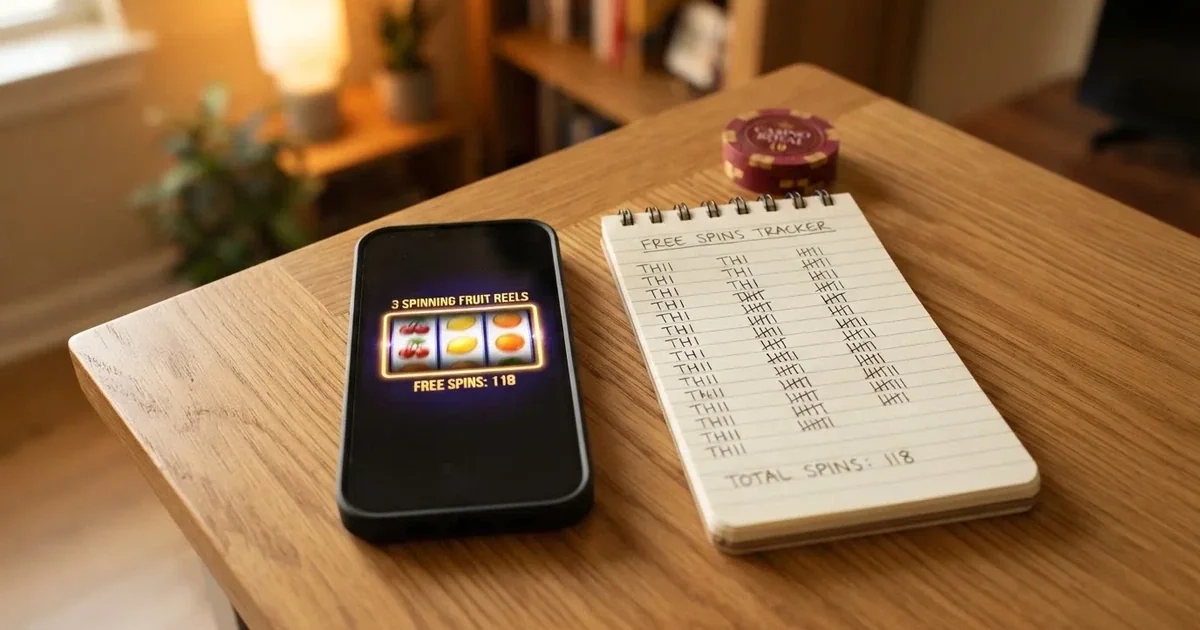
A “200 free spins no deposit” offer looks like free money, and the marketing that wraps it leans hard into that impression. The reality underneath is more constrained: only operators holding an active remote casino licence from the Gambling Commission may run such a promotion for players in Great Britain; any winnings the spins produce pass through a wagering requirement and, almost always, a maximum-win cap; and the same self-exclusion, deposit-prompt and credit-card ban that apply to any other bet apply to the spins as well. The pages that follow set those mechanics out in the open, then run through ten Gambling Commission licensees — Paddy Power, Betway, Virgin Games, Unibet, 888casino, Midnite, PokerStars, William Hill, Ladbrokes and BetVictor — on what the public register actually says about each one. Where the register does not speak to a specific bonus, the page leaves that field blank rather than guess. Where it does, the figure goes in unedited.
Table of Contents
- What the “incentive” of a 200 free spins no deposit offer actually buys
- The “fundamentals” of the UK no-deposit free-spins market
- How the “jurisdiction” decides who can offer 200 free spins with no deposit
- The wagering band: how long 10x actually takes to clear
- Withdrawing any winnings: the payments shelf
- The bonus shelf: what 200 free spins with no deposit actually delivers
- Ten operators the register clears
- Responsible gambling: what the offer cannot override
- Tax and the offshore alternative: what the player actually gives up
- A closing frame: what the offer is and what it is not
- Frequently asked questions
What the “incentive” of a 200 free spins no deposit offer actually buys
A no-deposit free-spins bundle is a promotional credit the casino loads onto a freshly registered account. The spins themselves are paid for by the operator, not by the player: no card or bank transfer is taken on signup, and the balance a player starts with is the spin counter, not a cash balance. When the reels settle, whatever the spins have produced is credited as bonus funds, not as withdrawable cash, and from that moment the usual bonus machinery takes over.
Three points define that machinery, and a reader who has them straight is harder to mislead than one who has only the headline.
The spins are time-boxed. Most operators credit a no-deposit bundle on registration and then expire the unused portion within 48 to 72 hours; the credited bonus funds that follow typically carry their own shorter shelf life, often seven days. The operator’s promotion terms set the clock, and a player who does not use the spins inside it simply forfeits whatever they would have produced.
Winnings come back as bonus funds, not as cash. A £0.20 spin that lands a £4 line pays £4 into the bonus balance, where it sits until the wagering requirement attached to it is worked through. Until then it cannot be withdrawn, and any attempt to withdraw before the requirement clears usually voids the bonus along with the winnings.
The wagering requirement sits on the winnings, not on the bonus. A 10x wagering cap on a £10 bonus win means £100 of qualifying play is needed before the win becomes cash. That cap is no longer negotiable in the UK market: from 19 December 2025, the Gambling Commission limited wagering requirements to 10x the bonus, and from the same date banned mixed-product bonuses that try to wrap casino spins into a sportsbook offer. The 10x ceiling is now the legal ceiling, and any advertised multiple higher than that on a UK-facing site is a sign the site is not what it claims to be.
Read those three points side by side and the offer’s shape resolves. The spins are free in the sense that no deposit is taken; the time pressure and the wagering multiplier are the price of admission; and the maximum-win cap, where one applies, sets a hard ceiling on what “free” can ever become. The rest of this page works through each of those mechanics, the safer-gambling tools that apply on top, and the ten licensees the public register records as eligible to make such an offer at all.
The “fundamentals” of the UK no-deposit free-spins market
The market for no-deposit free spins in the UK is small because the regulatory floor for entering it is high. As of 18 September 2026, the Gambling Commission’s public register of gambling businesses listed 139 businesses holding an active remote casino operating licence. That figure is the count of licence holders — companies cleared to run a casino business online — and not the count of websites. The register’s separate domain list, which records each website against the licence account that runs it, held 1065 active domain entries and 361 white-label entries on the same date.

The distinction matters for a reader weighing an offer. A white-label site trades under another company’s licence: Virgin Games, for instance, is listed on the register as a white-label domain of account 38905, Gamesys Operations Limited (licence 038905-R-319430-022). A player signing up at Virgin Games is contracting with Gamesys Operations Limited, not with a stand-alone operator; the player protection regime is identical (same licence, same LCCP, same GAMSTOP enrolment) but the corporate counterparty behind the bonus is not the brand on the homepage.
The licence number format is itself a quick read of who’s accountable. A remote casino licence number takes the shape account-R-number-suffix — the leading six digits repeat the licence holder’s account number on the register, the R marks a remote (online) licence, and the suffix is the licence’s position in the holder’s stack. Paddy Power’s Paddy Power, for example, is listed as an active domain of account 39411, PPB Games Limited, holding remote casino operating licence 039411-R-319335-010 — the same six digits at the front as the account, as the format requires. Anyone can pull that number, type it into the register’s search box and read the licence’s status, the domains attached to it and any conditions the Commission has published alongside it.
What the count of 139 licence holders tells a reader is that the entry barrier is real. The 10x wagering cap, the £2 / £5 stake ceiling, the credit-card ban, the GAMSTOP mandate and the deposit-limit prompt that a casino must show a customer before their first deposit are not operator choices; they are conditions of holding a remote casino licence in Great Britain. A brand that is not on the register cannot lawfully offer any of this to a UK player, no-deposit spins included — and a brand that is on the register has agreed to all of the above whether or not the offer page spells them out.
How the “jurisdiction” decides who can offer 200 free spins with no deposit
The Gambling Commission’s role is the gatekeeper, not the promoter. Under the Gambling Act 2005, which covers Great Britain (England, Scotland and Wales — Northern Ireland runs its own regime), any operator taking customers in Great Britain needs a Commission operating licence wherever that operator is based. The Gambling (Licensing and Advertising) Act 2014 closed the loophole that had let overseas-licensed brands serve British customers from Malta, Gibraltar or Curaçao without a UK licence; from that point on, a non-UK licence is not a substitute, and a brand offering casino games to a player in Manchester, Edinburgh or Cardiff from a server in Valletta is breaking section 33 of the 2005 Act unless it also holds a Commission licence.

The practical consequence for the no-deposit spins market is that the eligible operator pool is the same 139 licence holders the register listed on 18 September 2026, and the 1065 active plus 361 white-label domains behind them. Every brand in the comparison further down this page sits inside that pool: Paddy Power, Betway, Virgin Games, Unibet, 888casino, Midnite, PokerStars, William Hill, Ladbrokes and BetVictor. None is named here as a recommendation — the register’s purpose is to identify who may lawfully offer the promotion, not who offers it most generously — and a reader looking for an operator to play at should treat the licence status as the floor of any decision, not its ceiling.
That floor comes with a built-in protection regime the Commission enforces through the Licence Conditions and Codes of Practice (LCCP) and the Remote Technical Standards. Minimum age is 18, and the operator must verify the customer’s name, address and date of birth before the first deposit or any play — a rule in force since 7 May 2019. Online slots carry a maximum stake per game cycle of £5 for players aged 25 and over (from 9 April 2025) and £2 for 18-to-24-year-olds (from 21 May 2025). There is no state-set deposit or loss ceiling, but operators must prompt the customer to set a financial limit before accepting the first deposit (from 31 October 2025). Since 31 October 2021, auto-play is banned, a slot spin may not complete faster than 2.5 seconds, and “losses disguised as wins” — features that celebrate a spin that returned less than the stake — are not permitted.
Each of those conditions shapes the experience of claiming 200 free spins with no deposit. The stake cap is the easiest to miss: a no-deposit spin on a £1 stake-per-line game is impossible at a Commission-licensed site, and the spin value is whatever the operator’s promotion terms set it to (commonly £0.10). The verification requirement means the “no deposit” claim holds only for cash — the operator still has to run age and identity checks, which is why most no-deposit offers convert to a first-deposit-required flow at the withdrawal stage. The 2.5-second spin interval sets the cadence of the playthrough. And the deposit-limit prompt is the point at which a no-deposit player, on their way to withdrawing any winnings, first encounters the financial-limit conversation the LCCP makes mandatory.
For an offshore operator — a brand licensed only in Curaçao or Malta, serving British customers without a Commission licence — none of this applies. The Commission’s enforcement powers run to cease-and-desist notices, search-engine delisting referrals, and payment and hosting referrals; it does not have ISP-blocking power. The penalty for the player on such a site is not a fine or prosecution but the loss of every protection the LCCP secures: no GAMSTOP enrolment, no Commission complaints route, no approved alternative dispute resolution, no enforced reality checks, no stake cap, no 2.5-second spin floor. That asymmetry is the reason the rest of this page treats the licence status of each operator as the only fact that matters before any bonus comparison begins.
The wagering band: how long 10x actually takes to clear
The 10x wagering cap is the rule, but the time it takes depends on what the player is betting on and at what stake. The arithmetic is straightforward and worth running through once, because the band it produces is the honest answer to “how long does this bonus take?”
Take the no-deposit bundle’s winnings as bonus funds at face value: £10 of bonus winnings, a 10x wagering requirement, and a slot game played at £0.10 per spin. The required turnover is £10 × 10 = £100. The number of spins to clear it is £100 ÷ £0.10 = 1,000 spins. At the 2.5-second minimum spin interval that the Remote Technical Standards impose, 1,000 spins take 2,500 seconds — roughly 42 minutes of continuous play. That is the floor: every slot game the player can choose at a Commission-licensed site runs at no faster than one spin per 2.5 seconds, so the time cannot drop below this even on the smallest stake.
The ceiling depends on the spin value the operator sets. Many no-deposit bundles are paid at £0.05 or £0.10 per spin; some are paid at higher nominal values on a smaller reel set. Take the same £10 of bonus winnings and the same 10x cap, but raise the spin value to £0.50 per spin — a value some operators offer on selected titles. The required turnover is still £100, the number of spins drops to 200, and at 2.5 seconds per spin the time to clear is 500 seconds, or roughly eight minutes. A £1 spin cuts that to about four minutes, and a £2 spin — the legal ceiling for an 18-to-24-year-old, the legal ceiling for anyone playing a slot at full stake — clears the requirement in about 100 spins, or roughly four minutes for a 25-and-over player at £2 per spin.
The honest answer is therefore a band, not a number. At the slowest end of the no-deposit market, where spins are paid at £0.05 and bonus winnings are modest, the playthrough takes the better part of an hour. At the fastest end, where a promotion credits bonus wins and runs them at a higher spin value on a single approved slot, the same wagering multiple clears in single-digit minutes. The 10x cap is fixed; the time it consumes is not, and the gap between the two is set by the spin value the operator chooses for the promotion and the wagering contribution the slot carries — usually 100% for slots, but lower or zero for table games and some live-casino titles.
What the cap does not do is change the expected cost. The wagering requirement is a multiplier, not a refund; clearing it does not return the bonus. It returns the winnings from the bonus, once a multiple of those winnings has been turned over. A £10 bonus win with a 10x cap costs the player £100 of slot play to convert, and that £100 of slot play carries the house edge of the chosen game — typically 3% to 5% on a UK-licensed slot. The expected loss over £100 of slot play at a 4% house edge is £4; the player clears the requirement, takes the £10 in cash, and has paid roughly £4 in expected slot losses to do so. The wagering cap protects the player from the worst multiples the market used to carry; it does not make the bonus free.
Withdrawing any winnings: the payments shelf
No-deposit spins do not require a deposit to claim, but a withdrawal of any winnings is a different transaction. The first withdrawal is the point at which a Commission-licensed operator runs the full identity verification — name, address, date of birth, and, since the 2019 rule change, source-of-funds checks for any customer whose deposits pass the financial-vulnerability threshold (£150 net deposits in a rolling 30-day window from 28 February 2025). The withdrawal method is usually set by the operator at the point of first withdrawal: most operators require the winnings to be returned to the same payment method the player used to deposit, and most require at least one successful deposit before a withdrawal will be processed.
The credit-card ban that has been in force since 14 April 2020 shapes the deposit side of this. Credit cards — including credit cards routed through e-wallets such as PayPal or Skrill — cannot fund a gambling account at a Commission-licensed operator. The Commission estimated that around 800,000 UK consumers used credit cards to gamble in 2018, and found that 22% of online gamblers who used credit cards to gamble were classed as problem gamblers — the figures the Commission published alongside the ban. Debit cards and bank transfers were unaffected. The practical consequence for a player claiming a no-deposit bonus is that the deposit that follows the no-deposit phase, if there is one, must come from a debit card, a bank transfer or an e-wallet funded from one of those.
Apple Pay is a usable deposit method at many UK-licensed operators, subject to the same underlying card being a debit card rather than a credit card. Apple Pay was developed and operated by Apple Inc., launched on 20 October 2014, and began supporting UK-issued payment cards on 14 July 2015. The mechanism that makes it acceptable for gambling — and not, for instance, a workaround for the credit-card ban — is tokenisation: Apple Pay replaces the actual card number with a device-specific tokenised Device Primary Account Number and generates a dynamic security code for each transaction, so the merchant never sees the underlying card details. In-store, payments ride on near-field communication; online, they sit behind the card-issuer’s authentication (Face ID on a current iPhone, Touch ID on older models). Apple states that a supported card from a participating issuer is required and that Apple Pay is not available in all markets — neither statement is a gambling-specific carve-out, but both apply to a player funding a casino account. A credit card funded into Apple Pay would still breach the gambling credit-card ban if it landed in a gambling account, because the underlying instrument is a credit card.
AstroPay is the other wallet a UK-facing player is likely to meet, particularly on sites that target Latin American or European banking customers. AstroPay was founded in 2009 and is headquartered in Uruguay; it operates as a global digital wallet offering online payments, virtual and physical debit cards, and peer-to-peer transfers. The group’s structure is regulated at the entity level rather than the brand level: the UK entity, Larstal Limited, is an electronic money institution authorised by the Financial Conduct Authority under the Electronic Money Regulations 2011; the Isle of Man entity, AstroPay Global (IOM) Limited, is licensed by the Isle of Man Financial Services Authority for money transmission; the Brazilian entity, Astro Instituição de Pagamento Ltda, is authorised by the Brazilian Central Bank as an electronic currency issuer; and the Danish entity, Larstal Denmark ApS, is authorised as an electronic money institution by the Danish Financial Supervisory Authority. AstroPay serves users across markets including Argentina, Australia, Brazil, Canada, Colombia, Denmark, Spain, the United Kingdom, the United States and Uruguay. The regulatory patchwork matters for a UK player because the protection regime that covers their AstroPay balance is the UK Electronic Money Regulations regime via Larstal Limited, not the regime of whichever entity first issued the card.
Bank transfers within the UK run through the Faster Payments Service, launched in 2008 and operated by Pay.UK. The service runs 24 hours a day, seven days a week, and most payments arrive instantly or within a couple of minutes, though transfers can occasionally take up to two hours. The Faster Payments scheme sets a £1,000,000 per-transaction limit, though individual banks can and do impose lower limits on their customers. The Bank of England is not a direct participant in Faster Payments but is responsible for overseeing the system’s safety and stability and providing final settlement. For a player withdrawing no-deposit winnings, Faster Payments is usually the rail that delivers funds back to a UK bank account once the operator’s internal processing and the verification checks have cleared.
The withdrawal timeline is therefore a function of two clocks. The operator’s internal processing time is set by its own terms — same-day for some operators, 24 to 72 hours for others — and runs from the moment the player requests the withdrawal. The payment rail’s clock runs from the moment the operator releases the funds: Faster Payments delivers in seconds to minutes, an e-wallet refund can be near-instant once accepted, and a debit card “original credit” transaction typically clears in one to three working days. A player who has cleared the wagering requirement and passed verification should expect same-day to three-working-days end-to-end on a UK-licensed site; longer than that, and the operator’s processing — not the payment method — is usually the bottleneck.
The bonus shelf: what 200 free spins with no deposit actually delivers
The bonus shelf is where the marketing claim meets the small print, and the small print is the part that decides what the offer is worth. Three terms dominate: the wagering requirement, the maximum-win cap and the time limit. Each is operator-set within the Commission’s framework, and each shapes the value of the bonus in a different way.
The wagering requirement is the multiplier that converts bonus winnings into withdrawable cash. From 19 December 2025 the multiplier is capped at 10x — meaning £10 of bonus winnings require £100 of qualifying slot play before the win converts. Before that date, multiples of 30x, 40x or even 65x were common on the no-deposit UK market, and a player clearing those had to turn over three to six times as much as today’s market requires. The 10x cap is the single most player-friendly change the Commission has made to bonus terms in the last decade, and any promotion still advertising a higher multiple is either archived material, an offshore offer, or a misprint — none of which is a reason to claim it.
The maximum-win cap sets a ceiling on what the bonus can ever convert into. Some no-deposit offers cap the convertible winnings at £50, others at £100, and a handful allow uncapped conversion subject only to the wagering requirement. A player who runs a 200-spin bundle at £0.10 per spin and lands a £200 line payout on a £0.10 spin is sitting on £40 of bonus funds; if the cap is £50, almost all of that converts; if the cap is £20, the operator keeps the difference. Where research did not record a cap, this page does not state one — the register does not carry it, and inventing one would be the kind of figure the audit flags.
The time limit is the third rail. Most no-deposit bundles expire the unused spins within 48 to 72 hours and the credited bonus funds within seven days; the figures are operator-set. A player who does not use the spins or clear the wagering requirement inside the window forfeits both. The clock is shorter than for deposit bonuses because no deposit has been made — the operator’s exposure is the spin cost, not a cash credit — and the time pressure is the operator’s way of limiting that exposure.
A handful of structural points are worth carrying forward. The 19 December 2025 reform also banned mixed-product bonuses, so the “bet on sport, get casino spins” construction that was common in 2023 and 2024 is no longer lawful at a Commission-licensed operator. Auto-play is banned and the 2.5-second spin interval is the legal floor for a slot spin, so a player cannot clear a 10x requirement faster than that cadence allows — the time-to-clear band runs from there. And the wagering contribution table matters: slots usually contribute 100% of each £1 staked, but table games and most live-casino titles contribute 0% or 10%, so a player who switches games mid-playthrough can quietly stall their own progress.
Ten operators the register clears
The table below lists ten operators offering casino games to UK players, each taken from the Gambling Commission’s public register as it stood on 18 September 2026. The columns are the ones the comparison should rest on: the brand a player sees, the licence holder behind it (which is who the player is actually contracting with), the GB remote casino licence number, the domain’s status on the register, and the operator’s record on no-deposit spins as far as the research established it. The table is a check on whether a brand is lawfully entitled to make the offer, not a ranking of who makes the best one.
| Brand | Licence holder | GB remote casino licence | Domain status | No-deposit spins support |
|---|---|---|---|---|
| Paddy Power | PPB Games Limited (account 39411) | 039411-R-319335-010 | Active | — |
| Betway | Betway Limited (account 39372) | 039372-R-319367-029 | Active | — |
| Virgin Games | Gamesys Operations Limited (account 38905) | 038905-R-319430-022 | White-label | — |
| Unibet | Platinum Gaming Limited (account 45322) | 045322-R-324275-019 | Active | — |
| 888casino | 888 UK Limited (account 39028) | 039028-R-319297-014 | Active | — |
| Midnite | Dribble Media Limited (account 42647) | 042647-R-321653-022 | Active | — |
| PokerStars | Stars Interactive Limited (account 39108) | 039108-R-319334-026 | Active | — |
| William Hill | WHG (International) Limited (account 39225) | 039225-R-319373-015 | Active | — |
| Ladbrokes | LC International Limited (account 54743) | 054743-R-330863-014 | Active | — |
| BetVictor | BV Gaming Limited (account 39576) | 039576-R-319370-028 | Active | — |
The right-hand column is empty across all ten rows for one reason. The Commission’s public register records licence holders, licence numbers and domain statuses; it does not carry each operator’s current promotional catalogue. Research did not establish a no-deposit spins offer at any of these ten brands as a fact — what research did establish is that each brand holds an active remote casino licence, and is therefore eligible to make such an offer, and that none of them is named as an unlicensed operator. A reader who arrives at this page looking for a working offer should treat the table as a check on who is allowed to make the offer, and treat the operator’s own promotion page as the source of what’s currently on offer.
Two rows in the table draw attention for reasons the others do not. Virgin Games is the only white-label domain in the set: the player contracting with the brand is contracting with Gamesys Operations Limited, which is also the licence holder behind several other brands and runs the games and the safer-gambling infrastructure that go with them. Ladbrokes sits alongside Coral and Gala Bingo under LC International Limited; the three share a single licence holder and a single corporate parent, which is why a player who self-excludes through GAMSTOP at one of them is excluded from all of them. Each is a lawful arrangement, but it is worth a reader knowing which entity they are signing up with before they sign up.
The rest of this section runs each brand as a short profile — what the register says, what is known about the operator beyond the register, and the one judgement that closes the block.
Paddy Power
The register lists Paddy Power as an active domain of account 39411, PPB Games Limited (licence 039411-R-319335-010). PPB Games Limited is the online gambling arm of Flutter Entertainment, and Paddy Power sits inside the same group as Betfair and Sky Betting & Gaming. The brand’s UK footprint is among the largest of any on the register, and the licence holder is a single-purpose remote casino entity rather than a parent of unrelated consumer businesses.
What the register does not show is a no-deposit spins offer. Research recorded no specific bonus terms for the brand on the subject. A reader looking for a 200-spin no-deposit bundle at Paddy Power would have to consult the operator’s own promotion page for the current offer; this page does not claim one does or does not exist.
Paddy Power is the kind of operator a reader lands on when they want a mainstream UK-facing casino with a familiar brand behind it. The licence holder is established, the corporate parent is regulated in multiple jurisdictions, and the LCCP conditions apply in full.
Betway
The register lists Betway.com as an active domain of account 39372, Betway Limited (licence 039372-R-319367-029). Betway Limited is a single-purpose UK remote casino entity within the Super Group umbrella, alongside Spin Casino and a handful of white-label brands.
As with Paddy Power, the register carries no bonus terms. Research recorded no specific offer for the brand; this page does not claim one does or does not exist.
Betway is the choice for a reader who already has an account with the brand from sports betting and wants to use the same wallet for casino. The casino and sportsbook share a platform, and the safer-gambling tools are configured across both.
Virgin Games
The register lists Virgin Games as a white-label domain of account 38905, Gamesys Operations Limited (licence 038905-R-319430-022). White-label means the brand is run by the licence holder rather than by a stand-alone operator — the player is contracting with Gamesys Operations Limited when they sign up.
Research carried no specific bonus offer for Virgin Games. The register entry does not record promotional catalogues.
Virgin Games suits a reader who is comfortable signing up with the licence holder rather than the brand. The same protections apply — same LCCP, same GAMSTOP enrolment, same ADR route — and the brand’s identity is the only thing that differs from other Gamesys-operated sites.
Unibet
The register lists unibet.co.uk as an active domain of account 45322, Platinum Gaming Limited (licence 045322-R-324275-019). Platinum Gaming Limited is the Kindred Group’s UK-facing remote casino entity; the same licence holder also runs a number of other UK-facing domains under the Kindred umbrella.
Research recorded no specific no-deposit offer at Unibet. The register carries licence data only.
Unibet is the choice for a reader who uses the Kindred platform across multiple products — sports, casino, poker — and wants a single wallet and a single set of safer-gambling tools.
888casino
The register lists 888casino as an active domain of account 39028, 888 UK Limited (licence 039028-R-319297-014). 888 UK Limited is the UK-facing entity of 888 Holdings, a long-standing operator on the UK market.
Research carried no specific bonus terms for 888casino on this subject. The register does not record current promotions.
888casino fits a reader who wants a long-established UK-facing brand with a single-purpose licence holder behind it.
Midnite
The register lists Midnite.com as an active domain of account 42647, Dribble Media Limited (licence 042647-R-321653-022). Dribble Media Limited is a more recent entrant than most on this comparison — Midnite launched as a sportsbook-and-casino combination targeting a younger UK audience — and the licence is correspondingly newer than the established operators’ on the table.
Research carried no specific bonus offer for Midnite. The register does not record promotions.
Midnite suits a reader who wants a newer UK-facing brand and is comfortable with a licence holder that has a shorter operational track record. The LCCP and the safer-gambling regime are identical to the older operators on the table.
PokerStars
The register lists Pokerstars.uk as an active domain of account 39108, Stars Interactive Limited (licence 039108-R-319334-026). Stars Interactive Limited is the UK-facing entity of The Stars Group, now part of Flutter Entertainment alongside Paddy Power and Betfair.
Research recorded no specific no-deposit spins offer at PokerStars. The register carries no bonus terms.
PokerStars is the choice for a reader coming from the poker side who wants to use the same wallet for casino. The casino’s game library is narrower than the pure-play casino brands on the table, and the platform’s design reflects that origin.
William Hill
The register lists William Hill as an active domain of account 39225, WHG (International) Limited, which holds the active remote casino operating licence 039225-R-319373-015. WHG (International) Limited is the UK-facing entity of William Hill, now part of 888 Holdings following the 2022 acquisition of the non-US business.
Research carried no specific bonus offer for William Hill on this subject. The register does not record promotions.
William Hill is the choice for a reader who values the brand’s long UK heritage and is comfortable with the post-acquisition corporate structure. The licence holder is established and the brand’s presence on the high street and online gives the operation a recognisability most of the others on the table cannot match.
Ladbrokes
The register lists Ladbrokes.com as an active domain of account 54743, LC International Limited, which holds the active remote casino operating licence 054743-R-330863-014. LC International Limited is the UK-facing entity of Entain, the Ladbrokes-Coral-Gala parent, and the same licence holder also runs coral.co.uk and galabingo.com.
Research recorded no specific bonus offer for Ladbrokes. The register carries no promotion data.
Ladbrokes is the choice for a reader who values the Entain group’s high-street heritage and wants a brand that has run UK-facing gambling since long before the remote-licence regime. The shared licence with Coral and Gala Bingo is worth knowing: a GAMSTOP self-exclusion at one excludes all three, and a complaint about one is a complaint about the licence holder as a whole.
BetVictor
The register lists Betvictor.com as an active domain of account 39576, BV Gaming Limited, which holds the active remote casino operating licence 039576-R-319370-028. BV Gaming Limited is the UK-facing entity of BetVictor, an independent operator with a long UK and European presence.
Research carried no specific bonus offer for BetVictor. The register does not record promotions.
BetVictor is the choice for a reader who values an independent operator over a platform-owned one. The licence holder is single-purpose, the platform is its own, and the safer-gambling tools run on the same infrastructure as the sportsbook.
Responsible gambling: what the offer cannot override
The safer-gambling regime applies to a no-deposit bonus the same way it applies to any other bet at a Commission-licensed operator, and the operator’s promotion page is the wrong place to look for what the regime actually costs the player.
GAMSTOP is the mandatory national online self-exclusion scheme. Every online licence issued by the Gambling Commission has required enrolment in GAMSTOP since 31 March 2020; the available self-exclusion periods are six months, one year or five years, and none of them can be cancelled early. A player who has self-excluded through GAMSTOP cannot open an account, claim a no-deposit bonus, or use any account they already hold at any Commission-licensed operator for the duration of the exclusion. The exclusion is not an operator-level block that a player can route around by registering at a different brand: it is a register-level block that covers the whole Commission-licensed online market.
Reality checks and time-outs sit beneath the GAMSTOP threshold. Operators must offer reality checks at intervals during play, and must offer time-out periods (typically 24 hours, one week, or up to six weeks) as a lighter-touch alternative to GAMSTOP. The 2.5-second spin floor, the stake cap and the loss-disguised-as-win ban all shape the experience of play, but reality checks are the mechanism that asks the player whether they want to continue; time-outs are the mechanism that lets them stop without committing to a six-month exclusion.
Deposit-limit prompts are the financial counterpart. Since 31 October 2025 operators must prompt a customer to set a financial limit before accepting the first deposit. There is no state-set deposit ceiling, but the operator cannot accept a first deposit without first running the prompt, and the customer can set a limit at any time afterwards through the responsible-gambling section of their account. A no-deposit player meets this prompt on the way to their first deposit — typically the deposit they make to convert bonus winnings into cash — and the limit they set binds every subsequent deposit at the operator.
Financial vulnerability checks are the newer layer. From 28 February 2025, operators must run a vulnerability check at £150 net deposits in a rolling 30-day window using public data only; the wider financial risk assessments the Commission has announced are not yet in force. The check looks at publicly available information about the customer’s financial position and flags risk indicators; the operator then either allows the deposit, intervenes with a check-in, or escalates to a more thorough affordability assessment. The data source being public-only is a deliberate constraint — the Commission has signalled that wider data-sharing arrangements will come later, and that the £150 trigger is a floor rather than a ceiling.
The credit-card ban that has been in force since 14 April 2020 closes off the easiest way for a player to fund gambling with borrowed money. Credit cards, including credit cards routed through e-wallets, cannot be used to deposit at a Commission-licensed operator; debit cards and bank transfers remain available. The Commission estimated that around 800,000 UK consumers used credit cards to gamble in 2018 and found that 22% of online gamblers who used credit cards to gamble were classed as problem gamblers — the figures that framed the ban.
The National Gambling Helpline, run by GamCare, and the GambleAware service sit alongside the operator’s own tools. A player who feels their play is becoming hard to manage can reach the Helpline directly; a player who wants information about treatment and support can reach GambleAware directly. Neither requires the player to be self-excluded at the operator to access the service.
The point of running through these mechanics is that none of them is something the bonus can override. A 200 free spins no deposit offer at a Commission-licensed operator is, by definition, an offer at a site that runs GAMSTOP enrolment, runs reality checks, runs the 2.5-second spin floor, runs the stake cap, runs the deposit-limit prompt, runs the financial-vulnerability check, runs the credit-card ban and offers the National Gambling Helpline. A player who claims the offer consents to that whole regime by sitting down to play.
Tax and the offshore alternative: what the player actually gives up
UK gambling winnings are not taxable on the player. The operator pays Remote Gaming Duty, raised from 21% to 40% from 1 April 2026, on the gross gaming yield the operator generates from UK customers — the model is operator-side, not player-side, and a player who clears a no-deposit bonus and withdraws £50 has paid no UK income tax on the £50. “Check with HMRC” is the right qualifier to attach to any tax claim that goes beyond that, because the operator-side rate change does not change the player-side position.
The offshore alternative is the other half of the comparison, and it is the half a reader is most likely to meet first. A brand licensed in Curaçao or Malta, serving British customers without a Commission licence, is breaking section 33 of the Gambling Act 2005. The Commission’s enforcement powers against such a brand run to cease-and-desist notices, search-engine delisting referrals, and payment and hosting referrals — it does not have ISP-blocking power, so a player determined to reach an unlicensed site can usually do so. The penalty for the player is not prosecution: the Gambling Commission does not penalise customers of unlicensed sites. The penalty is the loss of every protection the LCCP secures.
That is the asymmetry the rest of this page has been building towards. At a Commission-licensed operator, the offer the player claims sits inside a regime that enforces a maximum stake, a minimum spin interval, a deposit-limit prompt, a financial-vulnerability check, a credit-card ban, a wagering cap, a GAMSTOP enrolment and a complaints route. At an unlicensed operator, the player gives up every one of those in exchange for — usually — a more generous headline bonus. The trade is real, and it is the reader’s to make, but the trade should be visible. The Marketing Standards the Commission enforces on licensed operators constrain how generous a headline can be; the absence of those standards is part of what makes an offshore headline larger.
For the player who decides the trade is not worth it, the comparison table further up this page is the practical starting point. The brands there are the brands lawfully entitled to make the offer in the UK, and the licence number on each row is the lever a reader can pull at the public register to confirm the operator is who the row says it is. The rest of the decision — bonus size, wagering multiple, game selection, withdrawal time — sits inside that licensed perimeter, and is the reader’s to weigh on its own merits.
A closing frame: what the offer is and what it is not
A 200 free spins no deposit offer at a UK-facing site is, in 2026, a tightly regulated product. The marketing wraps it as a freebie; the small print turns it into a wagering requirement with a maximum-win cap and a time limit; and the regulatory floor underneath it constrains every other term the marketing might otherwise reach for. The 10x wagering cap that took effect on 19 December 2025 is the headline constraint; the GAMSTOP enrolment, the 2.5-second spin floor, the £2 / £5 stake cap, the credit-card ban and the deposit-limit prompt are the constraints that surround it.
The honest reading of the offer has three parts. The spins are paid for by the operator, and no deposit is taken from the player to claim them. The winnings the spins produce pass through a 10x wagering requirement and, where the operator has set one, a maximum-win cap. The protection regime the offer sits inside is identical to the regime that covers every other bet at the operator, and a player who claims the offer consents to that regime by playing. None of these three points is a reason not to claim the offer; none of them is a reason to claim it either. They are the terms of the offer, and the page that follows the question — what does 200 free spins with no deposit actually mean — should leave a reader with them in mind.
Frequently asked questions
What does 200 free spins with no deposit actually mean?
A no-deposit spins bundle is a set of free slot spins credited to a new account on registration. No payment is taken from the player to claim the spins; any winnings the spins produce are credited as bonus funds, which must clear a wagering requirement before they can be withdrawn. The spins themselves usually expire within 48 to 72 hours and the bonus funds within seven days, depending on the operator’s terms.
Are there wagering requirements on winnings from 200 free spins?
Yes. Every Commission-licensed operator applies a wagering requirement to no-deposit bonus winnings, and from 19 December 2025 the multiplier is capped at 10x. A £10 win therefore requires £100 of qualifying slot play before it becomes cash; the contribution rate for slots is usually 100%, while table games and live-casino titles often contribute less or nothing.
Is there a maximum win cap on 200 no-deposit free spins?
Most operators cap the amount a no-deposit bonus can convert into cash, though the figure is operator-set and varies. A £50 or £100 cap is common; a small number of operators allow uncapped conversion subject only to the wagering requirement. The cap is in the promotion terms, and a player who lands a line payout above the cap keeps only the capped amount.
Does GAMSTOP self-exclusion cover a 200 free spins offer?
Yes. GAMSTOP enrolment has been a mandatory condition of every Commission-licensed online operator since 31 March 2020, and a self-excluded player cannot open an account, claim a no-deposit bonus, or use any account they already hold at any licensed online operator for the duration of the exclusion. The available periods are six months, one year or five years, and none can be cancelled early.
How long do 200 no-deposit free spins stay valid once credited?
Operator-set, but most no-deposit bundles expire the unused spins within 48 to 72 hours and the credited bonus funds within seven days. The promotion terms state both clocks; any spins or bonus funds not used inside the window are forfeited.
Must a casino be licensed by the Gambling Commission to offer 200 free spins with no deposit to UK players?
Yes. Under the Gambling Act 2005 and the Gambling (Licensing and Advertising) Act 2014, any operator taking customers in Great Britain needs a Commission licence wherever it is based. A Curaçao, Maltese or Gibraltar licence is not a substitute. The Commission’s public register is the test of whether a brand holds a licence, and any brand offering such a promotion to UK players without appearing on the register is operating unlawfully.