Best bingo casinos UK 2026: where licensed rooms meet slot add-ons
 Available in GB
The phrase “bingo casino” means two distinct products sharing one account: a 90-ball or 75-ball bingo room run by a licensed operator, plus the slot catalogue bolted onto the same wallet. Both halves are gambling, both are covered by the same Gambling Commission rules, and both are paid out of the same balance. That single sentence is the reason this page exists — readers searching for a bingo site that does slots well tend to get marketing pages written by operators, not analysis written from the register. The register is what this page leans on.
The comparison below is current as of 23 September 2026, checked against the Gambling Commission’s public register of gambling businesses. Every licence number, every domain status and every operating-company name in this article is taken from that register. Where a brand is not on the register, it does not appear here.
Table of Contents
- Why a UK bingo casino still needs a Gambling Commission licence
- What the responsible-gaming rules cover — and why they apply to a bingo wallet
- How deposits and withdrawals actually move at a bingo casino
- Bonuses and free spins on a bingo site’s slots tab
- What runs on mobile: app versus browser
- The games, providers and live tables behind the bingo-and-slots wall
- How the ten licensed bingo casinos compare
- The wagering-turnover band under the 10x cap
- Picking a brand, and what the comparison above leaves out
- What a UK bingo casino looks like from the player’s seat
- Frequently asked questions
Why a UK bingo casino still needs a Gambling Commission licence
The starting point is straightforward. Under the Gambling Act 2005, any operator taking deposits from customers in Great Britain needs a Gambling Commission licence, regardless of where that operator is incorporated. The Gambling (Licensing and Advertising) Act 2014 closed the route whereby offshore brands could serve British customers on a Maltese or Curaçao licence alone. A UK-facing bingo site without a Commission licence is operating illegally, and that carries consequences the operator wears — cease-and-desist notices, payment referrals, search-engine delisting — but consequences the player also wears: no GAMSTOP integration, no ADR complaints route, no obligation to honour the stake limits and affordability checks the rest of the market follows.

Bingo itself is the only form of gambling that the Gambling Act 2005 leaves without a statutory definition. Section 8 instead states that “bingo means any version of that game, irrespective of by what name it is described”, and the Commission has cited a 1978 Royal Commission line that calls bingo “a lottery played as a game” in which each player receives, for their stake, a set of numbers they have not chosen. The same section requires that bingo must be equal-chance gaming, so it cannot involve playing against a bank and the chances of winning must be equally favourable to all participants. Those constraints matter when the “bingo” element of a site is really a slot dressed up in a bingo skin.
The register itself is the test. On 18 September 2026 it listed 139 businesses holding an active remote casino operating licence, and the domain list that hangs off the register held 1065 active and 361 white-label entries. A white-label entry trades under another company’s licence — Virgin Games, for instance, sits as a white-label domain of account 38905 (Gamesys Operations Limited). A reader who treats a white-label brand as independent of its host company is making a category error. The remote casino operating licence numbers follow a fixed pattern: an account code, the letter “R” for remote, a licence sequence number and a suffix — for example, 042647-R-321653-022 is the licence held by Dribble Media Limited, which runs Midnite.
The application fees alone hint at who takes the regime seriously. A remote bingo game host operating licence currently costs between £3,168 and £68,765 depending on annual gross gambling yield, rising to a range of £6,711 to £135,357 from 1 October 2026. The wide spread reflects the yield-based structure the Commission uses; what matters for a player is that the fee is a real barrier to entry, and a brand with a recent active licence has cleared it.
What the responsible-gaming rules cover — and why they apply to a bingo wallet
A licensed UK bingo casino sits inside the same consumer-protection machinery as any other online casino, because the wallet is shared. GAMSTOP, the national self-exclusion scheme, is a mandatory condition of every online licence since 31 March 2020. Self-exclusion periods are six months, one year or five years, and they cannot be cancelled early — once a player registers with GAMSTOP, the exclusion runs to its end on every GB-licensed site, bingo rooms included. None of the ten operators reviewed here offers a way around that, and the register confirms none of them holds an exemption.

Deposit limits work on the same basis. Since 31 October 2025 operators must prompt a customer to set a financial limit before the first deposit. There is no state-set ceiling on what a player can deposit — the limit is whatever the player sets, or the operator’s own higher default. A player who never sets a limit is still betting; a player who sets £20 a week and forgets it does so for the lifetime of the account, unless they actively raise it. Financial vulnerability checks run at £150 net deposits in a rolling 30-day window, using public data, and the Commission’s wider financial risk assessments have been announced but are not yet in force. The £500 net-deposit level often quoted in older articles is the older trigger; the current one is £150.
The slot side has its own design rules, and a bingo casino running slot games has to follow them. A slot spin cannot be faster than 2.5 seconds; auto-play has been permanently banned since the same package of reforms; losses disguised as wins are banned. Maximum stake per game cycle is £5 for players aged 25 and over, in force from 9 April 2025, and £2 for players aged 18 to 24, in force from 21 May 2025. The Government has stated that 18 to 24 year olds have the highest average problem gambling score of any age group, and the lower stake ceiling sits alongside lower disposable income and ongoing neurological development as the stated reasons for the reduced limit. None of these rules changes because a game is sold as part of a bingo site — the rules apply to the slot, and the slot runs on the same wallet.
Reverse withdrawals were banned at the same time as auto-play, with operators given until 31 October 2021 to comply. The old habit of requesting a withdrawal and then cancelling it to keep playing is gone from every licensed site. Credit cards have been banned for gambling since 14 April 2020, including credit cards routed through e-wallets such as PayPal or Skrill — a player funding a bingo account with a credit card is funding it with money the operator should not accept.
Where a player gets help outside the site itself: the National Gambling Helpline runs through GamCare, and GambleAware funds treatment and education across Great Britain. A licensed operator is required to surface those routes. An unlicensed operator is not.
How deposits and withdrawals actually move at a bingo casino
The bingo wallet works the same way a slot wallet does: a deposit lands in the account balance, the player uses it on bingo rooms or slot games, and a withdrawal moves real money back out. There is no separate “bingo purse”. That is why the same payment methods apply — debit cards, bank transfer, PayPal and a handful of e-wallets — and the same payout speeds apply.
Most GB-licensed operators publish a withdrawal time after verification, typically expressed in hours for e-wallets and in working days for debit cards. Bank transfers fall between. A reader comparing two operators is comparing the operator’s stated time and the published payment-method list — there is no industry-wide standard speed, only what each operator commits to on its help pages. The honest comparison reads the published numbers and stops there: an honest number beats a vague promise.
The wagering cap that took effect on 19 December 2025 is the single biggest change to the bonus side of the wallet. Wagering requirements are now capped at 10x the bonus amount (or 10x the deposit plus bonus where the structure is deposit-matched), and mixed-product bonuses — for example, a free bet on sport that returns casino spins — are banned. Both rules are enforced by the Commission through the Licence Conditions and Codes of Practice. The cap means an offer that used to read “deposit £10, get £100 of bonus funds, wager 40x” is no longer compliant; an offer reading “deposit £10, get £100, wager 10x” is.
What the wagering cap looks like in practice: a £50 bonus with a 10x wagering cap means the player must place £500 of qualifying bets before the bonus funds — and any winnings tied to them — move into the withdrawable balance. At an average slot stake of, say, £1 per spin, that is 500 spins. At the Commission’s 2.5-second minimum spin interval, 500 spins take roughly 21 minutes of play — though no real session plays uninterrupted for that long, and the £2 stake cap on 18-24 year olds triples the spin count to clear the same turnover at the lower stake. The 10x cap is not a gift to the player; it is the new ceiling on what an offer can cost the operator, and the operator’s bonus design still has to clear the bonus amount at a profit.
Anonymous play is not possible at a licensed site. Name, address and date of birth are verified before the first deposit or any play — that verification has been required since 7 May 2019. A reader who wants to play without sharing those details is, by definition, looking at an unlicensed site, and the section on legality above sets out what that loses.
Bonuses and free spins on a bingo site’s slots tab
A “bingo site’s slots bonus” is two things: an offer on the bingo side, usually free tickets or a matched deposit, and an offer on the slot side, usually matched deposit funds plus free spins. The two run on the same wallet and the same wagering pot, but they often run on different expiry clocks. The slot bonus is the one most readers are searching for when they look for this topic.
What the 10x wagering cap looks like in pounds: a typical welcome package might promise £50 of bonus funds on a £10 deposit and 50 free spins on a named slot. Pre-cap, that kind of offer would carry a 35x or 40x wagering multiple — that is, the player would have to bet the bonus £1,750 to £2,000 before withdrawing. Post-cap, the same £50 bonus costs £500 of qualifying bets, and the free-spin winnings run on their own wagering terms stated in the offer’s small print. The cap does not apply to free-spin winnings; it applies to the bonus amount attached to the deposit match.
The arithmetic a player is doing is the same as the arithmetic a bonus designer is doing: how long does it take to clear £500 of qualifying bets at a given stake? A £1 slot stake over 500 spins, with a 2.5-second minimum interval between spins, is roughly 21 minutes of uninterrupted play. At £0.20 a spin, the spin count rises to 2,500 and the time rises to roughly 104 minutes — about an hour and three quarters. The promotional language tends to advertise the bonus amount, not the time to clear it, which is why the wagering cap is worth understanding rather than reading past.
Mixed-product bonuses are banned outright. The old trick of “bet £10 on the football, get 50 free spins on a slot” is gone. A licensed operator cannot now offer a free bet on sport in exchange for casino play; both products must stand on their own. What remains is the standard structure: matched deposit on bingo tickets and matched deposit on slots, with free spins as a sweetener on a named title. The sweetener still has the standard restrictions — winnings capped at a stated figure, expiry on a stated clock, free-spin value fixed at £0.10 or £0.20 per spin in most cases.
The figures above are the arithmetic of the cap. They are not a guarantee; they are a band. Real sessions break up, real slots have autoplay limits that force manual spinning, real wagering terms name a list of qualifying games that excludes a fraction of the catalogue. A player who reads the offer’s small print once knows more about the offer than the headline does.
What runs on mobile: app versus browser
A bingo casino on a phone is one of two things: a native app downloaded from the App Store or Google Play, or a browser site that scales to the screen. There is no third option that a licensed operator tends to offer. The two formats differ in three ways — push notifications, account-switching friction, and live data usage on a slot spin — and each affects the player differently.
The browser site is the most common format. It runs on the same account as the desktop site, has no installation cost, and updates without the operator needing to push a new build through an app store. The trade-off is push notifications: a browser site can request them, but most players refuse the prompt, and a bingo room’s “30 seconds to go” alert arrives in an inbox the player does not open mid-session. Bingo rooms are time-sensitive in a way that slots are not, so the gap shows.
A native app is more common among the bingo-led brands than the slot-led ones. The slot catalogue is identical in either format, because slot games run on HTML5 and the operator’s wrapper is what changes. App load times tend to be quicker on a warm cache, and bingo room lobbies tend to refresh more frequently. The trade-off is storage space and the operator’s app store review cycle — a new slot release can land in a browser the day it is approved, while the app version waits on the next build.
Slot play itself is the same on either format. The 2.5-second minimum spin interval applies to the slot engine, not the wrapper, so a browser-based slot is no faster than an app-based one. The £5 / £2 stake cap applies to the player, not the device. Auto-play being banned applies to the slot, not the wrapper. A reader comparing two operators on mobile is comparing the wrapper, not the slot experience inside it.
Live tables — roulette, blackjack, baccarat — sit alongside the slot catalogue on most of the ten brands reviewed here. Live tables run on a separate streaming infrastructure and a separate studio feed, so a slow home broadband connection shows up in live-table lag more visibly than in slot lag. A 4G connection handles slots comfortably and live tables at low-to-mid stakes; a sustained live-table session benefits from wifi. None of these differences is an operator choice — they are the physics of streaming video on a phone.
The games, providers and live tables behind the bingo-and-slots wall
A licensed UK bingo casino’s catalogue breaks into four buckets: bingo rooms, slots, live tables, and instant-win or crash games. Each bucket has its own suppliers and its own compliance checks, and each costs the operator a separate integration fee.
Bingo rooms are dominated by a handful of platform suppliers — Pragmatic Play, Playtech, Gamesys, Virtuos Gaming — with the room style varying between 90-ball, 75-ball, 80-ball and themed variants. The British 90-ball ticket is the reference: 27 spaces arranged in nine columns by three rows, five numbers and four blanks per row, sold in strips of six covering every number from 1 to 90. The winning patterns are one line, two lines or a full house of all fifteen numbers on a ticket, with the last number called required to be part of the winning pattern. The mechanic is decades old and unchanged by the move online; the operator’s wrapper is what differs.
Slots are dominated by the same suppliers that supply the rest of the UK market — NetEnt, Microgaming (now Games Global), Play’n GO, Pragmatic Play, Big Time Gaming, ELK Studios and others, with a long tail of smaller studios. Bingo-linked slots — the “bingo slots” cluster this page is built around — are a specific subset. They tend to use bingo themes (numbered balls, dauber-style visuals, ticket-grid reels) layered onto a standard slot reel set with a free-spins bonus round. The paytable reads like any other slot’s: a return-to-player percentage, a volatility band, a hit frequency, and a maximum win. The bingo skin is decoration, not a separate mechanic.
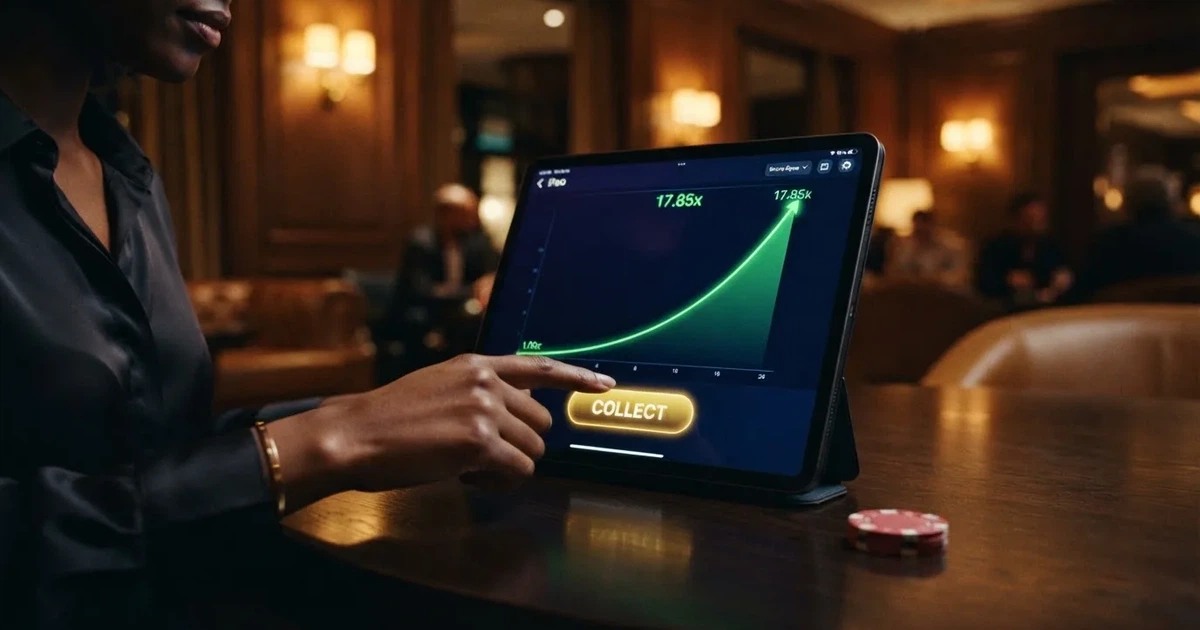
Crash games are a different shape. Aviator, developed by Spribe — a studio founded in 2018 — and released in 2019, is the reference title. In a crash game, a multiplier curve rises from 1.00x until the round randomly crashes, and the player must cash out before the crash to win their stake multiplied by the current value. Spribe has reported more than 42 million active users on Aviator and around 350,000 bets per minute across more than 5,000 operators worldwide. Spribe’s CEO has described Aviator as “the first true multiplayer crash game in the regulated igaming space”. The point of that scale figure is that crash games are now a fixture of the regulated market, not a novelty — and a bingo site running a slots tab now runs crash games alongside the slot catalogue.
Live tables are dominated by Evolution and Pragmatic Play Live, with a small number of boutique studios supplying baccarat and game-show formats. Punto Banco is the most-played baccarat variant on those tables, and the casino banks the game at all times with both hands dealt according to fixed drawing rules, so players make no strategic decisions. Chemin de Fer — the variant popular in France — gives players strategic choices and includes an element of skill, but it is rare on UK-licensed sites. The slots, crash games and live tables on a bingo casino’s wall are not unique to that brand; the supply chain is shared.
How the ten licensed bingo casinos compare
The table below compares the ten operators reviewed in this article on the matters research backs: the brand as a player meets it, the licence holder behind it, the licence number on the Commission register, the domain’s status on that register, and the brand’s relationship to this page’s subject. Subject support is the relevant cell: where research does not name a feature, an em dash stands in for the gap, and the gap is the point — the reader sees that a brand has not stated the feature rather than seeing an invented value.
| Brand | Licence holder | GB remote casino licence | Domain status | Subject support |
|---|---|---|---|---|
| Paddy Power | PPB Games Limited (account 39411) | 039411-R-319335-010 | Active | — |
| kwiff | Eaton Gate Gaming Limited (account 44448) | 044448-R-323408-017 | Active | — |
| Betway | Betway Limited (account 39372) | 039372-R-319367-029 | Active | — |
| bet365 | Hillside (UK Gaming) ENC (account 55149) | 055149-R-331499-004 | Active | — |
| Unibet | Platinum Gaming Limited (account 45322) | 045322-R-324275-019 | Active | — |
| 888casino | 888 UK Limited (account 39028) | 039028-R-319297-014 | Active | — |
| Virgin Games | Gamesys Operations Limited (account 38905) | 038905-R-319430-022 | White Label | — |
| Midnite | Dribble Media Limited (account 42647) | 042647-R-321653-022 | Active | — |
| Betfred | Petfre (Gibraltar) Limited (account 39544) | 039544-R-319290-010 | Active | — |
| BetVictor | BV Gaming Limited (account 39576) | 039576-R-319370-028 | Active | — |
A reader looking at this table should note three things the cells do not say. First, all ten brands are on the register and all ten hold an active remote casino operating licence — the table does not rank by quality, only by presence. Second, Virgin Games is the only white-label entry in the set; the rest are active domains of their own licence accounts. Third, the subject-support column is empty for every brand because research does not name a bingo-specific feature for any of them — the brands are reviewed as licensed bingo casinos, not on the strength of features the inputs do not carry.
Paddy Power
Paddy Power sits on the register as an active domain of PPB Games Limited, with the licence 039411-R-319335-010. The brand’s bingo rooms and slot catalogue run on a shared wallet, so the Commission’s stake caps, spin-speed limits and reverse-withdrawal ban apply uniformly. Paddy Power’s strength is its sportsbook heritage — a player who wants sports and slots on the same account finds the integration tidy, and a player who wants bingo as a secondary product alongside the sportsbook will not be fighting the site for screen space. The weakness for a player whose priority is bingo is the same: the brand is not built around a bingo hall, and the lobby often leads with sports.
kwiff
Kwiff’s licence is held by Eaton Gate Gaming Limited under account 44448, with the licence number 044448-R-323408-017. The brand positions itself around a “surprise” staking mechanic — stake boosts that apply unpredictably to placed bets — and that positioning pulls the product design away from a traditional bingo-and-slots blend. A player looking for a steady bingo room schedule will find kwiff’s bingo offering thin compared with the longer-established brands; a player looking for a slot catalogue with the same kind of stake-boost energy on the casino side will find more of what the brand is built to do.
Betway
Betway’s licence is held by Betway Limited under account 39372, with the licence number 039372-R-319367-029. The brand has a longer history than most of the field in UK-facing casino play, and its slot catalogue carries the standard supplier list — NetEnt, Microgaming-derived content, Pragmatic Play — alongside a smaller bingo rooms selection than the dedicated bingo brands. A player who has used Betway for sports and now wants the casino tabs will not be surprised by the layout; a player who comes to Betway specifically for bingo will not find a hall-led product.
bet365
Bet365’s licence is held by Hillside (UK Gaming) ENC under account 55149, with the licence number 055149-R-331499-004. The brand is the largest of the ten by traffic and the most identifiable by its sportsbook, but the casino and bingo tabs run on the same account infrastructure. A bet365 customer opening a bingo room sees a tighter game selection than a dedicated bingo brand offers, because bet365’s strength is breadth rather than depth in any one product. The same breadth is the brand’s weakness on bingo specifically: the lobby leads elsewhere.
Unibet
Unibet’s licence is held by Platinum Gaming Limited under account 45322, with the licence number 045322-R-324275-019. The brand runs on the Kindred Group platform and has historically led with sports and poker; its bingo rooms are a smaller part of the offering than at bingo-led brands. A player looking for a multi-product account that includes bingo alongside poker, sports and casino will find Unibet a reasonable fit; a player whose primary product is bingo will find the catalogue lighter than the dedicated alternatives.
888casino
888casino’s licence is held by 888 UK Limited under account 39028, with the licence number 039028-R-319297-014. The brand is built around a casino product, with bingo rooms as a secondary tab on the same wallet. 888’s slot catalogue carries proprietary 888-developed content alongside the standard supplier list, and the brand’s reputation is for casino depth rather than bingo depth. A player whose priority is a deep slot catalogue with bingo on the side will find a familiar shape here; a player whose priority is bingo hall atmosphere will find the brand less than ideal.
Virgin Games
Virgin Games is the only white-label entry in the reviewed set. Its domain is listed against account 38905, Gamesys Operations Limited, which holds the licence 038905-R-319430-022. The “Virgin” branding is a marketing licence; the operating company is Gamesys — a long-established UK bingo and casino operator. A player on Virgin Games is therefore playing on Gamesys’s platform under the Virgin brand, and the bingo rooms, slot catalogue and responsible-gaming infrastructure are Gamesys’s. The trade-off for the player is that the brand does not own its own licence; the upside is that the underlying platform has been running since the early days of UK-regulated online bingo.
Midnite
Midnite’s licence is held by Dribble Media Limited under account 42647, with the licence number 042647-R-321653-022. The brand is newer than most of the reviewed set and built around a more design-led product, with a casino-and-bingo offering that runs on a single wallet. The brand’s catalogue is shorter than the longest-established brands but curated — a player who values product polish over catalogue size will find Midnite worth considering, and a player who wants the largest possible slot library will find it lighter than the field’s biggest operators.
Betfred
Betfred’s licence is held by Petfre (Gibraltar) Limited under account 39544, with the licence number 039544-R-319290-010. The brand is a high-street bookmaker with a long history in UK gambling, and the online casino and bingo tabs sit alongside the sportsbook on a shared account. Betfred’s bingo rooms are smaller than at the dedicated bingo brands, but the brand’s reputation for trust and its high-street presence give it a particular kind of player — one who has shopped on the high street and now wants the same brand online. The trade-off is that the casino and bingo tabs are secondary products within a sports-led platform.
BetVictor
BetVictor’s licence is held by BV Gaming Limited under account 39576, with the licence number 039576-R-319370-028. The brand has historically led with sports and casino; its bingo offering is a smaller part of the product than at the dedicated bingo brands. A player who wants a casino-led product with a credible bingo tab will find BetVictor’s casino depth a plus; a player who wants the deepest bingo product will find the catalogue lighter than the field’s bingo-led competitors.
The wagering-turnover band under the 10x cap
The wagering cap that took effect on 19 December 2025 changed the maths of every welcome offer on the UK market. The old 35x and 40x wagering multiples are gone; the new ceiling is 10x the bonus amount (or 10x the deposit-plus-bonus figure on a matched deposit). The result is a band rather than a single number, because bonus size varies across the market and the player’s stake varies within the £2 / £5 cap.
Take a £50 bonus on a £10 deposit. The 10x cap means £500 of qualifying bets must be placed before the bonus funds move to the withdrawable balance. At a £1 slot stake — within the £5 cap for over-25s — that is 500 spins. At a £0.20 slot stake — within the cap for either age group — that is 2,500 spins. At the Commission’s 2.5-second minimum spin interval, those spins take roughly 21 minutes and 104 minutes of uninterrupted play respectively. The band runs from a quarter of an hour to nearly two hours depending on stake size, with the age-based stake cap shifting the band further for the 18-24 cohort.
Take a smaller £20 bonus on a £10 deposit. The 10x cap means £200 of qualifying bets — 200 spins at £1 or 1,000 spins at £0.20, with play times of roughly 8 minutes and 42 minutes. Take a larger £100 bonus on a £10 deposit. The 10x cap means £1,000 of qualifying bets — 1,000 spins at £1 or 5,000 spins at £0.20, with play times of roughly 42 minutes and 208 minutes (just over three and a half hours).
The shape of the band matters because it tells a player what a “10x wagering” offer actually costs in time. A reader who reads “wager 10x” in an offer’s terms will form a different picture of the offer’s cost depending on whether the bonus is £20 or £100. The arithmetic above is the picture. It is also why the 10x cap is described by the regulator as a consumer-protection measure rather than a loosening: an offer that takes two hours of play to clear is harder to clear by accident than an offer that takes six hours.
The band assumes the player wagers only the bonus amount. If the bonus is structured as a deposit match with the wagering applied to deposit-plus-bonus, the qualifying turnover doubles — a £50 bonus on a £50 deposit with 10x wagering on deposit-plus-bonus is £1,000 of qualifying bets, not £500. The offer’s small print names which base the cap applies to.
Picking a brand, and what the comparison above leaves out
The honest comparison this page can make is on licence, on wallet structure and on the slots-and-bingo product shape. The honest comparison this page cannot make is on payout speed per brand, because research does not name a figure for any of the ten operators reviewed here. The published withdrawal times differ across the field, the published payment-method lists differ, and the published verification steps differ. A reader who needs a payout-time comparison needs each operator’s help pages rather than a market-wide table.
The comparison this page can make is on what the register tells the reader. Paddy Power, kwiff, Betway, bet365, Unibet, 888casino, Midnite, Betfred and BetVictor all hold active remote casino operating licences; Virgin Games sits on a white-label licence of an active operator. A reader who wants a brand that holds its own licence has nine candidates in the field of ten. A reader who is comfortable with a white-label structure on a credible platform has ten.
The comparison this page can make is on product shape. Bet365, Betfred, Paddy Power, Betway and Unibet lead with sports; 888casino and BetVictor lead with casino; Virgin Games, Midnite and the rest offer a smaller bingo-led balance. The right brand for a bingo-primary player is different from the right brand for a sports-primary player, and a market-wide ranking that ignores the difference ranks the wrong thing.
The comparison this page can make is on what the consumer-protection rules cost a player who is over the age-based stake cap. The £5 stake limit applies to the slot side of every reviewed brand; the £2 limit applies to the same slot side for 18-24 year olds; the GAMSTOP integration applies to all of them; the deposit-prompt rule applies to all of them. None of the ten offers a route around those rules.
What the comparison leaves out is any ranking of brand experience. Research does not carry product-review data on the ten operators, and inventing a ranking from a brand’s homepage design would be invented fact. The comparison above is the comparison this page can stand behind.
What a UK bingo casino looks like from the player’s seat
A player who opens an account at a licensed UK bingo casino goes through the same steps regardless of brand. Identity verification comes first — name, address and date of birth, with a source-of-funds check at the £150 net-deposit rolling threshold. A financial-limit prompt appears before the first deposit, with the player choosing a limit or accepting the operator’s default. The deposit then moves by debit card, bank transfer or a permitted e-wallet — credit cards are banned, including via e-wallets — and the wallet balance is the player’s spendable stake on both bingo rooms and slot games.
A typical first session: the player enters a 90-ball bingo room with tickets at, say, 10p each, plays through a session of one-line, two-line and full-house games, and shifts over to the slot tab between bingo rounds. The slot stake runs within the £5 cap (or £2 for 18-24 year olds), the spin interval runs at the 2.5-second minimum, and a session ends with a withdrawal request that cannot be reversed. The withdrawal takes the operator’s stated time on the operator’s stated payment method, with verification re-runs in some cases.
A player who has registered with GAMSTOP cannot reach this point — the exclusion runs on every GB-licensed site, and the operator’s own self-exclusion tool layers on top of GAMSTOP for shorter time-outs. A player who has not registered with GAMSTOP and has not set a deposit limit can still play; the Commission has not banned play, it has mandated the prompt. A player who reads the offer’s small print before claiming a bonus sees the wagering base (bonus only, or deposit plus bonus), the qualifying games, the expiry window and the maximum conversion from bonus funds. A player who reads none of those sees the offer’s headline only.
The right brand depends on the player’s priority. A bingo-primary player benefits from a brand with the deepest room schedule and the largest community chat. A slot-primary player benefits from a brand with the largest slot catalogue and the longest payout track record on the payment method the player uses. A sports-primary player benefits from a brand where the casino and bingo tabs are a known quantity rather than a primary product. The reviewed set offers all three shapes; the right shape depends on what the player is buying.
Frequently asked questions
What is the difference between a bingo room and a bingo-linked slot?
A bingo room is a real-time game in which numbered balls are drawn and players mark tickets for one-line, two-line or full-house wins; a bingo-linked slot is a standard slot game with a bingo-themed wrapper — numbered balls, dauber-style visuals, ticket-grid reels — running on a slot reel set and bonus round. The paytable on a bingo-linked slot reads like any other slot’s: a return-to-player percentage, a volatility band and a maximum win. The bingo room runs as a separate product on the same wallet.
Are there bingo slots available with no deposit required to try?
Some licensed UK bingo casinos offer a small free-spin or free-ticket allowance on signup without a deposit, but the offer is structured by the operator and varies across the field. The £0.10 to £0.20 free-spin value is standard, and free-spin winnings usually carry their own wagering terms stated in the offer’s small print. The no-deposit format is one of the routes the £150 net-deposit affordability threshold does not apply to, because no deposit has occurred.
What wagering terms usually apply to a bingo site’s slots bonus?
Since 19 December 2025 the wagering requirement on any UK-licensed bonus is capped at 10x the bonus amount (or 10x the deposit-plus-bonus figure on a matched deposit). Mixed-product bonuses — for example, a free bet on sport that returns casino spins — are banned. Free-spin winnings run on their own wagering terms in the offer’s small print, and the offer’s qualifying-games list names which slot titles contribute to the wagering total.
Is there a dedicated app for bingo casinos, or only a browser site?
Both formats exist. Some of the ten operators reviewed here run a native app downloadable from the App Store or Google Play; others run a browser site that scales to the phone screen. The slot catalogue is identical in either format because slot games run on HTML5. The app format gives quicker push notifications for bingo room alerts, while the browser format updates without an app store review cycle.
How is a bingo casino’s payout speed compared with a standard slots site?
Payout speed is set by the operator’s published withdrawal time on its help pages and the payment method the player uses. E-wallets tend to clear within hours at most licensed operators; debit cards tend to clear within one to three working days; bank transfers sit in between. There is no industry-wide standard speed, and a market-wide comparison would have to read each operator’s published numbers rather than cite a single figure.
Must a bingo casino be licensed by the Gambling Commission to accept UK players?
Yes. Under the Gambling Act 2005 and the Gambling (Licensing and Advertising) Act 2014, any operator taking deposits from customers in Great Britain needs a Gambling Commission licence, regardless of where it is incorporated. An unlicensed operator does not have to integrate GAMSTOP, follow the £2 / £5 slot stake caps or honour the reverse-withdrawal ban; a player on an unlicensed site loses those protections.
Published by the livecasinoguideuk team.