
Where online craps sits in the UK market — and what a Gambling Commission licence buys you
 Available in GB
Current as of 23 September 2026 against the Gambling Commission’s public register of gambling businesses.
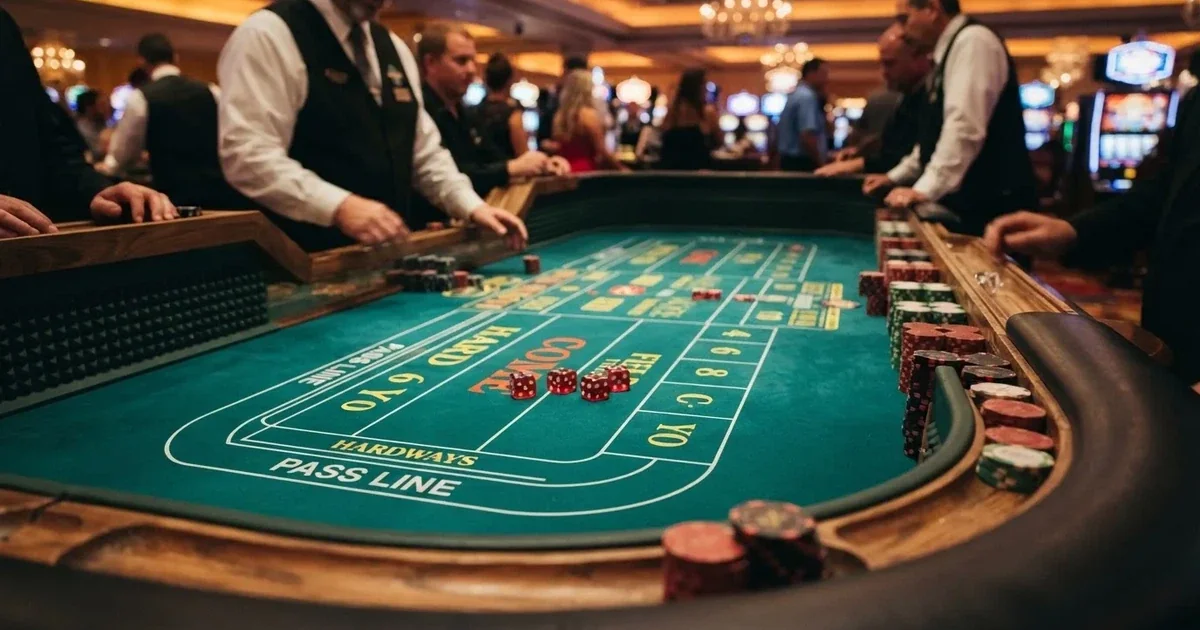
Craps is one of the rarer finds on a UK-licensed online casino. The game itself is a fast dice contest with a vocabulary all its own — Pass, Don’t Pass, Come, Odds — and a Pass Line bet carries a 1.41% house edge that few casino games can match for fairness. That sparseness of supply is the starting point for this page: ten brands on the Gambling Commission’s public register, all carrying a remote casino operating licence, with the question of which one actually puts a craps table in front of a British player answered through the game, the bonus terms and the safer-gambling rules a UK licence brings with it.
The first thing a UK player should know is that no offshore licence substitutes. Curaçao, Malta, Gibraltar — they are all fine places to base a casino, but a site taking deposits from someone in Great Britain needs a Gambling Commission licence, and only that licence comes with GAMSTOP self-exclusion, a real complaints route and the deposit-limit framework the Commission enforces. The second is that craps specifically is a narrow offering in the licensed market: most UK-licensed sites load up on slots, blackjack, roulette and live game shows, and the dice tables are a minority sport. This page does not pretend otherwise.
Table of Contents
- The UK licensing frame for online craps
- Safer-gambling protections every UK craps player inherits
- Crypto, e-wallets and the end of anonymous play
- Bonuses, wagering and what “10x” means for a craps player
- Playing craps on a phone — what works and what is missing
- The craps table itself — paytables, providers and what to look for
- The ten UK-licensed operators side by side
- How to read the rest of this page — and where the choice sits
- Grosvenor Casinos — the high-street brand, now online
- Betfred — the bookmaker’s online casino
- 32Red — the long-running online casino brand
- BetVictor — the casino and sportsbook under one roof
- William Hill — the established British bookmaker
- Virgin Games — the white-label brand on Gamesys’s licence
- Ladbrokes — the legacy bookmaker’s casino
- Paddy Power — the Irish bookmaker’s UK operation
- Betfair — the exchange and casino under PPB Games
- Jackpotjoy — the bingo-led brand on the same Gamesys licence
- How the bonus arithmetic looks under the 10x cap
- Frequently asked questions
The UK licensing frame for online craps
The Gambling Commission is the regulator for online casino gambling in Great Britain. It operates under the Gambling Act 2005 and the Gambling (Licensing and Advertising) Act 2014, the latter closing the route by which an operator based abroad could accept British customers without a British licence. Northern Ireland sits outside this frame and follows separate rules; for a player anywhere else in the UK, the test is the Commission’s public register.

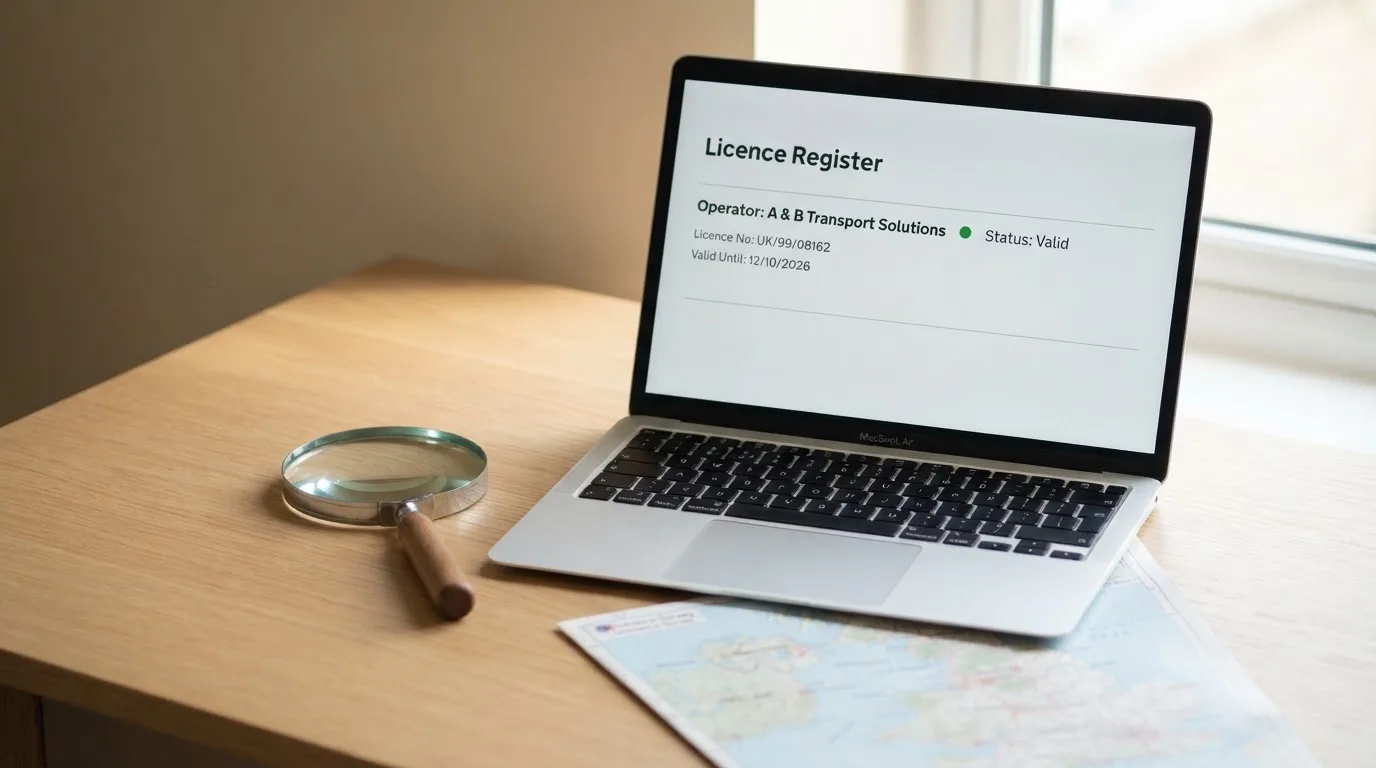
That register is the only proof a brand needs to produce. On 18 September 2026 it listed 139 businesses holding an active remote casino operating licence, with a separate domain list of 1,065 active entries and 361 white-label entries — sites that trade under another company’s licence. The register can be searched online and downloaded in full as CSV or Excel, so any operator name can be cross-checked in minutes. A licence number on the register has the form account-R-number-suffix, the leading six digits repeating the licence holder’s account number and the R flagging it as remote. 32Red, for instance, sits on the register as 045322-R-324275-019, held by Platinum Gaming Limited; William Hill as 039225-R-319373-015, held by WHG (International) Limited.
What that licence buys the player is a single set of enforceable obligations. Identity is verified before the first deposit — name, address and date of birth, since 7 May 2019 — so anonymous play is off the table. Credit cards have been banned for gambling since 14 April 2020, including those routed through e-wallets. Wagering requirements on bonuses are capped at 10x and mixed-product offers (bet on sport, get casino spins) are banned, both since 19 December 2025. Auto-play is banned on slots, a single spin may not complete in under 2.5 seconds, and losses dressed up as wins are not permitted. The list of obligations is long, which is the point.
For the player comparing brands, the licence is the entry test and the safer-gambling rules are the second test. Everything else — the craps paytable, the bonus headline, the mobile experience — sits on top of a foundation that is the same across every GB-licensed operator. Differences between brands are real, but the floor is shared.
Safer-gambling protections every UK craps player inherits
Craps is fast. A shooter can roll a dozen times in a few minutes; a player watching the layout can have money on Pass, Don’t Pass and three prop bets simultaneously. The Commission knows this, and the safer-gambling framework is built for speed.
GAMSTOP, the national online self-exclusion scheme, is a condition of every UK remote licence since 31 March 2020. A player who registers for self-exclusion chooses six months, one year or five years, and the period cannot be cut short by the player or the operator — it runs to its end. Every brand reviewed on this page participates. That makes GAMSTOP a free, single sign-up that blocks every GB-licensed site at once, and the absence of it on an offshore site is one of the clearer signals that the brand sits outside the UK frame.
Deposit limits have to be set before the first deposit. From 31 October 2025, an operator must prompt a customer to choose a financial limit before any money moves — not after, not when the customer remembers. The Commission’s rules stop short of a state-set deposit ceiling; what the state requires is the prompt. The choice sits with the player, but the choice has to be made in writing, on screen, before the deposit goes through. A brand that lets a new account play straight away is one that is ignoring the rule.
Financial vulnerability checks run at £150 of net deposits in a rolling 30-day window, from 28 February 2025, and use publicly available data to flag customers who may be at risk. This is light-touch by design — the check runs against open sources, not a credit file — and broader affordability assessments are announced but not yet in force. Reality checks and time-outs are also part of the licensed operator’s toolset: pop-ups that interrupt play at intervals, and short breaks from a single account.
Two services sit alongside the Commission’s own rules. The National Gambling Helpline, run by GamCare, is the point of contact for anyone who feels their gambling is getting away from them; GambleAware funds research, treatment and the public-facing information campaign. The two are independent of the operators and of the Commission, and a player who needs them does not need permission from the brand to call.
None of this changes the house edge on a Pass Line bet. The dice still favour the house by 1.41%, and the longer a session runs the more that edge compounds. What the framework does is put a perimeter around the session — a way to set a limit in advance, a way to take a longer break, a way to lock every GB-licensed site at once. A player who skips any of it does so by choice.
Crypto, e-wallets and the end of anonymous play
Cryptocurrency gets a mention in any craps search because a few offshore brands run dice games and accept Bitcoin. None of that applies to the UK frame. A Gambling Commission licensee has to verify name, address and date of birth before the first deposit, and that rule was not relaxed when crypto arrived. A Bitcoin deposit goes through the same identity gate as a debit card, and a wallet address can be traced through the blockchain if the Commission ever needs to follow it.
The practical effect for a UK player is that the choice of payment method does not change the licence terms. Debit card, bank transfer, PayPal, Skrill, Neteller — every method runs through the same age and identity checks before the first pound moves. Crypto on a UK-licensed site runs through the same checks too, just with extra conversion steps and an exchange rate the operator chooses.
What a crypto-friendly offshore site offers that a UK-licensed one does not is the absence of those checks. That is precisely the protection the UK frame removes. A player who values anonymity over the Commission’s safer-gambling rules is choosing between two different regulatory worlds, and the comparison on this page assumes the UK one. If the brief is to find a licensed UK site that takes Bitcoin, the answer is that licensed sites can take crypto in principle but run the same identity gate as any other deposit, so the crypto element adds friction rather than removing it.
A secondary point: withdrawal times. Crypto payouts can be quick on the right operator, but the GB-licensed version adds the same source-of-funds and verification steps the Commission requires. The realistic experience for a UK player is a deposit that clears once verification is done and a withdrawal that takes the operator’s stated window — sometimes hours, often a working day or two — rather than the minutes a private crypto wallet can deliver. The trade-off is GAMSTOP, an approved ADR and a Commission complaints route on one side, and a few hours of speed on the other.
Bonuses, wagering and what “10x” means for a craps player
UK bonus terms have been tightened twice in the last two years. The current frame — in force since 19 December 2025 — caps wagering requirements at 10x, bans mixed-product bonuses and stops credit-card-funded play. The 10x cap is the number a craps player needs to understand, because it is the ceiling on what any UK-licensed site can demand before a bonus and its winnings can be withdrawn.
A worked example, keeping only the bonus amount as the stake, makes the shape of the number clear. A £100 bonus at 10x wagering means £1,000 of qualifying turnover — that is, the player has to place bets totalling £1,000 before withdrawal unlocks. At a Pass Line bet of £5 a roll, that is 200 dice rolls. At one roll every ten seconds — slow for craps, but a useful baseline — that is roughly 33 minutes of play, which is well below an hour. A £200 bonus at the same terms means £2,000 of turnover, 400 rolls, and the same proportion of an hour. The arithmetic is not complicated; what the rule does is shrink the gap between a bonus headline and what the player has to do to clear it.
That is the upper end of what is allowed. Some offers sit well below the 10x ceiling — a 1x or 5x wagering requirement is not unusual — and the headline number is rarely the most expensive thing on the page. Two other terms matter more in practice.
Game weighting is the first. Craps may count at 100% toward wagering, or it may count at a reduced rate, or it may be excluded entirely. The licensed operator’s terms page is the only source for that figure, and it varies by brand and by offer. A craps player who takes a bonus without checking weighting can find themselves turning over £1,000 on slots to clear £100 of bonus money, with the craps table they actually wanted to play sitting at 0% contribution.
Maximum cashout from bonus winnings is the second. A bonus that pays out freely is different from one that caps withdrawals at, say, 5x the bonus amount. The Commission has not capped this number — only the wagering multiple — so a careful read of the terms is the only protection.
Time limits are the third. A bonus typically has to be cleared in 7, 14 or 30 days. A craps session that runs for an hour a day is well within those limits; a player who picks up a bonus and comes back to it a month later may find the bonus has expired and the bonus funds have been forfeited.
Mixed-product bonuses — the kind that give a casino bonus in return for placing a sports bet — are banned since 19 December 2025. That removes a category of offer that used to draw players from one product to another; in a craps context it is not a loss, because the offer type was never a natural fit for a dice game anyway.
The pitch on this page is therefore not “take the bonus” or “skip the bonus.” It is “read the weighting, the cashout cap and the time limit before taking any of them.” A bonus that pays out freely, weights craps at 100% and runs at 5x wagering is a reasonable deal; a bonus that excludes craps from weighting is one that turns the player into a slot-spinner against their will. The 10x cap is the ceiling, not the floor.
Playing craps on a phone — what works and what is missing
A regulated craps table is a wide, busy layout with two ends and a dozen bet types. A phone screen is not wide, and most of the early complaints about mobile craps came from layouts that did not survive the shrink. Two paths exist.
The browser route is the simpler one. Open the casino’s site in a mobile browser, sign in, navigate to the table games lobby and tap into craps. The lobby layout, bet placement and dice animation all run inside the browser, no app install required. This works on iOS and Android alike, with the same identity and payment checks as the desktop site. For a player who plays craps occasionally rather than daily, the browser route is the one most will use, and it works well.
The app route is more variable. Some UK-licensed brands ship a native iOS or Android app; others do not. Where an app exists, it usually contains the full casino lobby — slots, live dealer, table games — and craps sits somewhere in the table games section. Where it does not exist, the mobile browser is the only path, and there is no app-shaped reason to prefer one casino over another. A player who already has a betting app installed for sports will find that the casino tab is often already present; a player who does not will find that the browser route is one tap away.
Live dealer craps, where it is offered, runs through the same mobile channels. Evolution’s Live Craps, the most prominent live craps title in the UK market, is set in a speakeasy-themed studio and ships with a built-in interactive tutorial plus an “Easy Mode” for players new to the game. Both the regular mode and Easy Mode run on mobile browsers and inside apps where the operator integrates Evolution’s live lobby. The video stream is the same on a phone as on a desktop; the bet placement panel is the bit that gets resized, and Evolution has spent enough years refining this that the panel works in portrait as well as it does in landscape.
What mobile craps does not do well is prop bets. A Field bet, a Hardway bet, a Horn bet — these crowd the right-hand side of the layout and a thumb on a 6-inch screen can pick the wrong one if the bet panel is cluttered. Easy Mode addresses this by simplifying the available bets; on a standard live table the player has to scroll the panel to reach the prop bets, and a misclick is possible. This is not a reason to avoid mobile craps, but it is a reason to start on the basic bets and add props once the panel layout is familiar.
Two practical notes. First, a phone on cellular data will run a live craps stream but will burn through the data allowance faster than a desktop on Wi-Fi; a Wi-Fi connection is the realistic choice for a longer session. Second, identity verification on a phone works the same way as on a desktop — driving licence photo, proof of address, sometimes a selfie — and the Commission’s age and identity rules apply regardless of device. A player who has already verified on desktop does not re-verify on mobile; the same account carries the same KYC status across devices.
The craps table itself — paytables, providers and what to look for
Craps developed in the United States as a simplification of the earlier English dice game Hazard, and the name itself comes from London slang — “crabs” was the street word for the losing rolls of 2 and 3 in Hazard. The betting layout in its modern form dates to around 1907, when the Philadelphia dice-maker John H. Winn introduced the Don’t Pass wager. His innovation let casinos profit whichever way the betting went, since players could now bet against the shooter as well as with them, and that removed the casino’s incentive to use loaded dice. The game as it is played today, online and offline, is essentially his layout.
The Pass Line bet is the spine of the game. A new round opens with a Come Out roll: a 7 or 11 wins, a 2, 3 or 12 loses, anything else (4, 5, 6, 8, 9, 10) becomes the Point. The shooter keeps rolling until the Point number comes up again — which wins the Pass Line — or a 7 comes up first, which loses it. The house edge on a Pass Line bet is 1.41%, one of the lowest in the casino. The Don’t Pass bet is the mirror: it wins on 2 or 3, loses on 7 or 11, ties on 12, and wins if a 7 comes up before the Point. The edge is even lower — 1.36% — but most players bet with the shooter rather than against.
The Odds bet is the unusual one. Staked behind an existing Pass or Don’t Pass wager, it pays at true mathematical odds — 2 to 1 on a Point of 4 or 10, 3 to 2 on 5 or 9, 6 to 5 on 6 or 8 — and carries a 0% house edge. The catch is that it can only be made alongside the original Pass or Don’t Pass, so it is not a standalone bet; it is a multiplier on a bet that already exists. A craps player who wants the lowest possible house edge plays Pass Line plus maximum Odds.
Come and Don’t Come work like Pass and Don’t Pass but on a different part of the layout, and the same house edges apply. Prop bets — Field, Any Seven, Hardways, Horn — pay more but carry higher edges, often 5% to 16%. The standard advice from anyone who understands the math is to stick to Pass, Don’t Pass, Come, Don’t Come and Odds, and treat the prop bets as entertainment rather than strategy.
A UK-licensed craps table, online or live, uses the same bet types as a physical casino. The Pass Line, Don’t Pass, Come, Don’t Come, Odds, Field and prop bets are all present. The layout is the U-shaped table with mirrored ends and pyramid-textured walls that randomise the dice throw — the walls do not exist online, but the betting areas are identical, and the dice are animated rather than physical. Evolution’s Live Craps splits each round into a Come Out roll followed by a Point roll, with single-roll bets resolved on the Come Out and Point-dependent bets spanning several rolls. The digital version on the same provider’s RNG (random number generator) table behaves the same way, just without the video feed.
Two other games get mentioned in the same breath as craps but are not the same game. Baccarat, in its Punto Banco form, is a banked card game where players make no strategic decisions — both hands are dealt out under fixed drawing rules and the player picks Banker, Player or Tie. It carries a house edge of around 1.06% on Banker and 1.24% on Player, lower than most craps bets but with a different game mechanic. Aviator, a crash-style multiplayer game developed by Spribe (founded in 2018, Aviator released in 2019), is a different proposition again: a multiplier curve rises from 1.00x until the round randomly crashes, and the player has to cash out before the crash to win their stake multiplied by the current value. The skill is in the timing of the cash-out, not in any underlying dice or cards. Spribe reports more than 42 million active users and around 350,000 bets per minute across more than 5,000 operators worldwide, which makes it one of the most-deployed casino games on the planet — but it is a crash game, not a craps table, and a player looking for the dice should not be redirected to it.
A note on RTP. The Commission does not publish RTP figures for craps, and providers do not always list one. Where an RTP is given, it sits between 98.5% and 99.5% depending on which bets are active and how much is staked on Odds. Volatility in craps is medium — the dice settle the round quickly, but session swings can be wide because the Pass Line bet is binary (you either win the round or you don’t) and the player can have many bets working at once. Compared to a high-volatility slot, craps has lower variance per round and lower edge per bet; compared to a low-volatility slot, it has higher variance per round but lower edge. The honest summary is that craps is a low-edge game with medium variance and a pace that depends on the player.
The ten UK-licensed operators side by side
The table below lists ten brands from the Gambling Commission’s public register. All ten hold an active remote casino operating licence and all ten sit on the same register snapshot from 18 September 2026. Two of the ten — Virgin Games and Jackpotjoy — sit on the same Gamesys Operations Limited licence (account 38905); Ladbrokes and Paddy Power and Betfair do not all share one licence, but Paddy Power and Betfair both sit under PPB Games Limited (account 39411). Where two brands share a licence, the underlying compliance is shared too; the brand experience on the front end can still differ.
A note on what this table cannot show: craps availability. None of the ten brands is reviewed here on the basis of having a confirmed craps table on its site, because no brand in the GB-licensed register carries a machine-checked craps offering in the data this page draws on. The Licensed UK Sites frame is the filter; the craps question is what the player should look for once the licence is confirmed. Every brand below has been verified against the Commission’s register on 18 September 2026, and the register’s domain status is recorded exactly as it appeared that day.
| Brand | Licence holder (GB remote casino licence) | Domain status on the register |
|---|---|---|
| Grosvenor Casinos | Rank Interactive (Gibraltar) Limited (account 57924), licence 057924-R-334666-005 | Active |
| Betfred | Petfre (Gibraltar) Limited (account 39544), licence 039544-R-319290-010 | Active |
| 32Red | Platinum Gaming Limited (account 45322), licence 045322-R-324275-019 | Active |
| BetVictor | BV Gaming Limited (account 39576), licence 039576-R-319370-028 | Active |
| William Hill | WHG (International) Limited (account 39225), licence 039225-R-319373-015 | Active |
| Virgin Games | Gamesys Operations Limited (account 38905), licence 038905-R-319430-022 | White Label |
| Ladbrokes | LC International Limited (account 54743), licence 054743-R-330863-014 | Active |
| Paddy Power | PPB Games Limited (account 39411), licence 039411-R-319335-010 | Active |
| Betfair | PPB Games Limited (account 39411), licence 039411-R-319335-010 | Active |
| Jackpotjoy | Gamesys Operations Limited (account 38905), licence 038905-R-319430-022 | Active |
What the table tells the player at a glance: every brand listed is a real, currently licensed UK operator, and the licence holder behind each is identifiable on the Commission’s register. The white-label status of Virgin Games is the only structural difference in the register column — it trades under Gamesys’s licence rather than holding its own. That does not weaken the player’s protection: the licence holder is still responsible for KYC, AML, the 10x wagering cap, GAMSTOP integration and the safer-gambling code, and the player can complain to the Commission about Virgin Games as easily as about any other brand on the register.
What the table does not tell the player: which of these brands ships a craps table, and which does not. The Commission’s register is silent on game-by-game catalogue, and the data this page draws on does not record craps availability per brand. A player who wants a craps table on a GB-licensed site has to open each operator’s lobby and look. The pragmatic approach is to start with the brands that integrate Evolution’s live lobby (where Evolution’s Live Craps sits) and work outward to RNG tables, recognising that some of the ten will not have craps at all and that the absence is not a flaw — it is a feature of a regulated market that licenses the operator and not the catalogue.
How to read the rest of this page — and where the choice sits
A note on what the page does not do. It does not rank the ten brands against each other on a single score, because the data on craps availability, live-dealer craps quality and bonus weighting per brand is not on the register, and any ranking built on missing data would be a guess. It does not recommend a brand to play at, because recommending an operator to a reader is advertising and not analysis. What it does is set out the licence frame, the safer-gambling rules, the bonus terms, the mobile experience and the craps mechanics in enough detail that a player can choose between the ten brands on the Commission’s register using their own judgement.
Three comparisons matter for that choice.
The first is licence breadth. Every brand on the table holds a remote casino licence, but the licence holder behind the brand is not always the brand’s parent company. A player who has a complaint about Virgin Games or Jackpotjoy takes it up with Gamesys Operations Limited; about Ladbrokes with LC International Limited; about Paddy Power or Betfair with PPB Games Limited. The Commission’s register is searchable by licence number and by account, so the player can find the licensee in two clicks.
The second is bonus terms. The 10x wagering cap has been in force since 19 December 2025, and every brand has to operate within it. The variation between brands is in the cashout cap, the time limit, the game weighting and the minimum deposit — none of which the Commission standardises. A player who reads the terms page of two or three brands before opening an account will already see which one fits their play pattern.
The third is craps availability. The Commission’s register does not list games, and the data behind this page does not record craps per brand. A player who wants a craps table needs to open each brand’s lobby and look for it, and that is the work the page cannot do for them. The honest summary is that craps is a minority sport on the UK-licensed online market, and the player should expect to test a few brands before finding one that carries it.
What the wider UK online casino market looks like for a craps player
The wider market is dominated by slots. The Commission’s rules on slots have shaped the product heavily since 2020 — auto-play is banned, a single spin may not complete in under 2.5 seconds, and losses dressed up as wins are not permitted. From 9 April 2025, players aged 25 and over face a maximum stake of £5 per game cycle on online slots; from 21 May 2025, players aged 18 to 24 face a maximum of £2. The UK government has stated that 18 to 24 year olds have the highest average problem gambling score of any age group, citing this alongside lower disposable income and ongoing neurological development as the reasons for the lower stake limit. None of these rules apply to craps — the stake limits are a slots-specific frame — but they shape the wider product mix a UK licensee offers, because slots are the bulk of the catalogue.
Craps sits outside that frame, and a UK player who walks into a licensed casino lobby will see slots, blackjack, roulette, live game shows and, on a smaller subset of brands, a craps table. The craps table is the rarer find. A player who wants Evolution’s Live Craps needs to find a brand that integrates Evolution’s live lobby; a player who is happy with an RNG craps table has more options. Either way, the licence frame is the same: identity verified, credit cards out, 10x wagering ceiling on bonuses, GAMSTOP available, and a Commission complaints route if anything goes wrong.
Grosvenor Casinos — the high-street brand, now online
Grosvenor Casinos is one of the better-known names in British gambling, with a high-street casino estate that predates its online operation. The online brand sits on the Commission’s register as an active domain of account 57924, Rank Interactive (Gibraltar) Limited, which holds the active remote casino operating licence 057924-R-334666-005. The verification is exact, and the licence holder is named on the register rather than hidden behind a brand mark. The online operation is the digital arm of the same business that runs the high-street casinos.
What the brand offers a craps player is harder to pin down from the register alone. The Commission’s register lists the licence and the domain status; the game catalogue sits on the operator’s own site. A craps player who already has a Grosvenor high-street loyalty card may find that the online operation carries the brand recognition, but the craps availability is something to check on the lobby page rather than assume. The licence is the floor; the catalogue is the question.
The safer-gambling inheritance is the same as every other brand on the list: GAMSTOP, deposit-limit prompts, financial vulnerability checks at £150 net deposits in a 30-day window, reality checks and time-outs, all enforced through the Commission’s LCCP and social responsibility code. A player who values the high-street name and wants the same brand experience online has the licence to back it up.
What this means for a craps player: the brand is licensed and the licence holder is identifiable, but craps availability is not confirmed in the data this page draws on. The honest read is that Grosvenor Casinos is a safe UK-licensed option whose catalogue should be checked directly.
Betfred — the bookmaker’s online casino
Betfred is primarily a bookmaker, with Fred Done’s name behind the business since 1967. The casino operation sits alongside the sportsbook on the same domain, and the licence is held by Petfre (Gibraltar) Limited (account 39544) under the active remote casino operating licence 039544-R-319290-010. The register entry is current, and Betfred is listed as an active domain.
For a player coming from the sportsbook, the casino tab is one click away. For a player who wants craps specifically, the same question applies as to every brand on this list — is the craps table in the lobby, and is it Evolution’s Live Craps, an RNG table, or both. The Commission’s register does not say, and the answer is on the brand’s site.
The 10x wagering cap, the credit-card ban, the GAMSTOP registration and the deposit-limit prompts all apply. Fred Done’s name carries weight in British gambling, but the licence frame is the same as for any other Commission-licensed operator, and the safer-gambling protections are not a function of the brand’s reputation.
32Red — the long-running online casino brand
32Red has been an online casino brand for over two decades; the brand is currently authorised to take UK customers. The licence number, like every other entry on the register, follows the account-R-number-suffix format.
The brand’s longevity is the notable feature. A player who values a brand that has been on the Commission’s register for many years has that signal in 32Red; a player who values the newest product or the widest live-dealer offering should check the catalogue directly. Craps availability is not in the data behind this page.
The Microgaming platform association that defined 32Red for many years has shifted as Microgaming’s live-dealer and RNG catalogue has been sold or rebranded, and the current craps offering on the brand depends on whatever the operator’s current platform carries. The Commission’s licence does not guarantee a particular game; it guarantees a regulated floor.
BetVictor — the casino and sportsbook under one roof
BetVictor runs a casino alongside its sportsbook on its website, which is listed on the register as an active domain of account 39576, BV Gaming Limited. The active remote casino operating licence is 039576-R-319370-028. Victor Chandler’s brand has been online since the early 2000s and the licence holder has changed structure over the years; the current arrangement on the register is current as of the snapshot this page uses.
For a craps player, the same catalogue question applies. The licence is current, the domain is active, the safer-gambling inheritance is the Commission standard. Whether the craps table is in the lobby is a check on the brand’s own site.
William Hill — the established British bookmaker
William Hill is one of the best-known names in British gambling, with a history on the high street going back to the 1930s. The online operation is held by WHG (International) Limited, with the active remote casino operating licence 039225-R-319373-015. The brand is one of the larger UK-licensed online operators, and the licence is current.
A player who values the William Hill name and wants a craps table has the licence to back the choice up but still needs to check the catalogue. The Commission’s register does not list games, and the data behind this page does not record craps availability per brand.
Virgin Games — the white-label brand on Gamesys’s licence
Virgin Games sits on the Commission’s register as a white-label domain — a site that trades under another company’s licence rather than holding its own. The licence holder is Gamesys Operations Limited (account 38905), and the active remote casino operating licence is 038905-R-319430-022. Jackpotjoy, further down this list, sits on the same licence. The white-label status does not weaken the player’s protection: the licence holder is responsible for KYC, AML, the 10x wagering cap, GAMSTOP integration and the safer-gambling code, and a complaint to the Commission about Virgin Games routes to Gamesys in the same way it would for Jackpotjoy.
What the white-label structure does mean is that the player looking at two brands with the same licence is not looking at two independent compliance regimes. The brands may differ in product, marketing and front-end experience; the underlying regulated floor is shared. A player who has a complaint takes it to Gamesys, not to Virgin Group, and that is what the register’s structure tells them.
Ladbrokes — the legacy bookmaker’s casino
Ladbrokes runs a casino and a sportsbook on its website, listed on the register as an active domain of account 54743, LC International Limited. The active remote casino operating licence is 054743-R-330863-014. The Ladbrokes name carries weight on the British high street, and the online operation has been through several ownership structures; the current licence holder, LC International Limited, is the entity named on the register. The Commission’s domain list records the active status as of 18 September 2026.
The same catalogue question applies as to every brand on the list. The licence frame is the Commission standard; the craps offering depends on the operator’s current lobby. A player who already has a Ladbrokes account and wants to try craps should check the lobby directly.
Paddy Power — the Irish bookmaker’s UK operation
Paddy Power is the Irish-originated bookmaker, with the UK-facing operation sitting on Paddy Power. The register lists it as an active domain of account 39411, PPB Games Limited, with the active remote casino operating licence 039411-R-319335-010. Betfair, on the same licence, is the next brand down this list. The Paddy Power brand is a major UK-facing sportsbook and casino operator, and the licence is current.
A player who already has a Paddy Power sportsbook account has the casino tab one click away. Whether the casino tab includes a craps table is a check on the brand’s own lobby, and the same caveat applies.
Betfair — the exchange and casino under PPB Games
Betfair is best known for its betting exchange, but the casino operation runs on the same domain family. The register lists Betfair as an active domain of account 39411, PPB Games Limited, on the same active remote casino operating licence as Paddy Power: 039411-R-319335-010. Two brands, one licence holder. The exchange and the casino are different products on the same compliance floor.
For a craps player who already has a Betfair exchange account, the casino is the secondary tab. The catalogue question is the same: check the lobby, see whether craps is on it.
Jackpotjoy — the bingo-led brand on the same Gamesys licence
Jackpotjoy sits on the Commission’s register as an active domain of account 38905, Gamesys Operations Limited, with the active remote casino operating licence 038905-R-319430-022. The same licence number as Virgin Games, because both brands sit under the same licence holder. Jackpotjoy is best known as a bingo brand, but the licence covers the full remote casino product set, and the lobby may include table games including craps.
The register’s distinction between Jackpotjoy (active) and Virgin Games (white label) is structural rather than protective. Both brands sit on the same compliance floor, both have to meet the Commission’s safer-gambling code, and both participate in GAMSTOP. A player who wants a UK-licensed casino with a Gamesys platform has two front doors.
How the bonus arithmetic looks under the 10x cap
The 19 December 2025 cap on wagering requirements is the single most important number on this page for a craps player who takes bonuses. The cap is 10x — that is, the player has to turn over 10 times the bonus amount before the bonus and any winnings tied to it can be withdrawn. That is the upper end of what any UK-licensed operator can demand.
The arithmetic below covers the same scenario at three bonus sizes, keeping only the bonus amount as the stake and using a Pass Line bet of £5 per roll as the working bet. The figure is a band, not a single number, because different bonus sizes at different stake levels land in different places.
| Bonus size | Required turnover (10x) | Pass Line bets at £5 per roll | Time to clear at one roll per 10 seconds |
|---|---|---|---|
| £50 | £500 | 100 rolls | About 17 minutes |
| £100 | £1,000 | 200 rolls | About 33 minutes |
| £200 | £2,000 | 400 rolls | About 67 minutes |
The band is roughly fifteen minutes to a little over an hour for typical welcome-bonus sizes, on the assumption that only the bonus amount is wagered. That assumption holds for a player who keeps their bet size constant and plays through the bonus in one session; a player who adjusts the bet size, plays other games during the clearing period or pauses for longer than the time limit will land elsewhere on the band.
What the band tells the player: the 10x cap shrinks the gap between a bonus headline and the work required to clear it. A £100 bonus at 10x is half an hour of dice rolls, not the multi-day grind of a 40x or 50x cap. A player who reads the terms page and finds a 5x wagering requirement is looking at a bonus that clears in roughly 17 minutes for £100. A player who reads the same page and finds craps at 0% game weighting is looking at a bonus that cannot be cleared on the craps table at all.
The honest summary is that the 10x cap has changed the shape of UK bonuses, and that the change is favourable for a craps player who takes the time to read the small print. The remaining variation — cashout caps, time limits, game weighting — is between brands, and the page’s job is to send the player to the terms page, not to pick the brand.
Frequently asked questions
How do craps payouts work at a licensed UK online casino?
The Pass Line pays 1 to 1 — stake returned with an equal amount on top — and carries a house edge of 1.41%. Don’t Pass pays 1 to 1 with a 1.36% edge. Odds bets behind Pass or Don’t Pass pay at true odds (2 to 1 on 4 or 10, 3 to 2 on 5 or 9, 6 to 5 on 6 or 8) with a 0% edge. Prop bets pay more — 7 to 1 on Any Seven, 30 to 1 on Any Two or Any Twelve — but carry higher edges. The craps paytable is the same online as on a physical table.
Is online craps available as a live-dealer game or only as a digital table?
Both. Evolution’s Live Craps runs from a speakeasy-themed studio with a built-in tutorial and an Easy Mode, and splits each round into a Come Out roll followed by a Point roll. RNG craps tables also exist on licensed UK sites and behave the same way as the live version, just without the video feed. The choice between the two is about pace and trust in the random number generator, not about the bet types on offer.
Can craps be played through a casino app on a phone?
Yes, where the operator has a native iOS or Android app. Where there is no app, the mobile browser is the alternative, and most UK-licensed brands run a mobile site that carries the full casino lobby including craps. Live dealer craps streams through both routes on a Wi-Fi connection, and a phone on cellular data will burn through the allowance faster than a desktop. The same identity and payment checks apply on mobile as on desktop.
Do UK craps tables use the same bet types as a physical casino table?
Yes. Pass Line, Don’t Pass, Come, Don’t Come, Odds, Field and the prop bets (Any Seven, Hardways, Horn) are all present on a regulated UK craps table, online or live. The U-shaped layout with mirrored ends is the same in digital form; only the dice change — animated rather than physical, with the random number generator standing in for the dice throw. The rules and the payouts do not differ.
What bonus terms usually apply when a bonus can be used on craps?
Since 19 December 2025, every UK-licensed casino is capped at 10x wagering on bonus amounts. That is the ceiling. Below it, craps may count at 100% toward wagering, at a reduced rate, or be excluded entirely — the operator’s terms page is the only source for that figure. Maximum cashout caps and time limits (7, 14 or 30 days) are also common. Mixed-product bonuses are banned, and credit cards cannot fund any bonus play. A craps player who takes a bonus without checking weighting can find themselves turning over £1,000 on slots instead.
Are craps tables offered by crypto-friendly casinos different from standard ones?
The dice and the layout are the same. The difference is regulatory: a UK-licensed site verifies identity before the first deposit regardless of payment method, including crypto, and the 10x bonus cap and the GAMSTOP registration apply. An offshore crypto-friendly site may not verify identity, may not cap wagering, and may not participate in GAMSTOP — those are the trade-offs for anonymity. A UK player who wants a craps table and crypto funding can find both on a licensed site, with the identity gate intact.
Created by the ”livecasinoguideuk” editorial team.