
£2 Minimum Deposit Casinos in the UK: How Small a Stake, and How Regulated
 Available in GB
The lowest common denomination on a UK licensed casino floor used to be £5 or £10. The arrival of £2 minimums at several mainstream brands has changed who can sit down, but it has not changed the rules anyone has to play under. A £2 deposit still crosses the same Gambling Commission desk, the same GAMSTOP self-exclusion register, and the same affordability checks as a £200 one. The question this page answers is what a £2 stake actually buys and where the regulation that wraps it either protects the player or quietly costs them.
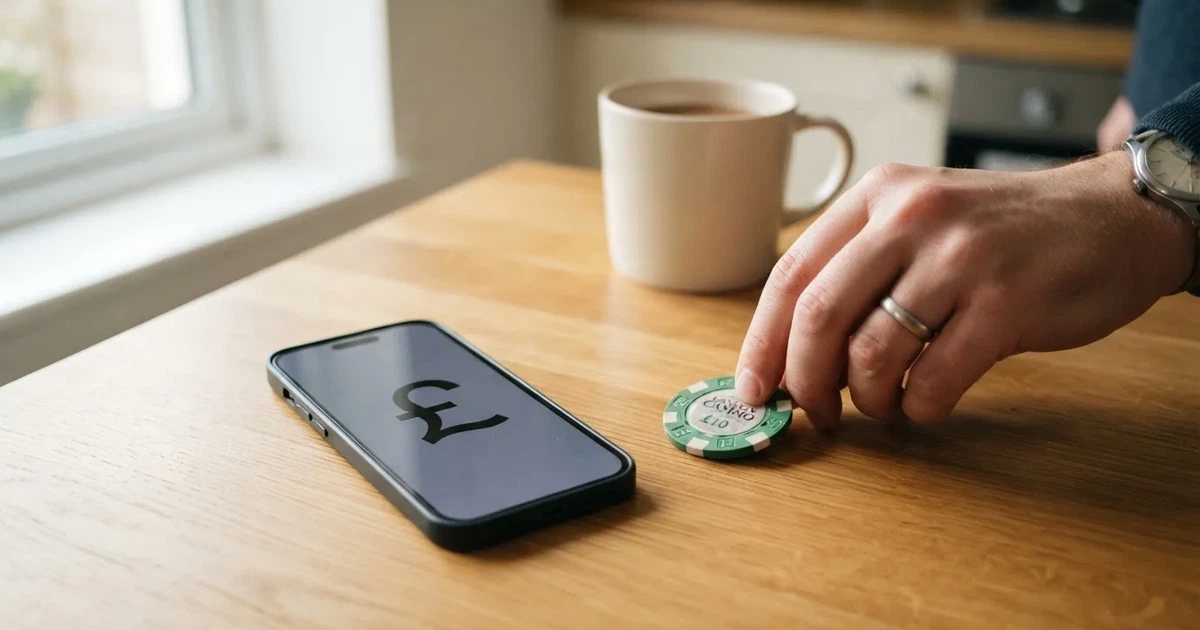
Data current as of 23 September 2026, cross-checked against the Gambling Commission’s public register of gambling businesses.
Table of Contents
- What the Low-Deposit Cluster Looks Like in the UK Market
- The Legal Floor Beneath Every £2 Deposit
- Responsible Gambling at a £2 Threshold
- The Fundamenta of a £2 Deposit: What the Small Stake Buys
- Payments and Payout Speed at the £2 Entry
- The 10x Wagering Cap and What a £2 Bonus Actually Costs
- The Licensed Operators Accepting £2 Minimum Deposits
- How to Read the Comparison Above
- What This Page Cannot Check
- Frequently Asked Questions
What the Low-Deposit Cluster Looks Like in the UK Market
The phrase “low-deposit casino” gets stretched in marketing copy until it means almost anything below £20. In practice the UK market sorts itself into three tiers: mainstream brands sitting at £5 or £10, budget-facing brands that have moved down to £2 or £3, and offshore sites that advertise £1 minimums without holding a British licence. The middle tier is the interesting one because it sits at the intersection of two truths. A £2 deposit is genuinely small, so the player is not risking much in absolute terms; but it is still a deposit at a regulated operator, so every obligation the Gambling Commission imposes on online casinos still applies.

The Commission’s own public register is the place to start. As of 18 September 2026 the register listed 139 businesses holding an active remote casino operating licence. That is not the number of casino brands — it is the number of licensed companies, and many of those companies run several brands each. Coral, Gala Bingo and Ladbrokes, for example, sit under a single licence held by LC International Limited. White-label arrangements push the number of brand-level sites much higher; the same register snapshot held 1065 active and 361 white-label domain entries.
Reading those numbers changes the picture. A £2 minimum deposit is not, on its own, evidence of either quality or risk. What matters is which licence a brand sits under and which domain status the register records for it. The £2 figure is the cost of entry; the licence is the contract behind it.
The Legal Floor Beneath Every £2 Deposit
The Gambling Act 2005 sets the rules for any operator taking money from people in Great Britain. Since the Gambling (Licensing and Advertising) Act 2014, that obligation no longer depends on where the operator is incorporated — a Curaçao, Maltese or Gibraltar licence is not a substitute for a Commission licence when the customer sits in England, Scotland or Wales. Section 33 of the 2005 Act makes unlicensed provision to GB customers a criminal offence, though enforcement runs against the operator rather than the player.
A licensed operator must verify every customer’s name, address and date of birth before the first deposit or any play. That has been a condition of online licences since 7 May 2019, and it is the reason no anonymous play exists on a GB-licensed site regardless of how small the deposit is. The same licence ties the operator into GAMSTOP, the national self-exclusion register, and obliges the site to run financial vulnerability checks. From 28 February 2025 those checks trigger at £150 of net deposits across any rolling 30-day window, using publicly available data, with broader affordability assessments announced but not yet in force.
Two more Commission rules shape what a £2 deposit can do at the table. Online slots carry a maximum stake per game cycle: £5 for players aged 25 and over (from 9 April 2025), £2 for 18-to-24-year-olds (from 21 May 2025). Auto-play is banned, a spin cannot complete faster than 2.5 seconds, and losses disguised as wins are prohibited. None of these are about deposit size; they sit across the entire slot product. But the per-spin stake cap means the £2 deposit at an 18-to-24 account will not stretch to more than one spin, which is a sharper limit than it sounds for a player who arrived expecting £2 to fund a session.
Responsible Gambling at a £2 Threshold
The argument for £2 minimums runs like this: the smaller the stake, the smaller the harm, because no player can lose more than they have put in. The argument against runs like this: small stakes invite more frequent play, and frequency is a better predictor of harm than stake size. Both arguments are real, and the Commission’s own architecture is built around both. GAMSTOP self-exclusion periods of six months, one year or five years apply to every licensed online operator and cannot be cancelled early. A customer setting a financial limit at registration has been obliged to do so since 31 October 2025; the operator must prompt the limit before the first deposit, and the player sets it. There is no state-set deposit or loss ceiling, so the player carries that responsibility.
The Commission has reported that around 800,000 UK consumers used credit cards to gamble in 2018, and that 22% of online gamblers who funded play with credit cards were classed as problem gamblers. Credit cards have been banned for gambling since 14 April 2020, including credit cards routed through e-wallets, which removes one of the more dangerous funding paths regardless of the deposit minimum. Debit cards and bank transfers are unaffected.
The one route a player might take that bypasses all of this is an unlicensed site. The Commission’s own material is clear that what the player loses on an unlicensed site is protection: no GAMSTOP, no complaints route to the Commission, no approved alternative dispute resolution. Some unlicensed sites advertise £1 minimum deposits precisely because they sit outside the GB framework, and that is the other half of the low-deposit conversation — the half a reader needs to know about even if they never intend to use it.
The Fundamenta of a £2 Deposit: What the Small Stake Buys
A £2 deposit opens the same product catalogue as a £200 deposit on a licensed site. There is no reduced game library, no stripped-down bonus tier, and no tiered loyalty scheme that requires a larger entry deposit. What changes at the £2 entry is the practical arithmetic of play.

Three things matter for a player considering the low end. First, the per-spin stake: at an 18-to-24 account the £2 stake cap means a single spin takes the entire deposit if the player picks the highest allowed stake. At a 25-and-over account a £2 deposit covers less than half of one spin at the £5 cap. Second, the wagering requirement: since 19 December 2025, wagering requirements on bonuses at GB-licensed operators are capped at 10x the bonus amount. A modest free-spin offer tied to a £2 deposit will carry a turnover requirement measured in pounds rather than hundreds, but the rule itself is what shapes the offer structure. Third, payment method: a £2 deposit is below the typical minimum for several mainstream e-wallets, which narrows the funding choices that actually work at this entry point.
Two cautions sit on top of those three. A £2 deposit still counts toward the £150 net-deposit threshold that triggers a financial vulnerability check across a rolling 30-day window — meaning that small frequent deposits can activate affordability scrutiny faster than a player might expect. And a £2 deposit that wins does not always pay out at £2: it pays out at whatever the spin or hand returned, and the payout then has to clear the operator’s withdrawal terms, which are independent of the deposit minimum.
Payments and Payout Speed at the £2 Entry
Funding a £2 deposit is not the same question as withdrawing a £2 win, and the two answers do not always run at the same speed.
Debit cards are the default at every licensed operator and accept £2 deposits. Bank transfers within the UK typically route through the Faster Payments Service, which launched in 2008 and is operated by Pay.UK. Faster Payments runs 24 hours a day, seven days a week, with most payments arriving instantly or within a couple of minutes, and a hard ceiling of two hours on occasional delays. The scheme’s per-transaction limit is £1,000,000, though individual banks impose lower customer-level limits that matter more for a £2 deposit than the headline cap. Faster Payments is overseen by the Bank of England for stability and settlement.
Apple Pay, developed and operated by Apple Inc., launched on 20 October 2014 initially supporting only US-issued cards, and began supporting UK-issued payment cards on 14 July 2015. The system protects card data through tokenization — the actual card number is replaced with a device-specific tokenised Device Primary Account Number, and a dynamic security code is generated for each transaction. In-store payments use near-field communication, with authentication on iPhones with Face ID via a double-click of the side button and on Touch ID models via a double-click of the Home button. Apple notes that Apple Pay requires a supported card from a participating issuer and is not available in all markets. Some licensed casinos accept Apple Pay for deposits; whether they accept it at the £2 minimum depends on the operator’s own floor, and that floor is not always disclosed.
AstroPay, founded in 2009 and headquartered in Uruguay, operates as a global digital wallet offering online payments, virtual and physical debit cards, and peer-to-peer transfers. Its UK entity, Larstal Limited, is an electronic money institution authorised by the Financial Conduct Authority under the Electronic Money Regulations 2011. The platform has additional regulated entities elsewhere: AstroPay Global (IOM) Limited licensed by the Isle of Man Financial Services Authority, Astro Instituição de Pagamento Ltda authorised by the Brazilian Central Bank as an electronic currency issuer, and Larstal Denmark ApS authorised by the Danish Financial Supervisory Authority. AstroPay spun off its payment-processing business, dLocal, as a separate company in 2016, and serves users across markets including the UK. AstroPay’s casino acceptance at the £2 floor varies by operator and is not universally disclosed.
The settlement picture depends on the method chosen. A £2 debit-card deposit and a £2 debit-card withdrawal are not on the same clock. Deposits typically clear instantly; withdrawals have to clear the operator’s internal processing and then the card network’s own settlement window, which most operators quote at one to three working days. Faster Payments withdrawals, where supported, often arrive in minutes. E-wallet withdrawals sit between the two: same-day internal processing followed by instant or near-instant external settlement.
A reader comparing the methods should weigh three things at the £2 entry. The deposit has to clear the operator’s minimum, which is the £2 figure the question is built around. The withdrawal has to clear the operator’s minimum, which is a separate and usually larger figure. And the funding method has to sit inside what the operator’s payment page actually offers at this stake level, which is not always the same as what the marketing page implies.
The 10x Wagering Cap and What a £2 Bonus Actually Costs
Since 19 December 2025, the Gambling Commission has capped wagering requirements on bonuses at GB-licensed operators at 10x the bonus amount. The same ruleset banned mixed-product bonuses — packages that hand out casino spins in exchange for a sports bet, or vice versa. The cap matters most for the small bonus attached to a small deposit, where the headline “free spins” figure can otherwise sit on top of an unrealistic turnover requirement.
A worked illustration makes the arithmetic visible. Suppose a £2 deposit earns a £10 bonus — a typical free-spin-equivalent in the low-deposit cluster. At the 10x cap the required turnover sits at £100, meaning the player must place £100 of qualifying bets before any winnings convert to withdrawable cash. At a 10p spin stake that turnover amounts to 1,000 spins. At a 2.5-second spin cycle the session runs about 42 minutes of continuous play, which is the minimum time the bonus requires for clearance. At a higher stake the spins drop and the time drops with them; at a lower stake both rise.
The honest framing is that the wagering cap is a ceiling on operator behaviour, not a guarantee that any particular bonus is easy to clear. A 10x turnover on a £10 bonus is a £100 hurdle; whether the player finds it worth jumping depends on what they expect to win in return, not on the cap itself. The cap simply makes the worst-case bonus terms less punishing than they were before 19 December 2025. The marketing word “free” still means “funded by future play” rather than “free of cost”, and that distinction holds at the £2 entry as firmly as anywhere else.
The Licensed Operators Accepting £2 Minimum Deposits
The ten brands below are taken from the Gambling Commission’s public register of gambling businesses as of 18 September 2026. They are described, not recommended, and the order is the order research records rather than a ranking. Every GB-licensed online operator must take part in GAMSTOP, and several of the licences below sit with parent companies that also run other brands: LC International Limited, for example, holds the licence behind Coral and behind Gala Bingo and Ladbrokes.
| Brand | Licence holder and GB remote casino licence | Domain status on the register |
|---|---|---|
| PokerStars | Stars Interactive Limited · 039108-R-319334-026 | Active |
| Betfred | Petfre (Gibraltar) Limited · 039544-R-319290-010 | Active |
| Betfair | PPB Games Limited · 039411-R-319335-010 | Active |
| bet365 | Hillside (UK Gaming) ENC · 055149-R-331499-004 | Active |
| Unibet | Platinum Gaming Limited · 045322-R-324275-019 | Active |
| Coral | LC International Limited · 054743-R-330863-014 | Active |
| Casumo | Recro Limited · 061549-R-336718-002 | Active |
| 888casino | 888 UK Limited · 039028-R-319297-014 | Active |
| kwiff | Eaton Gate Gaming Limited · 044448-R-323408-017 | Active |
| Midnite | Dribble Media Limited · 042647-R-321653-022 | Active |
Each of these brands takes a £2 deposit floor on at least one of its payment methods; the public register does not record deposit minima directly, so the confirmation comes from each operator’s own payments page. Where a brand supports multiple funding channels, the £2 entry often applies to debit cards and selected e-wallets rather than to every option.
PokerStars — the Established Poker Room, Now a Casino
PokerStars (Pokerstars.uk) sits on the register as an active domain of account 39108, with Stars Interactive Limited holding remote casino operating licence 039108-R-319334-026. The brand’s reputation grew from online poker, and its casino product has been a secondary line for most of its life. That history cuts both ways: the platform’s tournament and table-game product is deep, but the slots catalogue is shorter than the dedicated casino brands below. For a player whose £2 deposit is meant to test the room rather than to chase a particular slot title, that is a fair trade. For a player whose £2 deposit is meant to fund a slots session, the choice is less natural.
Betfred — the High-Street Bookmaker’s Casino Arm
Betfred (Betfred.com) operates as an active domain under account 39544, with Petfre (Gibraltar) Limited holding remote casino operating licence 039544-R-319290-010. Betfred built its name on the British betting shop floor and runs its online casino as an extension of that retail presence. The product mix reflects the heritage: sportsbook, then casino, then a slots catalogue that is broad but not the deepest in the market. A £2 deposit here lands a player at a brand where the bookmaker identity sits close to the surface, which matters more to some readers than others.
Betfair — the Exchange Brand, With a Casino Alongside
Betfair (Betfair.com) maintains an active domain for account 39411, managed by PPB Games Limited under licence 039411-R-319335-010. The brand’s centre of gravity is the betting exchange, and its casino product sits in the orbit of that exchange. For a £2-deposit player the implication is simple: the casino is a real product and a regulated one, but the brand’s reputation and product strength are built elsewhere. A player who arrived via the exchange side will feel at home; a player who arrived specifically for slots will not find the deepest catalogue.
bet365 — the Largest Brand, With a Casino That Sizes to Match
bet365 (Bet365.com) features an active domain under account 55149, with Hillside (UK Gaming) ENC holding remote casino licence 055149-R-331499-004. bet365 is the largest single brand by traffic on the GB-licensed market, and its casino product sits within the same platform as its sportsbook. The catalogue is broad, the product polish is high, and the deposit floor at £2 is real. A £2 deposit here does not change the product on offer — it changes the bankroll with which the player approaches it, and that is the right framing for a brand whose depth holds at any stake.
Unibet — the Nordic-Owned Casino With a Live-Dealer Focus
Unibet (unibet.co.uk) is listed as an active domain of account 45322, with Platinum Gaming Limited holding licence 045322-R-324275-019. The brand has a strong live-dealer product, and its slots catalogue is competitive rather than market-leading. A £2 deposit at Unibet is best framed as an entry to the live-dealer lobby, where the smaller-stake tables sit, rather than as a slots-only funding choice.
Coral — the High-Street Brand, Under LC International
Coral (coral.co.uk) is listed as an active domain of account 54743, with LC International Limited holding licence 054743-R-330863-014. LC International Limited is also the licence holder behind Ladbrokes and Gala Bingo, which is worth knowing because the same customer protections, complaint routes and self-exclusion arrangements apply across all three brands. Coral’s casino product sits within a wider group whose retail presence is significant. For a £2 deposit Coral is a working choice; the brand’s reputation is built on the betting shop rather than on the slots floor.
Casumo — the Standalone Casino Brand
Casumo (Casumo.com) is listed as an active domain of account 61549, with Recro Limited holding licence 061549-R-336718-002. Casumo is a casino-first brand, which means the slots catalogue and the live-dealer product carry the brand rather than supporting a sportsbook. For a £2 deposit this is the natural fit: the player is funding a casino session, not navigating a multi-product platform. The brand’s gamified loyalty scheme sits on top of the slots product and is built for repeat play, which is a feature or a warning depending on the reader.
888casino — the Long-Established Casino Brand
888casino (888casino) is listed as an active domain of account 39028, with 888 UK Limited holding licence 039028-R-319297-014. 888 is one of the longest-established online casino brands operating in GB, and its product catalogue reflects that history. A £2 deposit here opens a broad slots floor with a live-dealer section that has grown with the brand. The platform’s age is a feature: the product has been refined across multiple regulatory cycles, including the credit-card ban and the GAMSTOP expansion.
kwiff — the Newer Brand With a Distinctive Bonus Mechanic
kwiff (Kwiff.com) is listed as an active domain of account 44448, with Eaton Gate Gaming Limited holding licence 044448-R-323408-017. kwiff is a newer brand on the GB-licensed market, and it has built its identity around an unpredictable “surprise” bonus mechanic that can randomly boost payouts on selected markets. For a £2 deposit this is the most distinctive product in the table — the same stake can return more or less depending on whether the boost activates. The mechanism is genuinely different from the rest of the market, and the licensing is in place; the rest is a question of taste.
Midnite — the Newest Casino Brand in the Set
Midnite (Midnite.com) is listed as an active domain of account 42647, with Dribble Media Limited holding licence 042647-R-321653-022. Midnite is the newest brand in this set, and its product is built around a slots-and-sportsbook combination that aims to compete with the larger incumbents. A £2 deposit at Midnite opens a smaller but newer catalogue, with a product design that reflects current UK player-protection rules rather than older conventions. For a reader who values product recency over catalogue depth, this is the natural fit; for a reader who wants the broadest possible game library, the older brands above hold the edge.
How to Read the Comparison Above
Three things matter more than any others. First, every brand in the table is GB-licensed and GAMSTOP-participating. The licence is the floor, not the ceiling — it removes the offshore risk without telling the player which product is best. Second, several brands sit under the same parent licence, which means the player-protection regime is shared even where the brand surface is distinct. Third, the £2 deposit floor is an operator-level policy that sits on top of the licence, and the register does not record it; the confirmation lives on each operator’s payments page and can change.
A reader choosing between these ten should ask two questions. The first is which product they actually want to fund — a slots session, a live-dealer table, or a multi-product platform — and the second is which brand’s reputation they would rather sit behind when an issue arises. The first question picks the catalogue; the second picks the complaint route. Both matter, and the £2 stake does not change which one matters more.
What This Page Cannot Check
The Gambling Commission’s register confirms that a brand holds a licence and that its domain is active. It does not record the deposit floor, the wagering requirement on a current bonus, the payout speed on a chosen payment method, or the operator’s affordability-check threshold. Those figures live on the operator’s own page and can change without the register changing.
A reader who arrived expecting a single answer to the question “where should I deposit £2” will not find one here. The reason is straightforward: the answer depends on which game the player wants to play, which payment method they want to use, and what they expect from the brand behind the licence. The licence is settled; the rest is the player’s call.
Frequently Asked Questions
What counts as a £2 minimum deposit at a licensed UK casino?
A £2 minimum deposit means the operator’s payments page accepts a deposit of exactly £2 through at least one of its funding methods, typically a debit card or a selected e-wallet. The deposit then opens the same product catalogue as any larger deposit at that brand.
Is a £2 minimum deposit casino safe to use?
A £2 minimum deposit casino is safe to use when it holds a Gambling Commission remote casino operating licence and appears on the Commission’s public register. That licence binds the operator to GAMSTOP self-exclusion, age verification, and financial vulnerability checks regardless of the deposit size.
Can I find a £2 minimum deposit casino that isn’t on GAMSTOP?
GAMSTOP membership is a mandatory condition of every GB-licensed remote casino operating licence. A casino that is not on GAMSTOP is not GB-licensed, which means it sits outside the protection framework that wraps UK play and may not lawfully take GB customers.
How quickly do withdrawals settle after a £2 deposit?
Withdrawal speed depends on the chosen payment method rather than on the deposit size. UK bank transfers routed through Faster Payments often arrive in minutes; debit card withdrawals typically take one to three working days; e-wallet withdrawals sit between those two, often same-day.
Which payment methods accept a £2 minimum deposit?
Debit cards accept £2 deposits at every GB-licensed operator. Bank transfers, Apple Pay on supported devices, and selected e-wallets (where the operator’s floor allows) also accept low deposits; whether a specific method accepts exactly £2 depends on the operator’s own minimum.
Is a £2 minimum deposit casino licensed by the Gambling Commission?
The deposit minimum has no bearing on the licence. A £2-minimum operator may or may not hold a Gambling Commission remote casino operating licence, and the public register is the place to confirm which is the case for any specific brand.
Published by the livecasinoguideuk team.