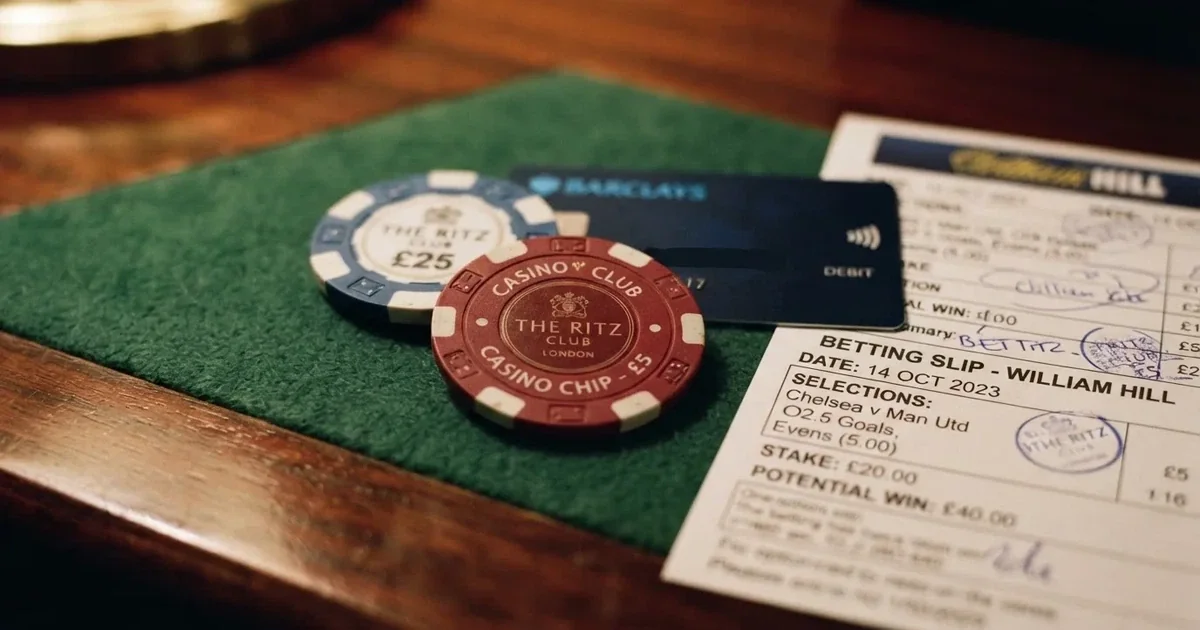
Casino sites that accept credit card UK in 2026: what the law actually permits
 Available in GB
The premise of the search is a small trap. Credit cards stopped being an option for gambling at any site serving customers in Great Britain on 14 April 2020, more than five years before this page was written, and the question “which casino sites accept credit card UK” has not had a straight answer since. What it does have is a different question behind it: a player wants to know whether a licensed British casino will let them fund an account the way they want to, what limits the licence places on the method they pick, and where the friction sits when they later try to take winnings back out. That is the question this page answers, and the credit card angle is only the start of it.

A note on what is current. The figures and licence numbers below were checked against the Gambling Commission’s public register on 23 September 2026. Where a date belongs to a specific event — the ban coming into force, a stake limit taking effect, a register download — that date is pinned to the year it actually happened.
Table of Contents
- What the April 2020 ban actually covers
- Why the Commission banned credit cards in the first place
- A British licence is the only thing that makes the question answerable
- How credit card funding shows up in the offers that replaced it
- How deposits and withdrawals actually behave at a licensed UK casino
- Where the major operators sit on credit card funding
- The credit card ban in practice — what a player actually experiences
- Side rails that look like credit cards but are not
- How an offer mentioning a deposit method works in 2026
- Where GAMSTOP and the player-protection rails actually sit
- The 10x wagering cap and what it leaves for the offer
- What an offshore site changes about this picture
- What a player should do before funding an account
- What a player on a smaller budget should know
- What a player who wants to use credit elsewhere should know
- What changed between the 2020 ban and the 2025 rule set
- Frequently asked questions
What the April 2020 ban actually covers
The Gambling Commission’s prohibition on credit card gambling took effect on 14 April 2020 and the wording does more work than most players realise. It covers every form of remote gambling that the Commission regulates — online casino, online slots, online bingo, online betting, poker — and it covers non-remote betting too, meaning the bet placed over the counter at a licensed bookmaker. The one carve-out is non-remote lotteries: a paper ticket bought in person from a National Lottery retailer can still be paid with a credit card.
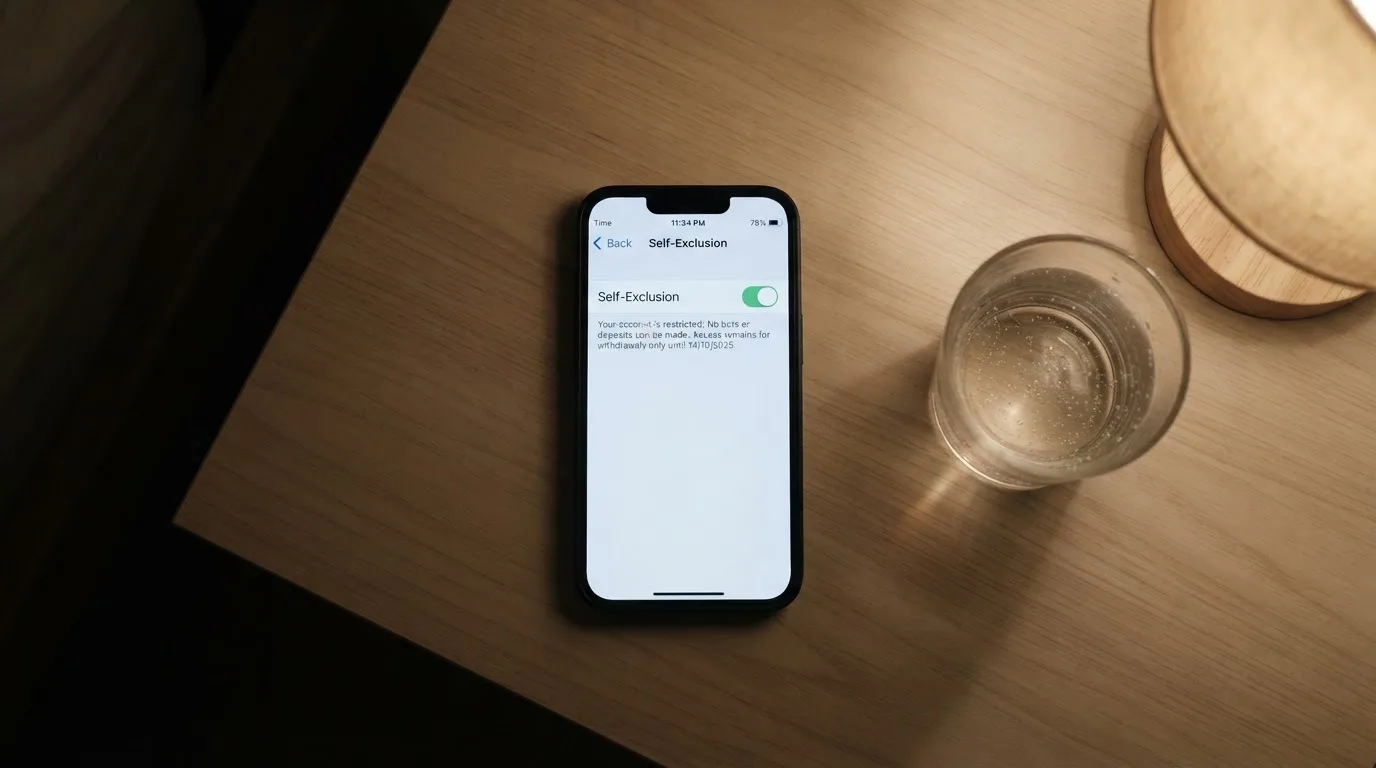
The other piece of wording that catches people out is the e-wallet clause. Loading an e-wallet with a credit card and then paying a casino from that wallet is also banned, unless the e-wallet provider can demonstrably block credit card funding of gambling transactions. In practice this means the short route — top up Neteller with a credit card, deposit from Neteller — is closed at every licensed British operator.
A consequence follows from the regulatory logic, and it is worth saying plainly. The ban is not aimed at the cardholder. It is aimed at the operator. A site licensed in Great Britain cannot accept a credit card deposit from a customer, full stop. The cardholder using one at an unlicensed offshore site is not prosecuted, but neither are they protected by anything the Commission oversees — no GAMSTOP, no ADR complaints route, no enforced segregation of funds. That trade is the reason the ban is on the operator’s side of the till.
Why the Commission banned credit cards in the first place
The Commission’s own rationale for the 2020 ban rested on two findings, both carried in the consultation and announcement material. A survey commissioned ahead of the decision classed around 22 per cent of online gamblers who used credit cards to gamble as problem gamblers, against a much smaller share of gamblers overall. UK Finance, the banking trade body, reported that around 800,000 UK consumers used a UK-issued credit card to gamble in 2018 — a sizeable pool of account holders in a position to borrow at ordinary credit card rates for what is, on its face, an entertainment expense.

The shape of harm the ban was designed to interrupt is worth naming in plain terms. A credit card transaction turns a deposit from money the gambler has into money the gambler owes. The casino never sees the difference, the gambler sees it for a billing cycle, and anyone who has run a balance over to the next statement is paying interest on money they may already have lost. The Commission’s framing of the ban was that, for the segment who needed protection most, the credit card was not a convenience, it was a lever.
That history matters for what comes next, because the same protective logic has since been extended in two related directions. The 10x wagering cap on bonuses, in force from 19 December 2025, attacks the same borrowed-money exposure from the offer side: a bonus that can be cleared only by wagering it ten times keeps the play obligation bounded. Auto-play has been banned since 31 October 2021, with a minimum 2.5-second spin interval, on the same logic that a longer pause interrupts a different kind of momentum.
A British licence is the only thing that makes the question answerable
Because the credit card ban is enforced through the operating licence, the answer to “which casino sites accept credit card UK” cannot start with the payment method — it has to start with the licence. A site holding only a Curaçao, Malta or Gibraltar licence is not authorised to take customers in Great Britain, and any operator serving British customers needs a Gambling Commission licence irrespective of where it is incorporated. Section 33 of the Gambling Act 2005 makes the unlicensed provision of gambling to people in Great Britain a criminal offence, and the Commission uses cease-and-desist notices, payment and hosting referrals and search-engine delisting to disrupt sites that try.
The Commission’s public register is the way a player verifies the licence. It is searchable online and downloadable as a CSV or Excel file. On 18 September 2026 it listed 139 businesses holding an active remote casino operating licence, and the same register’s domain list carried 1,065 active and 361 white-label domain entries, each tagged Active, Inactive or White Label. A white-label entry means the site trades under another company’s licence rather than holding its own, which is not a red flag by itself but is the reason several consumer brands appear on a single licence account.
The licence number is the second test, and it is worth knowing its shape. A remote casino licence on the register reads (account)-R-(number)-(suffix), where the leading six digits are the licence holder’s account number and the R marks the licence as remote. The suffix changes as licences are renewed or varied, so what stays stable across versions is the leading account number, and what proves a match to a consumer brand is the pairing of account number with the domain in the register.
This section serves as a starting point for readers who need to verify a casino’s licence. The register is the means to do so. The register is that means.
How credit card funding shows up in the offers that replaced it
Every deposit method a licensed British casino accepts today sits under the same rules that the credit card ban removed, and that is the frame in which a player should read any offer mentioning a payment method. The credit card ban took away one rail. It did not take away the limits on the others.
The first limit is the stake ceiling per game cycle on online slots. From 9 April 2025 the maximum stake for a player aged 25 or over is £5 per spin; from 21 May 2025 the maximum for a player aged 18 to 24 is £2 per spin. The £2 cap on younger players is set against a higher problem-gambling rate in that age group and is the single most important number a younger player carries into a session, because a stake higher than £2 is not allowed regardless of how the deposit was funded.
The second limit is the absence of a state-set deposit ceiling. There is no statutory maximum on how much a player can deposit in a day, a week or a month. What there is, from 31 October 2025, is a requirement that the operator prompt a customer to set a financial limit before the first deposit. The prompt is mandatory; the figure the player enters is not, beyond the limits the player themselves chooses.
The third limit sits on bonuses themselves. From 19 December 2025, wagering requirements on any bonus are capped at 10x the bonus amount, and mixed-product bonuses — an offer that gives casino spins on the back of a sports bet, for example — are banned. This is the rule that determines whether any welcome offer mentioning a deposit method is worth the player’s time, and the rule that the calculation in this page works against.
The fourth limit is identity verification. Name, address and date of birth must be verified before the first deposit or any play, a requirement in force since 7 May 2019. A licensed casino cannot accept a deposit, by any method, until that check has run, and the check is the reason a first deposit by any rail takes longer than a return visit.
How deposits and withdrawals actually behave at a licensed UK casino
The everyday timing question — “how long does a deposit take?” — has a different answer depending on which direction the money is moving. A deposit made by debit card, e-wallet or bank transfer is credited to the casino account almost immediately. The casino does not have to wait for the funds to clear before opening the games, because the player is not in a credit position. A deposit made from a bank transfer may take slightly longer, but is usually visible within minutes.
A withdrawal follows a different timetable. Most licensed operators run a pending period — typically 24 hours, sometimes longer — during which the player can reverse the withdrawal. After the pending period the funds are released. From there, a debit card withdrawal typically takes one to three working days, an e-wallet withdrawal minutes to a few hours, and a bank transfer one to three working days. The withdrawal speed is set by the receiving institution as much as by the casino, which is why the same casino can quote different times for the same player depending on the chosen method.
A practical point worth stating, because it comes up often. The method a deposit came in by is not necessarily the method a withdrawal can go out by. Some operators require the withdrawal to follow the deposit rail, others allow the player to pick a different outgoing method, and a few do not pay back to a credit card at all (which is academic given the ban, but illustrates how strongly the rails are separated in operator policy).
Where the major operators sit on credit card funding
Every operator in the ranking that follows is licensed by the Gambling Commission for the remote casino activity. The ranking is not a recommendation — it is a structured look at how ten licensed British casinos handle the question of credit card funding in 2026, given that none of them accept it. What differs between them is the shape of the offer that replaced it, the limits the player faces on the new rails, and the operator’s stated position on responsible gambling tooling.
Betfair — the broadest product range under one licence
Betfair runs on Gambling Commission remote casino operating licence 039411-R-319335-010, held by PPB Games Limited. Betfair.com is officially registered as an active domain. The brand spans sportsbook, exchange, casino and poker from a single account, and that breadth is the easiest way to describe what a player gets here: a single wallet that follows them across products, the same deposit rails on every product, and a single set of responsible gambling controls.
Because every product sits under one licence, the GAMSTOP enrolment is the same enrolment, the deposit limit prompt is one prompt, and the identity check before the first deposit is one check. The simplicity of a shared wallet across products is the primary draw for users of this platform.
kwiff — a smaller operator on its own account
Kwiff runs on Gambling Commission remote casino operating licence 044448-R-323408-017, held by Eaton Gate Gaming Limited. Kwiff.com appears on the register under active status. The licensee is the operator’s own, not a white-label of a larger group, which is sometimes a point in its favour for players who want to be able to read who they are paying.
The brand’s product is casino-led, with a sportsbook alongside. Its small licence account — and the correspondingly narrower customer base — usually means tighter personalisation of the responsible gambling tooling, but also fewer promotional rails than a multi-brand group. It is a straightforward, casino-focused experience for those preferring a smaller, identifiable operator.
888casino — a long-established casino licence under its own brand
888casino runs on Gambling Commission remote casino operating licence 039028-R-319297-014, held by 888 UK Limited. 888casino is listed on the register as an active domain. The brand has run under its own licence for two decades, and the operating company shares its name with the consumer brand — a structural clarity some of the bigger groups do not provide.
For players who want to know who is on the other side of a deposit, that is the practical value of the licence structure here. For players who want the casino product with the longest-running games catalogue at a major UK operator, the same point works as a quality signal.
Grosvenor Casinos — a high-street name running a remote licence
Grosvenor Casinos runs on Gambling Commission remote casino operating licence 057924-R-334666-005, held by Rank Interactive (Gibraltar) Limited. Grosvenorcasinos.com shows as an active domain. The operating company sits within the Rank group, which also runs Mecca and several other high-street gaming brands in the UK, but the remote licence is held in the Gibraltar-incorporated subsidiary rather than the UK parent — a structure that is common in the sector and is not a mark against the brand on its own.
The practical value of the licence structure here is the integration between the remote casino and the high-street estate. A Grosvenor player with a loyalty card has, in some periods, been able to use the same account balance across channels. That is not a unique feature, but it is the main reason a player who already uses Grosvenor venues in person chooses this brand for online play.
Gala Bingo — bingo-led under LC International’s licence
Gala Bingo runs on Gambling Commission remote casino operating licence 054743-R-330863-014, held by LC International Limited. Galabingo.com is recorded as an active domain. LC International is also the operating company behind Ladbrokes and Coral, and the three brands sit on the same licence account — a fact a player should know before treating them as independent operators.
The product is bingo-led, with slots and casino games alongside. For a player who wants a bingo-first product at a major UK brand, that is the offer. For a player who values a wide range of slots and a single bingo room with regular schedules, the same point applies.
Virgin Games — a white-label site on Gamesys’s licence
Virgin Games runs on Gambling Commission remote casino operating licence 038905-R-319430-022, held by Gamesys Operations Limited. Virgingames.com is listed on the register as a white-label domain. A white-label entry means the brand name trades under the operating company’s licence, with Gamesys running the platform behind the consumer-facing brand. Virgin Games is the only entry in this ranking marked White Label on the register.
For a player, the practical meaning of a white-label structure is that responsible gambling controls, dispute resolution and bonus terms are set by Gamesys and apply uniformly across all Gamesys-licensed sites. That is a stability argument rather than a flexibility argument: a player who likes what Virgin Games offers is, in practice, choosing the Gamesys platform.
PokerStars — a poker-led product with a casino alongside
PokerStars runs on Gambling Commission remote casino operating licence 039108-R-319334-026, held by Stars Interactive Limited. PokerStars.uk is found on the register with an active domain entry. The brand’s product is built around poker — cash games, tournaments, sit-and-gos — with a casino and sportsbook running on the same account.
For a player who wants poker as their primary product, the licence structure carries the same set of consumer protections as every other entry here, with the difference that the game catalogue is the draw rather than the bonus. The 10x wagering cap on bonuses applies equally.
32Red — a casino-first brand on Platinum Gaming’s licence
32Red runs on Gambling Commission remote casino operating licence 045322-R-324275-019, held by Platinum Gaming Limited. 32red maintains an active domain listing. Platinum Gaming also operates a small number of other UK-licensed casino brands, but 32Red is the consumer-facing name most players will know.
The product is casino-led, with the slot catalogue and live casino as the centre of the offer. It remains a reliable choice for players who prioritize an established UK brand and a casino-first approach.
bet365 — the largest multi-product operator on the register
Bet365 runs on Gambling Commission remote casino operating licence 055149-R-331499-004, held by Hillside (UK Gaming) ENC. Bet365.com is listed on the register as an active domain. The operating company is the UK-licensed entity of a much larger international group, and the licence here covers the casino product; a separate Commission licence covers the sportsbook.
For a player, the practical value is the depth of the product range — sportsbook, casino, live casino, poker, bingo, all under one customer account — and the infrastructure of a major operator behind it. The depth comes with the same consumer protections every licensed site carries, plus the operational capacity of a large operator, which is the reason deposits credit quickly and withdrawals clear within stated windows more often than at smaller sites.
MrQ — a casino-led independent on its own licence
MrQ runs on Gambling Commission remote casino operating licence 060629-R-337532-004, held by Tek Fox Ltd. MrQ.com is listed on the register as an active domain. Tek Fox is the operating company’s own, with no parent group of comparable scale, which puts MrQ in the smaller-operator category alongside kwiff.
The product is casino-led, with a stated position on no-wagering bonuses that sits comfortably under the 10x cap from 19 December 2025. For a player who wants a casino-first brand with a transparent bonus structure and a clearly named operating company, that is the offer.
The credit card ban in practice — what a player actually experiences
The daily reality of the credit card ban is narrower than the rule itself, and worth spelling out.
A licensed UK casino’s cashier page lists the deposit methods it accepts, and credit cards are not among them. A player who tries to deposit from a credit card by entering the card details into the casino’s payment form will see the transaction declined. The decline usually comes from the issuing bank rather than the casino, because most UK banks now block gambling transactions on credit cards at the network level — Mastercard and Visa both carry merchant categories that allow a bank to identify a transaction as gambling and decline it.
The bank-level blocking is the second layer of the same rule. HSBC, for example, declines credit card payments it identifies as gambling using the merchant category assigned by Mastercard or Visa, and the restriction applies across the bank’s credit card range with no option to remove it. HSBC itself states that it cannot guarantee every gambling transaction will be blocked, and a customer remains liable for any that go through. Other major UK banks apply similar rules.
A different kind of bank-level blocking exists for debit cards, though without the legal force of the credit card ban. Monzo launched an in-app gambling block in 2018, the first UK bank to do so, and over 275,000 Monzo customers have since activated it. The block works by declining any card payment to a merchant coded as gambling, with a customer-chosen cooldown period of 2 days up to 1 year during which the block cannot be switched off. This is a voluntary tool, not a regulatory requirement, and customers of most other UK banks can request an equivalent block by contacting their bank.
The consequence for a player is straightforward. A credit card is not a deposit option at any licensed UK casino, and a UK-issued credit card is increasingly difficult to use at any gambling merchant at all. The payment rails a player uses instead are debit card, bank transfer and approved e-wallets, with the same licence-level protections applying across all three.
Side rails that look like credit cards but are not
Two payment methods commonly confused with credit card funding are worth treating on their own terms, because the legal position differs from the credit card ban.
Apple Pay — tokenised, not credit by default
Apple Pay is developed and operated by Apple Inc., launched on 20 October 2014 and supporting UK-issued cards from 14 July 2015. Apple Pay uses tokenisation: the actual card number is replaced with a device-specific tokenised Device Primary Account Number, and a dynamic security code is generated for each transaction. In-store payments use NFC to communicate wirelessly with contactless terminals.
Apple Pay is not, on its own, a credit card. It is a way of paying from a card the user has already loaded into Apple Wallet, which can be a debit card or a credit card. Where the underlying card is a credit card, the Gambling Commission’s ban still applies, because the underlying funding source is what the rule targets. A casino running on Apple Pay can technically take the payment, but the operator remains responsible for ensuring the underlying funding is not credit. In practice, no licensed British operator accepts Apple Pay funded by a UK credit card.
The biometric authentication on an iPhone with Face ID is a double-click of the side button; on a model with Touch ID, a double-click of the Home button. None of this changes the credit card position, but it changes the experience of paying on a phone enough to matter to a player who wants to deposit from a mobile device without entering card details each time.
AstroPay — an e-money institution, not a credit facility
AstroPay was founded in 2009, is headquartered in Uruguay, and operates a global digital wallet for online payments, virtual and physical debit cards and peer-to-peer transfers. Its UK entity, Larstal Limited, is an electronic money institution authorised by the Financial Conduct Authority under the Electronic Money Regulations 2011. AstroPay spun off its payment-processing business, dLocal, as a separate company in 2016.
AstroPay is not a credit facility. A user loads an AstroPay wallet from a bank account or card and pays from that balance. The credit card ban does not apply to AstroPay as such, but the e-wallet clause of the 2020 ban applies to any wallet funded by a credit card: unless AstroPay can demonstrably prevent credit card funding of gambling transactions, a credit-card-funded AstroPay deposit is banned. AstroPay’s UK entity is FCA-authorised as an e-money institution, which is a different regulator from the Gambling Commission and does not give it any special status under the gambling rules.
How an offer mentioning a deposit method works in 2026
The most useful calculation a reader can do on a page like this is the one that turns a bonus headline into the time it actually costs to clear. The 10x wagering cap from 19 December 2025 sets the upper bound on this arithmetic for any licensed UK casino, and the rule means the work is bounded in a way it was not before. The value of this calculation is in showing how bounded the requirement really is.
A worked example, with the assumption that only the bonus amount is wagered: a £100 bonus at the 10x cap means £1,000 of required turnover before the bonus becomes withdrawable. At a £5 maximum stake per spin — the cap for players 25 and over from 9 April 2025 — that is 200 spins. At the 2.5-second minimum spin interval in force since 31 October 2021, that is roughly 8 minutes and 20 seconds of play.
A £200 bonus at the same 10x cap means £2,000 of turnover, 400 spins at £5, around 16 minutes and 40 seconds at the floor interval. A £500 bonus at the same cap means £5,000 of turnover, 1,000 spins at £5, around 41 minutes and 40 seconds at the floor interval.
The figure should be read as a band rather than a single number. A player who wagers more than the bonus amount — and most do, because most players play on after the bonus is cleared — multiplies every term above by the ratio of actual turnover to bonus turnover. A player who plays at lower stakes than the £5 cap multiplies the spin count upward and the time per spin roughly the same. The band is therefore short for a small bonus at the maximum stake and considerably longer for a larger bonus at a smaller stake, and the same bound applies whatever brand a player chooses, because the cap is statutory.
What the band gives a reader is a check on a marketing claim. A welcome offer described as “easy to clear” means, at the 10x cap, the easiest a £100 bonus can be is the 8 minutes and 20 seconds above — and only if the player wagers exactly the bonus amount and only at the maximum stake. A real session runs longer than that, and the gap between the floor and a real session is the marketing margin.
Where GAMSTOP and the player-protection rails actually sit
GAMSTOP is the national online self-exclusion scheme, mandatory for every online Gambling Commission licence since 31 March 2020. A player registers with GAMSTOP for a period of six months, one year or five years, and the registration cannot be cancelled early. Every licensed UK casino is required to check the GAMSTOP register before allowing a new account to be opened, and the check covers every payment rail — credit card if it were accepted, debit card, bank transfer, e-wallet. The credit card ban and the GAMSTOP enrolment are independent rules, but both apply to the same account from the same moment.
A financial vulnerability check runs at £150 net deposits in a rolling 30-day window, in force from 28 February 2025. The check uses publicly available data only — credit file, court records, the insolvency register — and is a one-off pass rather than a continuous monitor. Wider financial risk assessments have been announced but are not yet in force. None of these tools depend on the payment method the player uses to fund the account; they apply to the account itself.
A reality check, in the form of an on-screen prompt, runs during slot sessions, with the timing set by the operator within a Commission-prescribed minimum. Time-out, the shorter voluntary exclusion from a single site, sits alongside GAMSTOP. Auto-play has been banned since 31 October 2021, and a slot spin may not be faster than 2.5 seconds, with losses disguised as wins banned in the same rule set.
The National Gambling Helpline, run by GamCare, and the GambleAware website are the two signposted routes for a player who wants help outside the casino. Both are free and confidential.
The 10x wagering cap and what it leaves for the offer
The 19 December 2025 rule change is the largest shift in how a UK welcome offer reads since the credit card ban itself, and it is worth a paragraph in its own right because every bonus mentioned above and below this line has to clear the cap.
The cap is on wagering requirements. A bonus that requires the bonus amount to be wagered ten times is at the maximum the rule allows; a bonus that requires it more than ten times cannot be marketed at a licensed UK casino. Mixed-product bonuses — an offer that gives casino spins on the back of a sports bet, for example — are banned outright.
The consequence is that an offer’s headline becomes, in practice, the offer’s ceiling. A bonus of £100 with 10x wagering is the most demanding bonus the operator can run, and the calculation above shows what that ceiling looks like at the floor of stake size and spin interval. A bonus of £50 with 10x wagering is half the time, half the turnover, half the spin count, and is the most generous shape an offer can take under the cap.
The effect on player choice is small but real. A player choosing between two offers of different sizes can do the comparison in turnover and time, with no hidden multiplier above 10x to discount. A player choosing between an offer with bonus spins and one with a cash bonus can do the same comparison, knowing that the wagering multiple is the same and the difference is in the type of stake the offer rewards.
What an offshore site changes about this picture
A site licensed only outside Great Britain — in Curaçao, Malta, Gibraltar, the Isle of Man — is not authorised to take customers in Great Britain, and Section 33 of the Gambling Act 2005 makes the unlicensed provision of gambling to people in Great Britain a criminal offence. A player who uses such a site is not prosecuted, but the protections built up across this page do not apply.
The most concrete loss is GAMSTOP. An offshore site is not part of the national self-exclusion scheme, which means a player who has registered with GAMSTOP to take a break from gambling can still reach an offshore site. The second loss is the dispute resolution route. A licensed UK casino is required to be a member of an approved ADR provider, and a player with a complaint has a defined path. An offshore site has no equivalent obligation to a UK customer. The third loss is fund segregation: a licensed UK casino is required to keep customer funds in a segregated account, with the level of segregation disclosed; an offshore site is not bound by the same rule.
The Commission’s response to unlicensed sites is operational. It issues cease-and-desist notices, refers sites to payment providers and hosting companies for disruption, and works with search engines to delist them. It does not have the power to order ISP-level blocking, which means an unlicensed site remains reachable to a player who knows the address.
A player searching for credit card gambling from inside Great Britain will, in 2026, find licensed British sites and a long tail of offshore sites. The licensed ones carry every protection named above. The offshore ones do not. The presence of a credit card deposit option on an offshore site is itself a marker of where that site sits relative to UK consumer protection — a site that takes credit cards from UK customers is, by definition, not a UK-licensed site.
What a player should do before funding an account
The first check is the licence. The Gambling Commission’s public register is searchable by operator name and by domain, and the entry a player finds should match the brand and the URL of the site they intend to fund. A match on the licence account number and the domain status (Active or White Label) is what confirms a real, current licence.
The second check is GAMSTOP. A player who wants to take a break from gambling should register with GAMSTOP before funding any account. The registration applies to every licensed UK casino, not to a single one, and the period — six months, one year or five years — runs from the date of registration and cannot be cancelled early.
The third check is the deposit limit prompt. From 31 October 2025, every licensed UK casino must prompt the player to set a financial limit before the first deposit. A player who wants a working budget can set the figure here and use it as the binding limit on the session. The operator may suggest a figure but cannot impose one, and the limit set is the limit that applies.
The fourth check is the welcome offer. The 10x wagering cap from 19 December 2025 puts a ceiling on every bonus. A player choosing between offers should compare the turnover required and the time it costs at the stake and spin interval that suits the session, using the calculation above as the floor of the band.
The fifth check is the withdrawal route. A licensed UK casino will pay back to the same method the deposit came in by, with the debit card, bank transfer and e-wallet options all available. The player should know which method the casino will pay back to before the first deposit, because switching the outgoing rail is sometimes restricted and a withdrawal that takes three working days to a debit card is a different experience from a withdrawal that takes minutes to an e-wallet.
What a player on a smaller budget should know
A few practical points cluster around the credit card question for a player with a small bankroll, because the credit card ban changed the experience at the low end more than at the high end.
A credit card deposit, where it was allowed, was effectively a free loan for the duration of the billing cycle. A player with a small bankroll could fund a session on a Tuesday and pay it back from their next wages on Friday, with no interest if the statement was settled in full. That float is gone. Every deposit from a debit card, bank transfer or e-wallet comes out of money the player already has, and the float is replaced by the deposit limit prompt and the reality check.
The minimum deposit at a licensed UK casino is set by the operator, not by the Commission. Most operators set £5 or £10 as the floor, and a few set £20. A player on a £50 session budget is at the floor of every deposit the casino accepts, and the £5 stake cap for younger players (18-24) is the same number as the typical minimum deposit, which means a player in that age group can fund exactly one spin per deposit at the maximum stake.
The wagering cap interacts with a small bankroll. A £10 bonus at the 10x cap means £100 of turnover, 20 spins at the £5 stake, around 1 minute and 23 seconds at the floor spin interval. The arithmetic makes the offer small in absolute terms, but the ratio of bonus to required turnover is the same as for a £100 bonus, and the time it costs is correspondingly short.
The credit card ban is also relevant for the bank side of the same low-budget player. Some UK banks apply daily or monthly caps on gambling transactions across all cards and all casinos, separate from the casino’s own deposit limit. A player on a tight budget should know their bank’s position before the first deposit, because a bank-imposed cap is the same kind of friction as the casino-imposed limit but works across every site the player visits.
What a player who wants to use credit elsewhere should know
A player who simply wants to use a credit card for an online purchase, including online gambling where it remains legal, should know that the UK Gambling Commission’s ban is enforced at the operator level. A credit card is not declined because the issuing bank thinks gambling is a bad idea in the abstract; it is declined because the merchant is identified as a gambling operator and the operator’s licence does not permit the transaction. The decline is therefore a property of the merchant, not of the customer.
A credit card is also declined at the bank level for many UK customers. HSBC declines credit card payments it identifies as gambling using the merchant category assigned by Mastercard or Visa, and the restriction applies across the bank’s credit card range with no option to remove it. Other major UK banks apply similar rules. A player who holds a credit card and tries to use it at a gambling merchant will, in most cases, see a decline at the bank level rather than the merchant level.
The customer’s liability for a transaction that does go through is, per HSBC’s own statement, the customer’s. The bank cannot guarantee every gambling transaction will be blocked, and a customer who successfully pays for a gambling transaction on credit remains liable for the amount. The Gambling Commission does not regulate that liability — it is a matter of the card’s terms and conditions with the issuer.
The wider implication is that a credit card is no longer a useful payment rail for a UK player who wants to gamble. The combination of operator-level prohibition, bank-level blocking, and customer liability for any transaction that does go through makes the rail effectively closed, and the player who wants to gamble online at a licensed UK casino uses a debit card, bank transfer or e-wallet instead.
What changed between the 2020 ban and the 2025 rule set
The six years between the credit card ban and the 2025 wagering cap saw several related rule changes, each tightening the same protective frame.
In 2021, auto-play was banned and the 2.5-second spin interval was introduced. In 2022 and 2023, the Commission tightened rules on bonus design, particularly around the structure of free-spin offers and the visibility of bonus terms. In 2024, the consultation on financial vulnerability checks concluded with a £150 net deposits threshold for the rolling 30-day check, in force from 28 February 2025. In 2025, the deposit limit prompt took effect on 31 October 2025, and the wagering cap and bonus-mixing ban took effect on 19 December 2025.
The stake limits — £5 for players 25 and over from 9 April 2025, £2 for 18-24 from 21 May 2025 — were a parallel intervention, layered on the same protective logic. A stake cap is the simplest possible intervention: a rule that says a single spin cannot cost more than a fixed amount, regardless of how the player is funding it or what the bonus structure rewards.
The 2025 rule set is the most restrictive since the 2020 ban, and the wagering cap is the change that affects what a bonus looks like to a player. The combination of the stake cap, the spin interval, the wagering cap, the deposit limit prompt, the GAMSTOP enrolment and the financial vulnerability check is the rule set a licensed UK casino runs under in 2026, and every offer, bonus and promotion on a UK-licensed site sits under that combined set.
Frequently asked questions
Is it legal for a licensed UK casino to accept credit card?
No. The Gambling Commission’s ban on credit card gambling took effect on 14 April 2020 and applies to every form of remote gambling plus non-remote betting. The ban covers credit cards routed through e-wallets as well as direct card deposits, with the carve-out for non-remote lotteries only. Any site licensed by the Commission cannot accept a credit card deposit from a customer, full stop.
Is there a minimum deposit when paying with credit card?
The credit card question is academic at a licensed UK casino, because no such casino accepts credit card deposits. The minimum deposit at a licensed UK casino is set by the operator, not by the Commission, and most sit at £5 or £10. From 31 October 2025 the operator must prompt a customer to set a financial limit before the first deposit, which is a separate rule from any minimum.
How long does a credit card deposit take to show up in my account?
A deposit made by debit card, e-wallet or bank transfer at a licensed UK casino is usually credited to the casino account within minutes. Bank transfer may take slightly longer. A withdrawal follows a different timetable — a pending period of around 24 hours, then the funds released, then one to three working days for a debit card or bank transfer, minutes to hours for an e-wallet.
Do I need to verify my identity before depositing with credit card?
Identity verification applies to every deposit method at a licensed UK casino, not specifically to credit card. Name, address and date of birth must be verified before the first deposit or any play, in force since 7 May 2019. The check is the reason a first deposit by any rail takes longer than a return visit, regardless of the funding method.
Does GAMSTOP self-exclusion cover an account funded with credit card?
GAMSTOP enrolment is independent of the payment method. The scheme is mandatory for every online Gambling Commission licence since 31 March 2020, and the check runs against the customer, not the funding rail. A player who has registered with GAMSTOP cannot open a new account at any licensed UK casino, regardless of whether the intended deposit was by credit card, debit card, bank transfer or e-wallet.
Are there any fees for depositing with credit card?
No licensed UK casino accepts credit card deposits. Deposits by debit card, e-wallet or bank transfer at a licensed UK casino are typically free of operator-side fees, though a small number of operators apply a fee on certain rails. A player should check the cashier page for any fee disclosure before the first deposit, but the absence of fees on the major rails is the norm rather than the exception.
Created by the ”livecasinoguideuk” editorial team.