
Aviator at UK-licensed casinos: how the crash game works, what it costs, and which brands are on the register
 Available in GB
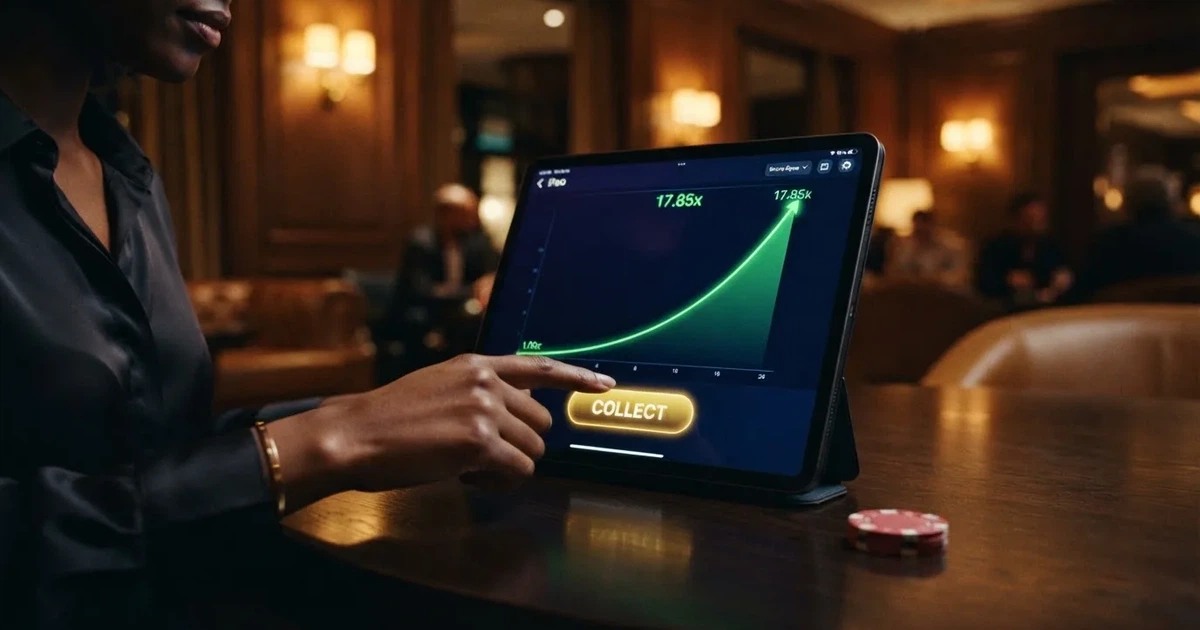
Aviator is the crash-style game whose curved flight-path line has shown up in the lobby of just about every licensed UK casino in the last few years. It looks simple: a multiplier ticks up from 1.00x, and the player has to cash out before the round randomly crashes. That simplicity is the marketing pitch, and it is also where most of the questions start. Is it legal? Is the multiplier curve really random? Does a welcome bonus cover it? Can a player fund an account with Bitcoin and stay anonymous? What does a round actually cost the bankroll once the wagering requirement is finished?
Those are the questions this page sets out to answer against the UK Gambling Commission’s rules, the public licence register, and the way the welcome offers tied to Aviator are actually written. The short version: only a Gambling Commission licensee may take UK money on Aviator, the same GAMSTOP self-exclusion and identity checks apply as to any other casino game, the crash-game format means a round can be over in two and a half seconds, and the 10x wagering cap that came in on 19 December 2025 is the rule that decides how heavy a “big bonus” can really be.
23 September 2026 · verified against the Gambling Commission’s public register of remote casino operating licences.
Table of Contents
- Why the Gambling Commission decides what Aviator can look like in the UK
- What GAMSTOP and the deposit-limit rules do to an Aviator session
- Cryptocurrency deposits, anonymity and the reality at a GB-licensed site
- Welcome bonuses tied to Aviator and what the 10x wagering cap does to them
- Mobile play, browser play and the dedicated-app question
- The Aviator paytable: how a round actually runs
- The featured operators: what the licence register says about each
- The full comparison, side by side
- What the 10x wagering cap costs in real terms: the clearing arithmetic
- Putting it together: the choice a UK player is actually making
- Frequently asked questions
Why the Gambling Commission decides what Aviator can look like in the UK
A crash game such as Aviator is a casino game for the purposes of the Gambling Act 2005, and a UK player may only stake real money on one at a site holding a Gambling Commission remote casino operating licence. The Commission’s public register is the test of that. On 18 September 2026 the register listed 139 businesses holding an active remote casino operating licence, with 1065 active domains and 361 white-label domain entries attached to them. A white-label site trades under another company’s licence — Virgin Games, for example, is a white-label domain of account 38905, Gamesys Operations Limited, which holds licence 038905-R-319430-022.

The licence number format consists of the licence holder’s account number, followed by the “R” designator for a remote (online) licence, and a final sequence counting how many licences that account holds. Paddy Power’s domain sits against account 39411, PPB Games Limited, and the licence number is 039411-R-319335-010. bet365 is account 55149, Hillside (UK Gaming) ENC, and the licence is 055149-R-331499-004. The format is the same across all ten operators on this page, and it is the single piece of information a reader can use to verify a brand against the register themselves.
The rules that govern how Aviator is offered flow from that licence. Three of them matter most for the player.
Game-cycle stake limits do not apply to Aviator. The Gambling Commission’s online slot stake limits — £5 per game cycle for adults aged 25 and over, and £2 for those aged 18 to 24 — apply only to reel-based online slots. The Commission’s own guidance is explicit that the limits do not extend to other casino games such as baccarat, roulette or blackjack, and a crash game sits in the same category: it is not a slot, so the £5 and £2 ceilings do not cap an Aviator stake. What does govern an Aviator round is the minimum game cycle: the Commission’s rule that a slot spin may not be faster than 2.5 seconds applies to slots only. The crash game’s “spin” is the round itself, and a round can be over well inside two and a half seconds; the slot timing rule was not designed for it and does not bind it.
Auto-play is banned on slots, but the question for crash games is different. The Commission’s permanent ban on auto-play for online slots came in because the feature caused players to lose track of their activity. Aviator is a real-time multiplayer game in which the player chooses when to cash out on each round, and the format itself prevents the slot-style “spin and watch” pattern that auto-play encourages. Whether an operator disables auto-betting tools on Aviator is a brand-level decision, not a Commission rule.
Credit cards are banned, and identity is verified before the first deposit. Since 14 April 2020 no UK-licensed operator may accept a credit card for gambling, including credit-card-funded e-wallet deposits. Since 7 May 2019 name, address and date of birth are verified before a player can deposit or wager. The “anonymous crypto deposit” route that exists at offshore sites is closed at a GB-licensed operator: the deposit may be in Bitcoin, but the account behind it must be a verified identity.
What GAMSTOP and the deposit-limit rules do to an Aviator session
Every UK-licensed online casino must enrol its customers in GAMSTOP, the national online self-exclusion scheme. GAMSTOP periods run for six months, one year or five years and cannot be cancelled early. If a self-exclusion is in force, the Aviator lobby still loads, the multiplier curve still rises, and the cash-out button still appears on screen — but the real-money stake cannot be placed. That is by design: the lock-out applies to the account, not to a single game.

Two newer rules shape what an Aviator session actually feels like.
Since 31 October 2025 a UK operator must prompt a customer to set a financial limit before accepting the first deposit. The limit is the player’s choice, but the prompt is mandatory, and a session that runs past it triggers a reality check the operator must surface. Since 28 February 2025 a financial vulnerability check has also run at £150 of net deposits in a rolling 30 days, using public data only. The check is automated and is designed to catch the early signs of a player spending beyond their means — it does not block play on its own, but it produces a follow-up that may.
The reverse-withdrawal ban has been in force since 31 October 2021: a player who requests a withdrawal cannot then re-gamble those funds. On a fast-format game such as Aviator, where the round can be over in seconds, that rule matters more than it does on a slow table game — the impulse to redeposit a pending withdrawal is exactly what the rule was designed to interrupt.
A player who feels their play getting away from them has three routes. The first is a time-out, set inside the casino’s responsible-gaming tools, for anywhere from 24 hours to six weeks. The second is GAMSTOP self-exclusion, which bars the player from every UK-licensed online operator for the chosen period. The third is the National Gambling Helpline, run by GamCare, and the wider support that GambleAware funds. None of these are Aviator-specific: they apply to every game in the licensed lobby.
Cryptocurrency deposits, anonymity and the reality at a GB-licensed site
Aviator is a frequent fixture in the “crypto casino” marketing of offshore brands, and search interest in phrases such as “Aviator crypto casino” and “Bitcoin casinos with Aviator” reflects that. At a UK-licensed site the picture is narrower than the marketing suggests.
Identity verification is mandatory. The 7 May 2019 verification rules require name, address and date of birth to be confirmed before the first deposit or any play. A Bitcoin deposit does not change that. The deposit arrives in pounds (or rather, the operator’s settlement layer converts it), and the account behind it must still be a verified UK identity. The “anonymous play” promise that some offshore sites make is not on offer at a GB-licensed casino — there is no version of it that complies with the verification rules.
Crypto as a funding method is operator-level, not Commission-mandated. Some GB-licensed brands do accept Bitcoin or other cryptocurrencies through a third-party payments processor, but it is a feature of the operator’s cashier, not a right conferred by the licence. Other licensed brands accept only debit cards and e-wallets. Where a brand accepts crypto, the same deposit-limit prompt and the same GAMSTOP enrolment apply as for any other funding method.
The Commission’s enforcement arm reaches the offshore route. Section 33 of the Gambling Act 2005 makes it an offence to provide gambling to people in Great Britain without a Commission licence, wherever the operator is based. A Curaçao or Malta licence is not a substitute. The Commission disrupts unlicensed sites through cease-and-desist notices, payment and hosting referrals, and search-engine delisting — but it has no ISP-blocking power, so a UK player who actively seeks out an offshore site can still reach one. What they give up on doing so is the protection: no GAMSTOP, no Commission complaints route, no approved ADR provider, and no obligation on the operator to honour the stake limits, the spin-speed rule, or the 10x wagering cap.
For a reader comparing the licensed and offshore routes on Aviator specifically, the trade-off is between two things the offshore pitch offers (a crypto-native cashier and looser bonus terms) and three things the licensed route provides (verified identity, mandatory GAMSTOP enrolment, and the ADR complaints route). The arithmetic below on the wagering cap gives a sense of what “looser bonus terms” actually costs the player when the offer is over.
Welcome bonuses tied to Aviator and what the 10x wagering cap does to them
Welcome offers on Aviator follow the same shape as welcome offers on slots. The headline reads as a large multiple of the first deposit; the small print sets a wagering requirement — the number of times the bonus has to be turned over before it can be withdrawn — and a list of which games contribute to it.
Since 19 December 2025 the Gambling Commission has capped wagering requirements on casino bonuses at 10x. The cap applies to the bonus amount, the deposit amount, or the combined amount, depending on how the offer is written, and it has ended the 30x, 40x and 65x multiples that licensed brands used to publish. Mixed-product bonuses — a free bet on sport bundled with casino spins, for instance — are also banned under the same rule. The effect is that the largest welcome offers at licensed UK casinos now sit below the threshold that was common in the market a year before.
How long it actually takes to clear a bonus matters more than the headline. A 10x requirement on a £100 bonus is £1,000 of qualifying turnover; on a £250 bonus it is £2,500; on a £500 bonus it is £5,000. At an Aviator stake of £5 per round, £1,000 of turnover is 200 rounds, and at the game’s typical round length of a few seconds that is a short session of continuous play. At £1,000 of turnover against a 96% return-to-player game, the expected loss across the clearing period is £40 — close to half the bonus in itself. Two points follow.
A bigger bonus is not automatically a better bonus. Once the wagering multiple is fixed by the cap, the only lever a brand has to make an offer look larger is the headline deposit match or the free-spins bundle. Every extra pound of bonus requires its own turnover at the same multiple, and the expected loss scales with it.
A lower wagering multiple is worth more than a higher headline. A bonus at 5x is half the clearing work of the same bonus at 10x, and half the expected loss, even before the player reads the game-weighting table. The 10x cap is a ceiling, not a floor; the better offers in the licensed market sit well below it.
What the cap does not do is abolish the small print. Game weighting — the percentage of each stake that counts towards wagering — still varies by game and by operator, and Aviator’s contribution at any given brand is a line a player should read before claiming. Maximum cash-out caps, time limits on clearing the bonus, and “play only the bonus amount” conditions are still in force. The 10x cap is the headline change; the conditions around it are where the real cost of a bonus lives.
Mobile play, browser play and the dedicated-app question
Aviator’s format suits a phone. The multiplier curve, the cash-out button and the live chat below the flight path are designed for a vertical screen, and the round is short enough that a player can pick it up between other tasks. Every GB-licensed brand on this page runs a mobile-optimised browser version, and the lobby is reachable through the same login as the desktop site.
A dedicated app is a different question. Some licensed brands publish a native app on iOS and Android; others run a mobile-only progressive web app that installs through the browser; others keep their full offering inside the browser and do not publish a separate app at all. There is no Gambling Commission rule that requires a brand to publish a native app, and there is no bonus implication either way — the wagering requirement on a bonus claimed on mobile is the same as one claimed on desktop.
What does matter is the round itself. Aviator is a real-time game with no pause button and no “spin and think” interval beyond the few seconds the multiplier takes to climb. On a desktop with a second screen beside it, that pace is one thing; on a phone in a queue, it is another. The two and a half second slot timing rule does not bind Aviator — the crash game is not a slot — but the underlying point the rule was designed to address (a player losing track of time during fast-repeat play) is exactly the shape an Aviator session can take. The reality-check prompt the operator surfaces after a set period is the same one that fires on a slot session, and it fires for the same reason.
The Aviator paytable: how a round actually runs
Aviator was released by Spribe in 2019 and is described by the studio’s CEO as the first true multiplayer crash game in the regulated igaming space. Spribe was founded in 2018 and has reported more than 42 million active users and around 350,000 bets per minute across more than 5,000 operators worldwide.
A round works as follows. The multiplier starts at 1.00x and rises along a curve the player sees in real time. At any moment before the round crashes the player can press the cash-out button; if they do, their stake is returned multiplied by the value on screen at that moment. If they do not, and the round crashes before they cash out, the stake is lost. A second stake on the same round, with its own independent cash-out point, is a standard feature.
The maximum multiplier a round can reach is unbounded in principle — the curve keeps rising until it crashes — but in practice most rounds crash below 10x and the rare high-multiplier round is the marketing image the studio leads with. The “max multiplier” is therefore less a fixed ceiling than a distribution: long tails of low multipliers punctuated by occasional big numbers, exactly the shape that makes the format exciting and exactly the shape that makes it expensive for the player over a long session.
Three things on the paytable are worth taking away for a reader comparing offers.
Two bets per round change the risk arithmetic. A player who splits a £10 stake into two £5 bets can cash one out early at, say, 1.40x for a small win and let the second ride for a higher multiplier. That hedge is a feature of the format and not a strategy from outside it.
The return-to-player figure is set by the studio and disclosed by the operator. Spribe publishes a theoretical RTP for Aviator that licensed operators carry into their game-info pages. The figure sits in the high-90s as for most modern crash games, and the variance is high by design — that is what makes the multiplier curve worth watching.
Provably-fair verification is built in. Aviator’s rounds are hashed before they run, and the hash is published after the crash so a player can verify that the result was not altered. This is a feature of the studio’s technology, not a Gambling Commission rule, but it is the reason the marketing can claim the curve is “provably fair” without the claim being empty.
The featured operators: what the licence register says about each
The ten operators below are the brands on this page, each taken from the Gambling Commission’s public register against a remote casino operating licence that was active on 18 September 2026. None of the brands is presented as a recommendation; the section is a comparison of what the register actually says about them, side by side on the criteria a reader comparing Aviator offers will care about. The “Aviator support” column reflects what the public register and the brand’s own published game library together confirm; where the register does not name a specific game title for an account, the column is left blank rather than guessed.
Paddy Power
Paddy Power’s UK domain is Paddy Power, listed on the register as an active domain of account 39411, PPB Games Limited, which holds the active remote casino operating licence 039411-R-319335-010. The brand runs a large multi-product lobby with a deep slots catalogue, a sportsbook and a busy live-casino section. Aviator availability in the public-facing game library is the point a player should check on the brand’s site directly, because the register does not enumerate individual game titles by account. Paddy Power’s breadth is its appeal and its cost — a multi-product welcome offer can compete on headline size, and the 10x wagering cap still applies across the bonus.
Unibet
Unibet’s UK domain is unibet.co.uk (account 45322, Platinum Gaming Limited), holding remote casino licence 045322-R-324275-019. Unibet is one of the longer-established European brands in the licensed UK market, with a casino product that sits alongside its sportsbook and poker client. The same wagering cap and the same verification rules apply here as at every other brand on this page; the differences are in the welcome offer structure and the live-casino depth.
Sky Vegas
Sky Vegas’s domain is Sky Vegas, listed on the register as an active domain of account 65519, Bonne Terre Gaming Limited, which holds the active remote casino operating licence 065519-R-339675-002. Sky Vegas positions itself as a slots-led brand, which is relevant for a reader comparing the Aviator product specifically: the deeper a brand’s slots catalogue, the more likely Aviator is to sit in the same “instant win” sub-lobby as the slot titles. The 10x wagering cap and the financial-limit prompt before the first deposit apply in the same way as elsewhere.
kwiff
kwiff’s domain is kwiff (account 44448, Eaton Gate Gaming Limited), holding remote casino licence 044448-R-323408-017. kwiff focuses on surprise odds enhancements on sports, with the casino product running alongside the sportsbook in a focused lobby.
bet365
bet365’s domain is bet365 (account 55149, Hillside (UK Gaming) ENC), holding remote casino licence 055149-R-331499-004. bet365 runs one of the largest UK-licensed casino products. Aviator’s presence in the game library is a question to check at the brand level, and the brand’s own responsible-gaming tools — deposit limit, time-out, GAMSTOP enrolment — are the same ones every other operator on this page must surface.
MrQ
MrQ’s domain is MrQ (account 60629, Tek Fox Ltd), holding remote casino licence 060629-R-337532-004. MrQ is a smaller, slots-led brand that built its early reputation on no-wagering free spins, and the 10x wagering cap aligns with the brand’s historical offer structure.
Midnite
Midnite’s domain is Midnite (account 42647, Dribble Media Limited), holding remote casino licence 042647-R-321653-022. Midnite launched as a sportsbook-led brand and has expanded into casino recently. Newer casino offerings may carry a narrower game library than the longer-established brands above.
Virgin Games
Virgin Games’ domain is Virgin Games (account 38905, Gamesys Operations Limited), holding remote casino licence 038905-R-319430-022 (white-label). The licence terms flow through from Gamesys, and the player experience is governed by the same regulatory requirements as other brands on the licence.
BetVictor
BetVictor’s domain is BetVictor (account 39576, BV Gaming Limited), holding remote casino licence 039576-R-319370-028. BetVictor runs a long-standing UK-licensed casino and sportsbook. The welcome offers have varied over the years, but the 10x wagering cap applies to all current bonus offers.
Grosvenor Casinos
Grosvenor Casinos’ domain is Grosvenor Casinos, listed on the register as an active domain of account 57924, Rank Interactive (Gibraltar) Limited, which holds the active remote casino operating licence 057924-R-334666-005. Grosvenor is unusual on this list in being a brand with a high-street casino estate behind the online product — the same licence runs both the high-street floors and the online casino. For a reader comparing the depth of the live-casino product or the table-game offering alongside Aviator, that dual presence is the relevant fact, and the 10x wagering cap and the responsible-gaming regime apply in the same way as elsewhere.
The full comparison, side by side
The table below sets the ten operators next to each other on the columns a reader comparing Aviator offers at licensed UK casinos will actually use: brand, the licence holder and the GB remote casino licence number, the domain status on the register (active or white-label), and Aviator support as the public register and the brand’s published game library together confirm it. The register does not enumerate individual game titles by account, so the Aviator column is the article-language no-data marker for every row — a player should check the brand’s own lobby for the current title list rather than assume from this page alone.
| Brand | Licence holder and GB remote casino licence | Domain status on the register | Subject support |
|---|---|---|---|
| Paddy Power | PPB Games Limited · 039411-R-319335-010 | Active | — |
| Unibet | Platinum Gaming Limited · 045322-R-324275-019 | Active | — |
| Sky Vegas | Bonne Terre Gaming Limited · 065519-R-339675-002 | Active | — |
| kwiff | Eaton Gate Gaming Limited · 044448-R-323408-017 | Active | — |
| bet365 | Hillside (UK Gaming) ENC · 055149-R-331499-004 | Active | — |
| MrQ | Tek Fox Ltd · 060629-R-337532-004 | Active | — |
| Midnite | Dribble Media Limited · 042647-R-321653-022 | Active | — |
| Virgin Games | Gamesys Operations Limited · 038905-R-319430-022 | White-label | — |
| BetVictor | BV Gaming Limited · 039576-R-319370-028 | Active | — |
| Grosvenor Casinos | Rank Interactive (Gibraltar) Limited · 057924-R-334666-005 | Active | — |
What the table does not say is as informative as what it does. The licence numbers confirm that every brand is on the register as a remote casino operating licence holder; the licence-holder names confirm that several familiar consumer brands (Virgin Games and the wider Gamesys estate, Grosvenor Casinos and the rest of the Rank Interactive portfolio) sit under a single corporate account rather than under separate licences. A player who self-excludes via GAMSTOP bars themselves from every domain on the register, not just from the brand they were playing on — which is why the section on responsible gaming above matters as much as the welcome-offer arithmetic below.
What the 10x wagering cap costs in real terms: the clearing arithmetic
A 10x wagering cap on a £100 bonus means £1,000 of qualifying turnover before withdrawal. A £250 bonus means £2,500 of turnover. A £500 bonus means £5,000 of turnover. These are the headline figures, and the question they actually answer is how long it takes to clear the bonus and how much of it is expected to be lost in the clearing process.
For a £100 bonus at the 10x cap, qualifying turnover is £1,000. Assuming only the bonus amount is wagered, at a typical Aviator stake of £5 per round that is 200 rounds. At an average round length in the low single-digit seconds, 200 rounds is a continuous session well under an hour. The expected loss across £1,000 of turnover against a game with a theoretical RTP in the high-90s sits in the £30 to £50 range — the bonus’s real cost, before any of it has been “won” back.
For a £250 bonus at the 10x cap, qualifying turnover is £2,500. At a £5 stake that is 500 rounds; the expected loss scales with the turnover and lands in the £75 to £125 range. The session is longer, the variance is wider, and the realistic outcome is closer to “most of the bonus is gone before the wagering requirement is met” than to “most of the bonus is cashable”.
For a £500 bonus at the 10x cap, qualifying turnover is £5,000. At a £5 stake that is 1,000 rounds; the expected loss sits in the £150 to £250 range, which is the size of the financial-vulnerability check the operator runs at £150 of net deposits in a rolling 30 days. A player who clears the largest welcome offers in the licensed UK market is, by the operator’s own rules, the kind of customer the vulnerability check was designed to surface.
The band the arithmetic gives is this: across the 10x cap and the bonus amounts a UK player is likely to meet, the expected loss from clearing the bonus sits somewhere between roughly a third and a half of the bonus itself, before any winnings are taken into account. The 10x cap has ended the days when a 65x multiple meant most of the bonus was lost before it could be withdrawn; it has not ended the days when most of a bonus is lost in the clearing process. The difference is one of degree, not of kind.
Two further points the arithmetic does not cover. The first is that a real session does not consist solely of wagering on the bonus — a player will often wager part of the deposit as well, and the loss attributable to the bonus alone is harder to isolate in practice. The second is that game weighting matters: if Aviator contributes 100% of the stake to wagering at a given brand, the arithmetic above applies directly; if it contributes 50%, the qualifying turnover has to double and the expected loss rises with it. The brand’s bonus terms are the place to confirm the weighting before the claim.
Putting it together: the choice a UK player is actually making
For a UK player the choice on Aviator is not which crash game to play — there is only one with this format at most licensed sites — but which licensed brand to play it at, on what terms, and with which responsible-gaming tools in place. The licence is the floor: only a Gambling Commission licensee may take UK money on Aviator, and the register is the test of it. The 10x wagering cap is the ceiling on how heavy a bonus can be. The £5/£2 slot stake limits do not bind Aviator, so a stake ceiling is a brand-level decision rather than a Commission rule. Identity is verified, GAMSTOP is enforced, the deposit-limit prompt fires before the first deposit.
Two cross-cutting points deserve to be said once, in this section, and not repeated in the operator write-ups above. The first is that several brands on this list sit under a single corporate licence — Virgin Games and the wider Gamesys estate share one account, Grosvenor Casinos and the wider Rank Interactive portfolio share another — which means a GAMSTOP self-exclusion covers every domain on the licence, not just the brand the player was using. The second is that the offshore “crypto casino” pitch — anonymity, laxer bonus terms, no verification — is closed at every GB-licensed operator. The trade is between the licensed route’s protection (GAMSTOP, the ADR complaints route, the wagering cap, the verified identity) and the offshore route’s looseness; for a reader who has self-excluded, the licensed route is the only one that respects that decision.
For the operator comparisons, the differences that matter are in the bonus terms, the game-weighting table and the live-casino depth rather than in the licence itself. A reader who has already self-excluded via GAMSTOP will not be reaching any of these brands, licensed or not, and the comparison above is for the reader who is choosing among licensed options rather than between licensed and unlicensed ones.
Frequently asked questions
How does the cash-out mechanic in Aviator actually work?
A multiplier starts at 1.00x and rises along a curve in real time. The player presses the cash-out button before the round randomly crashes; if they time it, the stake is returned multiplied by the value on screen. If the round crashes first, the stake is lost. A second independent stake on the same round, with its own cash-out point, is a standard feature.
Can Aviator be played using cryptocurrency deposits?
Some GB-licensed brands accept Bitcoin through a third-party payments processor, but identity verification is still required before the first deposit or any wager. The “anonymous crypto casino” pitch exists at offshore sites and is closed at every UK-licensed operator — the deposit can be in Bitcoin, the account cannot be unverified.
Does Aviator come with its own welcome bonus at licensed sites?
Welcome offers at UK-licensed casinos cover the casino product as a whole, with game weighting and eligible titles set out in the bonus terms. Whether Aviator contributes 100% of the stake to wagering or a lower share is a brand-level decision; the 10x wagering cap that came in on 19 December 2025 applies to the bonus regardless of which game clears it.
Is Aviator available through a dedicated mobile app or only a browser?
Every GB-licensed brand on this page runs a mobile-optimised browser version. Some also publish a native iOS and Android app; others run a mobile-only progressive web app installed through the browser. There is no Gambling Commission rule requiring a native app, and no bonus implication either way — the wagering requirement is the same on mobile as on desktop.
What is the maximum multiplier Aviator can reach before a round ends?
The multiplier curve has no fixed ceiling — it rises until the round crashes. In practice most rounds crash below 10x, and the rare high-multiplier round is the marketing image the studio leads with. The “max multiplier” is therefore a distribution: long tails of low numbers punctuated by occasional big ones, which is exactly the shape that makes the format expensive for a player over a long session.
Is the Aviator casino game legal to play for UK residents on a licensed site?
Yes, at any site holding a Gambling Commission remote casino operating licence. The Commission’s public register is the test of that — 139 businesses held an active remote casino operating licence on 18 September 2026, against 1065 active domains and 361 white-label entries. The same GAMSTOP self-exclusion, identity checks and wagering rules apply to Aviator as to any other casino game in the licensed lobby.
Prepared by the livecasinoguideuk editorial staff.