
Paying by Phone Credit at UK Mobile Casinos in 2026: What the Route Actually Looks Like
 Available in GB
Depositing by phone credit at a mobile casino sounds like a single tap and a settled balance. The mechanism behind it is older than the app stores that host it, the legal frame around it is one of the stricter ones in Europe, and the choice between operators hinges on much more than whose cashier button reads “deposit.” This page works through the route end to end: how phone-credit deposits settle, which UK-licensed brands sit behind them, what the £5 slot stake and the 10x wagering cap cost the player who ignores them, and where the cash-out side actually runs into friction. The reading audience is someone deciding whether to fund a casino account from their phone bill at all — and if yes, which of the ten licensed names here is worth opening one with.
Data current as of 23 September 2026, checked against the Gambling Commission’s public register.
Table of Contents
- The UK Online Casino Landscape in 2026
- How Paying by Phone Credit Actually Works
- What Holding a UK Casino Licence Requires
- Safer Gambling Around a Phone-Credit Deposit
- Deposits, Withdrawals and How Fast the Money Moves
- The Ten UK-Licensed Casinos Reviewed Side by Side
- Choosing Between the Ten
- What the 2026 Frame Costs the Player Who Ignores It
- Frequently Asked Questions
The UK Online Casino Landscape in 2026
The shape of the market frames everything that follows. On 18 September 2026, the Gambling Commission’s public register of gambling businesses listed 139 companies holding an active remote casino operating licence — the licence a brand needs to take bets online from customers in Great Britain. That figure sits at the heart of the register’s purpose: the register is the only place that proves a site is licensed, and it is searchable and downloadable in full as a CSV or Excel file. Anything not on it is operating in the United Kingdom without permission, and that is what the Commission’s enforcement actions target.

A licence is one thing; the domains trading under it are another. The same register’s domain list recorded 1,065 active website entries and 361 white-label entries on the same date. A white-label domain trades under another company’s licence — it does not hold its own. A player cannot tell from a homepage which licence a white-label sits under, but the register makes it plain. Operators in this list appear as both sorts: Virgin Games, for example, is a white-label domain of Gamesys Operations Limited. Most of the household names are not; bet365, Betfred, William Hill, 888casino and the rest trade on their own licences.
A licence number on the register has a fixed shape: the first six digits are the licence holder’s account number, an “R” marks a remote (online) licence, and the rest identifies the specific licence activity. The reference 055149-R-331499-004, for instance, sits with Hillside (UK Gaming) ENC, which runs bet365. Numbers like that are the only thing separating a licensed site from a look-alike running out of Curaçao, and they are the easiest way for a player to verify what a homepage claims.
The £5 maximum stake on online slots, in force for players aged 25 and over from 9 April 2025, applies across this licensed set. The £2 ceiling for 18-to-24-year-olds, live since 21 May 2025, applies to the same brands. Auto-play is banned, spins cannot run faster than 2.5 seconds, and “losses disguised as wins” — celebratory sounds on a spin that pays back less than the stake — were prohibited at the same time. These are not optional features a casino can opt into; they sit in the Licence Conditions and Codes of Practice that every Commission licence accepts as a condition of holding it.
How Paying by Phone Credit Actually Works
A phone-credit deposit is a charge that lands on a mobile phone bill, or comes off prepaid credit, instead of moving through a bank account or card. In the United Kingdom the scheme most often involved is Payforit, which grew out of work started in 2005 by the founders of the SimPay consortium and launched in 2007; SimPay itself was the pan-European mobile-payment effort that ran from 2003 to 2005. The carrier-billing model that survives them is run today by companies like Boku, founded in 2009 and headquartered in London, which processes payments by billing transactions directly to a customer’s mobile phone account across more than 90 countries.

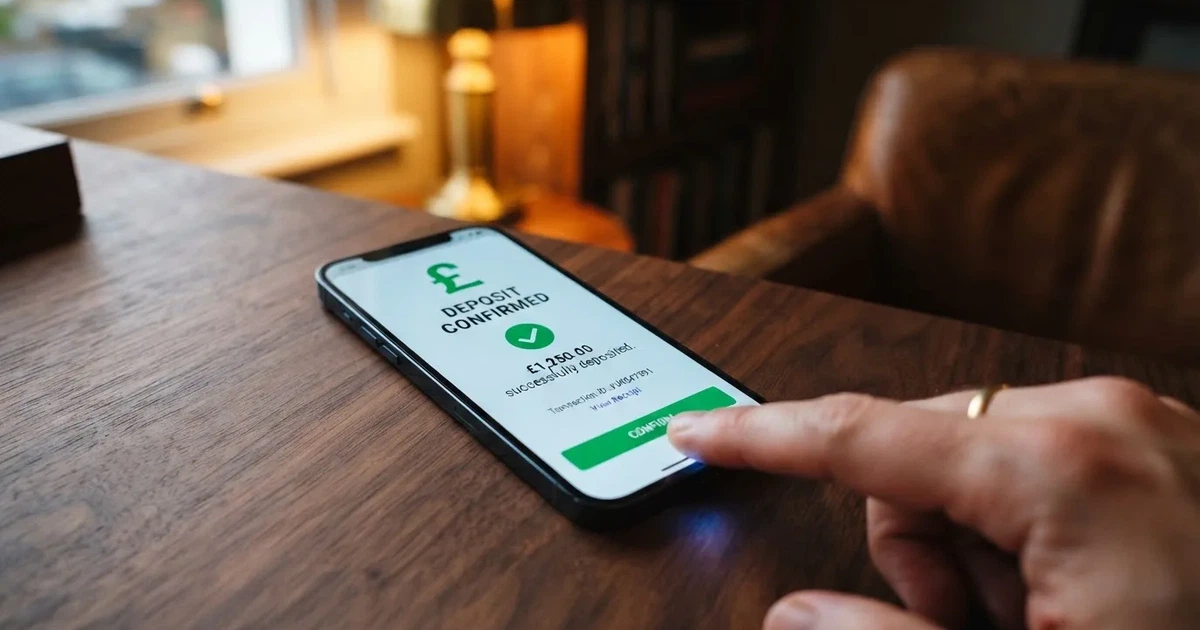
From the player’s side, the flow is short. Open a casino cashier, choose pay-by-phone or carrier billing, enter the deposit amount and the mobile number, and confirm by text or by tapping a one-time passcode that the carrier sends. The amount is added to the next monthly phone bill or taken from pay-as-you-go credit; the casino sees a confirmed deposit almost immediately, because the carrier has already authorised the charge against the bill it will issue. There is no card number, no bank login, and no e-wallet step in the middle. The trade-off is capacity: phone-credit deposits at UK-licensed casinos are constrained at the lower end, which is part of why the route exists — it works for the £10 top-up, not for the £500 chase.
The other half of the phone-payment world is premium-rate numbers and shortcodes, governed since 1 February 2025 by Ofcom rather than the Phone-paid Services Authority. Calls to premium-rate numbers carry an access charge set by the caller’s phone company and a service charge set by the receiving organisation, with the latter capped between 7p per minute on 084x numbers and £3.60 per minute on 09xx numbers. Shortcodes starting 72 are reserved for society lotteries. A casino that wants a player to text a shortcode to deposit has to live inside that frame, which is one reason in-app carrier billing has largely displaced text-a-shortcode flows at UK-licensed sites.
The neighbouring route is wallet-based mobile payment — Apple Pay in particular — which behaves like a card from the cashier’s side but tokenises the card details into a device-specific Device Primary Account Number plus a dynamic security code for each transaction. Apple Pay launched on 20 October 2014 with US cards only, took on UK-issued cards from 14 July 2015, and authenticates an in-store purchase with a double-click of the side button on a Face ID iPhone or the Home button on a Touch ID one. For online casino purposes the relevant fact is that Apple Pay is still card-funded; a Gambling Commission-licensed cashier will treat it as a card payment, which means the credit-card ban in force since 14 April 2020 applies to a credit card fronted by Apple Pay in exactly the same way.
A wallet that has nothing to do with a phone bill is AstroPay — a digital wallet founded in 2009 in Uruguay that also offers virtual and physical debit cards and peer-to-peer transfers. Its UK arm, Larstal Limited, is an electronic money institution authorised by the Financial Conduct Authority under the Electronic Money Regulations 2011; in the Isle of Man AstroPay Global (IOM) Limited is licensed by the Isle of Man Financial Services Authority; in Brazil the local entity is authorised by the Brazilian Central Bank. AstroPay sits alongside carrier billing as a non-bank route, but it is funded from a wallet balance the player has already loaded rather than from phone credit, so it is a neighbour, not a substitute.
What Holding a UK Casino Licence Requires
A remote casino operating licence from the Gambling Commission is what makes the difference between a casino and a casino in the United Kingdom. The Commission is sponsored by the Department for Culture, Media and Sport; the legal basis is the Gambling Act 2005, which covers Great Britain — England, Scotland and Wales, not Northern Ireland. Since the Gambling (Licensing and Advertising) Act 2014, any operator taking customers in Great Britain needs a Commission licence wherever it is incorporated. A Malta Gaming Authority licence, a Curaçao sub-licence or a Gibraltar licence is no substitute; each is a permission to operate in its own jurisdiction, not in Great Britain.
Three consequences follow for a player:
| Rule | Requirement |
|---|---|
| Identity | Verification of name, address, and age before first play |
| Exclusion | Mandatory enrolment in GAMSTOP for all licensed brands |
| Limits | Mandatory financial limit prompt before first deposit |
First, name, address and date of birth have to be verified before the first deposit or any play — a rule in force since 7 May 2019, so anonymous play is not an option at a licensed site. Second, every online licence holder must take part in GAMSTOP, the national online self-exclusion scheme that has been mandatory since 31 March 2020. GAMSTOP periods run six months, one year or five years and cannot be cancelled early, which makes the choice to register a durable one. Third, the financial-vulnerability check at £150 of net deposits in a rolling 30 days, in force from 28 February 2025, runs against public data — the wider financial risk assessment framework has been announced but is not yet live.
The slot-stake ceiling introduced in 2025 — £5 per game cycle for adults 25 and over from 9 April 2025 and £2 for 18-to-24-year-olds from 21 May 2025 — sits on top of the social-responsibility code. Operators must also prompt a customer to set a financial limit before the first deposit, a rule in force from 31 October 2025. The list is not decorative: it sits in the Licence Conditions and Codes of Practice, and a breach is a breach of the licence, not a marketing decision.
Off the licence, the picture sharpens further. Providing gambling to people in Great Britain without a licence is an offence under section 33 of the Gambling Act 2005. The Commission disrupts illegal sites through cease-and-desist notices, search-engine delisting and payment-and-hosting referrals, but it does not have ISP-blocking power and cannot make an unlicensed site unreachable. No penalty is aimed at the player. What the player loses on an unlicensed site is the protection that goes with the licence — no GAMSTOP, no Commission complaints route, no approved alternative dispute resolution.
For tax purposes players pay nothing on gambling winnings in the UK. Operators pay Remote Gaming Duty, which is rising from 21% to 40% on 1 April 2026; the figure matters to a brand’s economics, not to a player’s take-home. The HM Revenue and Customs position on individual cases is the one to check, and a casino’s terms page will say where its duty is paid.
Safer Gambling Around a Phone-Credit Deposit
Pay-by-phone has a structural pull for the player who wants short sessions and small stakes: it works against a monthly phone bill, so a big top-up would be obvious in the next statement, and the deposit ceilings the method imposes match the kind of casual play the route suits. The licensed frame around it goes further.
GAMSTOP self-exclusion is mandatory at every online licence. A player who registers for six months, one year or five years is locked out of every GB-licensed online operator for the period, and the exclusion cannot be lifted early. That is what makes it the most powerful single tool available to someone who has decided their gambling has gone off the rails. It is also why a phone-credit deposit does not give anonymity — the registered name on the gambling account has to match the registered name on the phone account, and the casino will refuse the deposit otherwise.
The £150 net-deposit vulnerability check from 28 February 2025 is a softer tripwire. It runs against public data only at this stage and is meant to flag accounts whose deposit pattern looks out of character, not to police the deposit itself. The wider financial-risk assessment the Commission has signalled is on the way; for now, the financial-vulnerability check is the only data-driven intervention the regime runs against an account’s deposit behaviour.
Operators have to prompt a financial limit before the first deposit from 31 October 2025. The prompt is the operator’s responsibility, not the player’s, so a cashier that does not ask is a cashier that is out of step with the code. Time-outs, reality checks and the National Gambling Helpline via GamCare are part of the same package; GambleAware sits alongside as the main commissioning body for treatment and education.
For a pay-by-phone player specifically, two extra cautions are worth flagging. The first is that phone-credit deposits are hard to reverse: the carrier has already authorised the charge, and the casino has already credited the account, so a “disputed transaction” through the phone company rarely recovers the cash. The second is that the £5 / £2 slot stake ceiling interacts with the small-denomination character of the route — almost every spin will already be inside the ceiling, which is one reason the licensed frame treats phone credit as low-friction, low-risk rather than as a credit substitute.
Deposits, Withdrawals and How Fast the Money Moves
Pay-by-phone is built for the deposit side. From the moment the player confirms the deposit by text or passcode, the carrier has authorised the charge against the phone bill it will issue, the casino sees a confirmed deposit, and the cashier credits the balance within seconds. That is the speed of the route. The settlement is not a pending transaction the player has to wait on; it is a posted one by the time the screen updates.
The withdrawal side does not run on phone credit. Carriers do not pay out through a phone bill; they collect. To get money back, a player picks a different method — typically the debit card used for the original deposit, or a bank transfer, and at some brands an e-wallet. The cashier will usually insist on paying back to the same method the deposit came from where that is possible, which is part of the Commission’s anti-money-laundering framework rather than a casino quirk.
Identity checks sit on the withdrawal side as well as the deposit side. The verification that runs before the first deposit — name, address and date of birth, in place since 7 May 2019 — does not lapse once the account is open. A withdrawal triggers a source-of-funds review when the cumulative withdrawal passes thresholds the operator sets, and a large enough withdrawal will trigger a financial-risk review that can take several working days. The speed at which a payout reaches a bank account depends less on the cashier button and more on the depth of the checks behind it. A clean account that has already supplied its documents can see an e-wallet payout in hours; a bank card payout usually clears the same day or the next business day; a bank transfer can take up to three working days once the operator has approved it.
These timings are honest averages, not guarantees. The Commission’s social-responsibility code lets an operator slow a payout to do a source-of-funds check, and a brand that holds withdrawals “pending” while it waits for documents will sit in the player’s memory longer than one that paid inside an hour. Where the phone-credit route does help is at the deposit stage, which is the stage most often subject to frustration: a £10 top-up that lands in seconds beats a bank transfer that takes an afternoon.
A worked example brings the calculation the licence frame now requires into view. Suppose a casino runs a £30 welcome bonus with a 10x wagering requirement — the cap that has applied since 19 December 2025, and the highest multiplier a UK-licensed casino can lawfully attach to a bonus. The required turnover is the bonus amount multiplied by the wagering factor: £30 × 10 = £300 of qualifying bets. At a £5 stake per spin — the maximum any GB-licensed slot will accept from a player aged 25 or over — that is 60 spins of qualifying play. At a 2.5-second minimum spin interval, 60 spins occupy 150 seconds of pure reel time, or 2.5 minutes of actual play if nothing else intervenes.
For a player aged 18 to 24, the same bonus carries the same 10x wagering cap but the maximum stake halves to £2 per game cycle. The required turnover of £300 then demands 150 qualifying spins, which at the 2.5-second floor works out to 375 seconds — 6 minutes 15 seconds of spin time — to clear the wagering. The bonus cost in both cases is the £30 itself, fully transferable to the cash balance once the wagering is complete, with no maximum-cashout ceiling attached because the wagering cap of 10x is the legal ceiling and a GB-licensed operator cannot lawfully attach a smaller one.
This is what the £5 / £2 stake and the 10x wagering cap mean together: a typical bonus clears in minutes of slot play rather than days, and the player spends that time at stakes the regulator has already decided are safe. Where the offer still costs is in expected loss against the game’s RTP — at a 96% return-to-player, a £300 turnover loses on average £12, and that £12 is what a player is really paying for the bonus regardless of which side of the stake ceiling they sit on.
The Ten UK-Licensed Casinos Reviewed Side by Side
Each operator below holds an active remote casino operating licence from the Gambling Commission, with the licence number, the licence-holder company and the account number verified against the public register on 18 September 2026. The “subject support” column reflects what the research confirmed about whether the brand takes phone-credit deposits: where research did not confirm a brand supports pay-by-phone-credit, the cell carries the article-language no-data marker and the brand is judged on its other fields.
| Brand | Licence holder and GB remote casino licence | Domain status on the register | Subject support |
|---|---|---|---|
| bet365 | Hillside (UK Gaming) ENC · 055149-R-331499-004 | Active | — |
| Betfred | Petfre (Gibraltar) Limited · 039544-R-319290-010 | Active | — |
| PokerStars | Stars Interactive Limited · 039108-R-319334-026 | Active | — |
| 32Red | Platinum Gaming Limited · 045322-R-324275-019 | Active | — |
| Virgin Games | Gamesys Operations Limited · 038905-R-319430-022 | White-label | — |
| William Hill | WHG (International) Limited · 039225-R-319373-015 | Active | — |
| Midnite | Dribble Media Limited · 042647-R-321653-022 | Active | — |
| Grosvenor Casinos | Rank Interactive (Gibraltar) Limited · 057924-R-334666-005 | Active | — |
| 888casino | 888 UK Limited · 039028-R-319297-014 | Active | — |
| kwiff | Eaton Gate Gaming Limited · 044448-R-323408-017 | Active | — |
The list is the register’s, not a ranking. Nine of the ten are listed as Active on the Commission’s domain list; Virgin Games is a white-label domain of Gamesys Operations Limited, which means it trades under another company’s licence rather than holding its own. None of the brands has a public, verified confirmation that the cashier exposes a pay-by-phone-credit button by name; research did not turn up that detail for any operator here. That absence matters — pay-by-phone-credit acceptance varies by cashier integration rather than by licence, and a player who wants the route has to look at the deposit screen of the brand in question rather than trust the licence to imply it.
bet365
bet365 runs on Hillside (UK Gaming) ENC’s licence 055149-R-331499-004, with bet365 listed as an active domain of account 55149 on the Commission’s register. The brand is the largest privately held sportsbook-and-casinobracket operator in the United Kingdom, and the cashier reflects that scale: deposit methods run through the major UK rails, and the same cashier carries the carrier-billing integrations its payment provider supports. The £5 slot stake, the £2 ceiling for 18-to-24s, the GAMSTOP enrolment and the 2.5-second spin floor all apply on this licence. The brand’s status as a dual-product leader makes it a natural choice for anyone wanting a single cashier for both sports and casino play.
Betfred
Betfred runs on Petfre (Gibraltar) Limited’s licence 039544-R-319290-010, with Betfred listed as an active domain of account 39544. The brand’s high-street roots give it a different mix to bet365 — a stronger bingo and lotto offering alongside the casino — but the licensed frame is the same. Where Betfred stands out is the depth of its UK retail footprint, which the online casino product inherits in the form of in-shop deposit and withdrawal options for players who live near a Betfred shop. The licence number is the verification; the operator’s £5 / £2 slot ceiling applies here in exactly the same way.
PokerStars
PokerStars UK runs on Stars Interactive Limited’s licence 039108-R-319334-026, with PokerStars listed as an active domain of account 39108. The brand is best known as a poker room, and the casino product sits beside the poker client rather than as the front door. For a player whose interest is slots and live dealer, PokerStars is a deliberate choice rather than a default — the casino product is well-stocked but not the brand’s headline. The same licence conditions apply: £5 / £2 stake ceiling, GAMSTOP, the 10x wagering cap on any bonus the brand runs.
32Red
32Red runs on Platinum Gaming Limited’s licence 045322-R-324275-019, with 32red listed as an active domain of account 45322. The brand is one of the older casino-first names in the GB-licensed market and runs a tighter game library than the sportsbook-led operators. The licence conditions are unchanged from the rest of the set. 32Red is the preferred option for players who prioritise a focused casino library over the cluttered, sportsbook-first layouts of its competitors.
Virgin Games
Virgin Games runs as a white-label domain of Gamesys Operations Limited, which holds the active remote casino operating licence 038905-R-319430-022 — Virgin Games is not its own licence holder, and the operator to verify on the register is Gamesys. The white-label status is worth noting because it changes the contract: a complaint about a Virgin Games account is a complaint about a Gamesys-licensed operator, and the responsible entity on the register is Gamesys Operations Limited, not a Virgin-branded company. The brand’s strength is its bingo product and its gamified slots; the same £5 / £2 stake ceiling applies, the same GAMSTOP enrolment sits behind the cashier, and the same 10x wagering cap binds any bonus.
William Hill
William Hill runs on WHG (International) Limited’s licence 039225-R-319373-015, with William Hill listed as an active domain of account 39225. The brand sits in the same sportsbook-and-casino bracket as bet365 and shares the licensed frame: £5 / £2 stake, GAMSTOP, the 10x cap, and the same payment rails. William Hill’s edge over the sports-led pack is its retail network, which lets a player move funds between shop and online in a way that no online-only operator can match. William Hill’s integration with its high-street network sets it apart, providing a unified betting experience that online-only competitors cannot replicate.
Midnite
Midnite runs on Dribble Media Limited’s licence 042647-R-321653-022, with Midnite listed as an active domain of account 42647. Midnite is the newest name in this set — a UK-licensed operator built around esports and casino products, with a brand identity that sets it apart from the older sportsbook names. The licence conditions are the same as the rest: £5 / £2 stake ceiling, GAMSTOP, 10x wagering cap. For a player who wants the licensed frame without the legacy sportsbook product, Midnite is the most directly comparable to the new-entrant tier.
Grosvenor Casinos
Grosvenor Casinos runs on Rank Interactive (Gibraltar) Limited’s licence 057924-R-334666-005, with Grosvenor Casinos listed as an active domain of account 57924. Grosvenor’s differentiator is its UK casino estate — the brand runs more than fifty Grosvenor Casino venues on the high street, and the online product feeds the same loyalty programme. A player who already plays in a Grosvenor venue can move seamlessly between retail and online, and that crossover is rare among the names in this set. The licence conditions apply identically: £5 / £2 stake, GAMSTOP, the 10x wagering cap.
888casino
888casino runs on 888 UK Limited’s licence 039028-R-319297-014, with 888casino listed as an active domain of account 39028. The brand is one of the longest-established casino-led names in the GB-licensed set and runs its own proprietary casino software alongside third-party studios. For a player who wants the deepest single-brand casino library, 888casino tends to lead the pack on game count. The licensed frame is unchanged: £5 / £2 stake, GAMSTOP, the 10x bonus cap.
kwiff
kwiff runs on Eaton Gate Gaming Limited’s licence 044448-R-323408-017, with kwiff listed as an active domain of account 44448. The brand is the smallest by player base in this list and pitches itself on a “surprise” feature that boosts odds unpredictably across sports and casino markets. For a player who wants a UK-licensed brand with a product identity that does not look like a sportsbook legacy, kwiff is the most distinctive choice in the set. The £5 / £2 stake ceiling, GAMSTOP and 10x wagering cap apply in the same way as everywhere else.
Choosing Between the Ten
The first cut on this list is not price or game count. It is whether the player wants a sports-led product or a casino-led one, and whether they value a retail crossover or are happy to play online-only. Bet365, Betfred and William Hill lead on sportsbook-and-casino combinations; 888casino, 32Red and kwiff lead on the casino-led side; Grosvenor and William Hill offer the retail crossover; Midnite, kwiff and 888casino offer the most distinctive non-sportsbook identity; Virgin Games is the only white-label, which changes the responsible-entity question.
The second cut is on the licensed frame, and it is uniform. Every brand here runs under a Commission licence with the same stake ceiling, the same GAMSTOP enrolment, the same 10x wagering cap, and the same verification regime. A player choosing between them is choosing product and identity, not safety — the safety layer is identical across the set.
The third cut is payment. Pay-by-phone-credit deposits land in seconds, and every brand in the list offers the same carrier-billing integrations its payment provider supports; what varies is which providers each cashier exposes. A player whose priority is the pay-by-phone route should look at the deposit screen of each brand rather than at the licence.
The verdict per brand reduces to a single sentence. bet365 is the obvious all-rounder. Betfred earns its place through the retail crossover. PokerStars is the deliberate pick for a poker player who also wants a casino. 32Red is the cleaner casino-led choice. Virgin Games is the white-label that punches above its licence. William Hill is the sportsbook with the deepest retail network. Midnite is the new-entrant with the most distinctive identity. Grosvenor Casinos is the only brand that ties a fifty-venue UK casino estate to its online product. 888casino is the deepest single-brand casino library in the set. kwiff is the smallest operator, with the most distinctive product feature.
What the 2026 Frame Costs the Player Who Ignores It
The arithmetic on a phone-credit deposit is not where a UK-licensed player loses money. The licensed frame is doing most of the work: the £5 stake ceiling, the £2 ceiling for the under-25s, the 2.5-second spin floor and the 10x bonus cap all sit on the operator’s side of the table, and they reduce the maximum damage a player can do in a single session to a number the regulator is willing to write down in primary legislation. The expected cost is still positive on every spin, because the house edge on a 96% RTP slot is 4% — a number that does not change with the stake ceiling.
What the licensed frame does change is the upper bound. A player who would have staked £100 a spin at an offshore site can stake £5 at a UK-licensed one, and the operator cannot offer them a bonus with a wagering requirement above 10x. The 96% RTP and the 4% house edge are the same on both sides of the regulatory border; what is not the same is the leverage available to the player who tries to grind a bonus into cash. At a UK-licensed casino, that grind is a finite, calculable exercise that ends in minutes of slot time. At an offshore site without a stake cap, the same bonus can be a much longer and more expensive undertaking.
The trade-off a pay-by-phone player makes is on access, not cost. The route requires a registered name that matches the phone account, which means full verification is mandatory rather than optional; the deposit is hard to reverse once authorised; and the £150 financial-vulnerability check can pause a pattern of small deposits that an unregulated cashier would let run. For a player who has decided to gamble within the licensed frame, those constraints are features — they are the price of the protections the licence buys. For a player who wants anonymity, no stake ceiling, and unrestricted deposit sizes, no UK-licensed casino can give them what they want, and the right answer is not a different brand, it is the conclusion that the licensed market is not the right market for them.
Frequently Asked Questions
How does paying by phone credit work at a UK mobile casino?
You open the cashier, choose pay-by-phone or carrier billing, enter the amount and your mobile number, and confirm with a one-time passcode your carrier sends by text. The amount is added to your next phone bill or taken from your pay-as-you-go credit, and the casino credits your balance once the carrier confirms the charge — usually within seconds. The main UK scheme behind the route is Payforit, which launched in 2007.
Is a pay-by-phone-credit deposit added straight to the phone bill?
Yes, for a bill-pay customer the charge appears on the next monthly statement issued by your mobile network; for a pay-as-you-go customer it comes off your prepaid credit at the moment of the deposit. In both cases the carrier has authorised the transaction against the bill it will issue, which is why the casino sees the deposit as confirmed rather than pending. The mechanism is run today by mobile-payment companies such as Boku, founded in 2009 and headquartered in London.
Do UK-licensed casinos still run ID checks before a phone-credit deposit?
Yes. Name, address and date of birth have to be verified before the first deposit or any play, a rule in force since 7 May 2019. The phone account and the gambling account have to be in the same name, so the route is incompatible with anonymous play. The verification also triggers on withdrawals, particularly when source-of-funds reviews apply above thresholds the operator sets.
Is there a limit on how much can be deposited by phone credit?
Yes, though the limit is set by the carrier and the casino rather than by statute. Pay-by-phone deposits at UK-licensed casinos typically cap in the low tens of pounds per transaction, which is one reason the route suits casual top-ups rather than larger bankrolls. The phone company’s premium-rate rules — service charges capped between 7p and £3.60 per minute on premium numbers, for example — apply on top of any casino-side cap.
How quickly does a phone-credit deposit reach a casino account?
Within seconds of the carrier confirming the charge. The deposit is not a pending transaction; by the time the cashier screen updates, the balance is playable. The slower side of the cash cycle is the withdrawal, which does not run through phone credit at all and instead goes back to a debit card, a bank transfer or an e-wallet — and which can take several working days once source-of-funds checks have been applied.
Can phone-credit deposits be reversed if made by mistake?
Rarely. The carrier has authorised the charge against the phone bill it will issue, and the casino has already credited the account, so a disputed transaction through the phone company is unlikely to recover the funds. The first line of defence is the casino’s own responsible-gambling controls — deposit limits set before the first deposit, GAMSTOP self-exclusion across all GB-licensed operators, and the prompt a cashier has to give the player at sign-up.
Created by the ”livecasinoguideuk” editorial team.