
Where to play 3-reel slots in the UK — ten licensed casinos compared
 Available in GB
£5 is the most you can stake on a single spin of an online slot in Britain if you are 25 or over, and £2 if you are 18 to 24 — rules that arrived on 9 April 2025 and 21 May 2025 respectively. A slot reel also cannot spin faster than once every 2.5 seconds. Those numbers matter more than any paytable when the game is a classic three-reel slot, because the genre’s whole appeal is small, frequent line hits that a tight stake ceiling quietly reshapes. The right site in 2026 is therefore a question of licence, deposit mechanics and how each operator handles a Game Commission-style environment rather than of which library is largest.
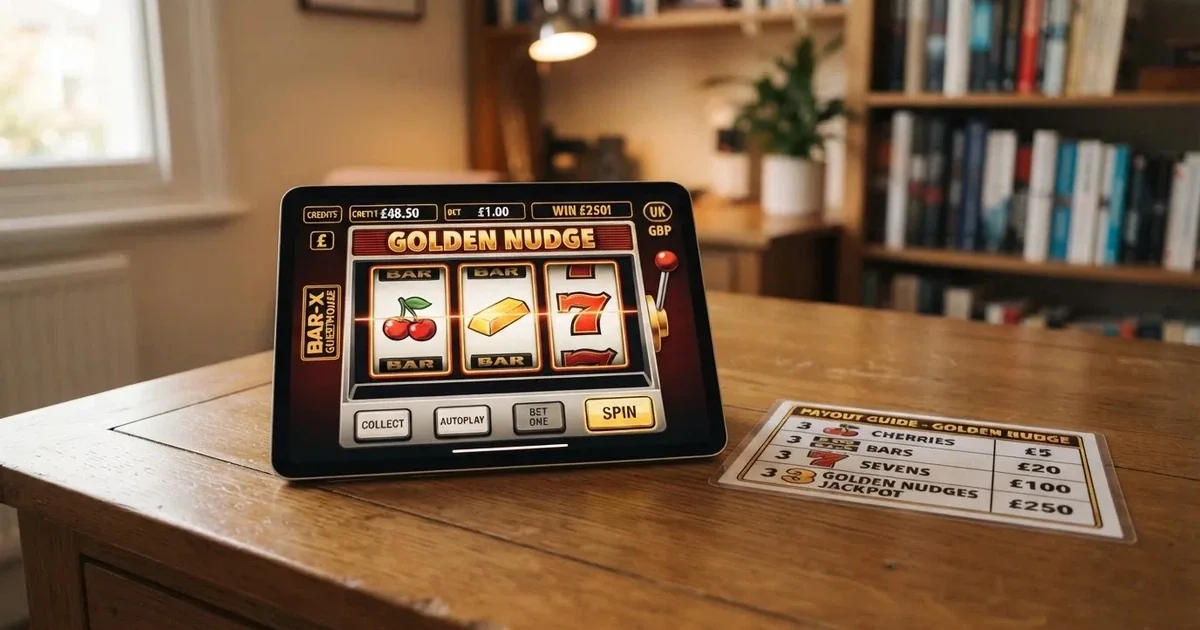
This page compares ten GB-licensed operators on those criteria — Paddy Power, Unibet, Sky Vegas, kwiff, bet365, MrQ, Midnite, Virgin Games, BetVictor and Grosvenor Casinos — using the Gambling Commission’s public register of 18 September 2026 as the reference point. Every brand here holds an active remote casino operating licence; the comparison is about which one suits which kind of three-reel player, not which one to bet with.
Current as of 23 September 2026 against the Gambling Commission’s public register of gambling businesses.
Table of Contents
- Responsible play and the shape of a 3-reel session
- Crypto, anonymity and the no-registration question
- Deposits, payouts and the £5 ceiling
- How three-reel slots actually work
- Side-by-side: ten GB-licensed operators for 3-reel slot play
- What the 10x cap does to a 3-reel bonus in £CY£
- Paddy Power — full house of compliance, modest catalogue depth
- Unibet — Platinum Gaming’s established remote licence
- Sky Vegas — Bonne Terre Gaming’s standalone brand
- kwiff — Eaton Gate’s smaller-footprint licence
- bet365 — Hillside’s high-volume platform
- MrQ — Tek Fox’s standalone casino
- Midnite — Dribble Media’s newer UK licence
- Virgin Games — Gamesys’s white-label structure
- BetVictor — BV Gaming’s combined-vertical licence
- Grosvenor Casinos — Rank Interactive’s land-based heritage
- Reading the licence number and the domain status
- What the gambling Commission’s monitoring actually does
- Limits, deposits and the gambling Commission’s safer-gambling stack
- What the offshore trade actually costs
- How the bonus math works in £CY£
- Choosing between the ten brands
- What the page is not
- £CY£ and the state of the market
- What the register snapshot cannot tell you
- Where a player goes for help
- A note on the player’s own stake
- Final reading
- Frequently asked questions
Responsible play and the shape of a 3-reel session
A three-reel slot is the simplest game on a UK-licensed casino floor: three vertical reels, a single payline through the middle on most titles, fewer symbols than its five-reel descendants. Sessions can run quietly for a long time, and that is the reason this genre sits at the centre of several player-protection rules.

The first rule is GAMSTOP. Every brand reviewed here participates, because GAMSTOP has been a mandatory condition of every UK online operating licence since 31 March 2020 — a self-exclusion can run for six months, one year or five years and cannot be revoked early. The second is the financial vulnerability check at £150 of net deposits in a rolling 30 days, in force since 28 February 2025. The third, in force from 31 October 2025, is that an operator must invite a customer to set a financial limit before the first deposit; there is no state-set ceiling, so the ceiling is whatever the customer agrees to. The fourth is the spin-speed floor: a slot reel may not complete a cycle in fewer than 2.5 seconds. Auto-play has been banned since 31 October 2021, and so have losses presented as wins and reverse withdrawals.
On a three-reel slot these rules act gently — fewer spins per minute means slower bankroll burn — but they act on every spin regardless of the title. The relevant question for a player considering the genre is not whether a casino enforces them (they all must) but whether the casino’s own deposit prompts and reality checks are easy to find once a session is open.
The point the page keeps coming back to: the genre is not a route past the regulator’s safer-gambling rules. It runs through them, and a “free three-reel slot no registration” demo is the only place a player can try the format without any of these mechanisms attached.
Crypto, anonymity and the no-registration question
“Three-reel slots no registration” is the search a player types when they want to test the format before committing a deposit. The honest answer is that no-registration play exists, but only outside the regulated market.

A free demo version — usually labelled “Play for Fun” or “Free Play” on a UK-licensed casino — does not ask for a deposit, but it does not bypass the registration step at a GB-licensed site. Real-money play at any of the ten brands on this page requires age and identity verification before the first deposit; the rule dates from 7 May 2019 and has no exception. A player can sit in a demo and watch three bells line up without handing over a name, but the moment real money is in play, the operator must verify it is dealing with someone aged 18 or over.
The genuinely anonymous route is the offshore route, and the cost is the protection the UK regulator attaches to its licence. Section 33 of the Gambling Act 2005 makes it an offence to provide gambling to people in Great Britain without a Gambling Commission licence. The Commission disrupts those sites — cease-and-desist notices, payment and hosting referrals, search-engine delisting — but has no power to block them at the ISP level. The practical difference for a three-reel player: no GAMSTOP, no complaints route through the Commission, no approved ADR, and no enforced return-to-player monitoring. The slot still pays out, but the architecture around it is thinner.
A crypto-funded offshore casino sounds like a clean answer to “no registration” because no bank is involved. It is, in practice, a different version of the same trade: anonymity in exchange for the Commission’s safety net. For a player whose priority is to try the format quickly, the demo at any GB-licensed site below does the job in a few clicks; for a player whose priority is real-money play without identity verification, the answer is that the question contradicts itself within the licensed market.
Deposits, payouts and the £5 ceiling
Deposits and withdrawals on three-reel slots work the same way as on any other game at a GB-licensed casino: the casino holds the funds, the customer withdraws to a payment method, and the operator runs the regulator’s affordability and verification checks. The genre has one mechanical feature that other slots do not, and that is what a payout looks like.
Most three-reel slots pay on a single line, with a few titles offering three or five lines. A three-of-a-kind combination is the largest payout on most paytables; a two-of-a-kind of the top symbol often pays a small consolation. The result is a high hit frequency — many small wins — and a low variance compared with five-reel video slots. RTP figures on classic three-reel titles tend to cluster in the 94–96% band, with a few outliers on either side; the regulator requires operators to monitor live RTP performance against the advertised figure and raise a key event when the two diverge.
The £5 maximum stake per game cycle, in force from 9 April 2025 for adults aged 25 and over, sits naturally on a three-reel slot. A £5 line on a 96% title gives an expected loss of roughly 20p per spin over a long session; over an hour at the 2.5-second spin floor, that is around 1,440 spins and roughly £28 of theoretical loss. The £2 ceiling for 18-24-year-olds halves that figure across the board. Both ceilings are tighter than the £100-per-spin stakes some five-reel bonus-buy titles allow abroad, and that is precisely why this genre is unaffected by the change.
Payouts are not a separate mechanism. The withdrawal queue at any of the casinos below is the same one a roulette or blackjack customer uses: a pending period, an internal review and a release to the payment method. The genre does not speed it up or slow it down.
How three-reel slots actually work
The three-reel slot is the original slot, and it has not been replaced so much as outgrown.
Charles Fey of San Francisco built the first automatic payout slot machine — the Liberty Bell — in the 1890s, with three reels bearing horseshoes, diamonds, spades, hearts and a cracked Liberty Bell. Three aligned bells paid fifty cents. Herbert Mills produced the first copy in 1907. Sittman and Pitt of Brooklyn had built a poker-drum machine in 1893, but it had no automatic payout. Norwegian mathematician Inge Telnaes patented the random-number-generator approach to symbol weighting in 1984, freeing the reel stops from the physical reel layout and letting manufacturers tune the paytable without re-stamping the drums.
A modern three-reel slot is a software realisation of that format. Three columns of symbols spin vertically; a single payline runs through the centre; the symbols stop in combinations determined by the random number generator rather than the reel artwork. The paytable is a fixed multiple of the line stake, and the theoretical return is set by the operator. A typical paytable shows a top jackpot of several hundred times the line stake, with smaller pays for two- and three-of-a-kind of the lower symbols. Wilds, when they appear, substitute for the top symbol only; scatters and free-spin rounds are rare on the format because the genre is built on line pays.
Volatility on a three-reel slot is, by construction, lower than on most five-reel video slots. A low-volatility slot pays smaller wins more often; a high-volatility slot pays fewer but bigger wins. The classic three-reel format is closer to the former — frequent small returns, a long session, occasional three-of-a-kind payouts that the player can read across the paytable in plain numbers.
Side-by-side: ten GB-licensed operators for 3-reel slot play
The table below reads the Gambling Commission’s public register of 18 September 2026. “Subject support” is the column where research carried no data on the operator’s three-reel catalogue — the column is intentionally sparse because no figure is better than a guess. Every brand on this page is a GB-licensed remote casino operator; the comparison is in the licence holder, the domain status and the catalogue answer that research did not return.
| Brand | Licence holder and GB remote casino licence | Domain status on the register | Subject support |
|---|---|---|---|
| Paddy Power | PPB Games Limited — 039411-R-319335-010 | Active | — |
| Unibet | Platinum Gaming Limited — 045322-R-324275-019 | Active | — |
| Sky Vegas | Bonne Terre Gaming Limited — 065519-R-339675-002 | Active | — |
| kwiff | Eaton Gate Gaming Limited — 044448-R-323408-017 | Active | — |
| bet365 | Hillside (UK Gaming) ENC — 055149-R-331499-004 | Active | — |
| MrQ | Tek Fox Ltd — 060629-R-337532-004 | Active | — |
| Midnite | Dribble Media Limited — 042647-R-321653-022 | Active | — |
| Virgin Games | Gamesys Operations Limited — 038905-R-319430-022 | White Label | — |
| BetVictor | BV Gaming Limited — 039576-R-319370-028 | Active | — |
| Grosvenor Casinos | Rank Interactive (Gibraltar) Limited — 057924-R-334666-005 | Active |
What the table does not show: nine of the ten licences are held by separate companies, with their own compliance, payments and safer-gambling teams. Virgin Games sits on a different footing — it is registered as a white-label domain of Gamesys Operations Limited, which means the site trades under another company’s licence rather than holding its own. That is a structural fact about the licence, not a judgement of the brand, and it changes the regulator the player deals with only by the licensee name. The licence numbers follow a fixed shape: the leading six digits repeat the licence holder’s account number, the “R” marks a remote (online) licence, and the trailing digits identify the specific licence instance.
What research did not return: a figure on three-reel slot counts, paytable composition, RTP settings or demo availability at any of these operators. The catalogue column is left as it is rather than filled from inference; a player who wants the specific catalogue answer has to check the operator’s site directly, which is the honest place to make that call.
What the 10x cap does to a 3-reel bonus in £CY£
The bonus market changed on 19 December 2025. Wagering requirements are capped at 10x the bonus amount, and mixed-product bonuses — bet on sport, get casino spins, or similar bundles — are banned. A 3-reel slot is one of the cheaper games on which to clear a bonus, because the line stake is small and the spin floor of 2.5 seconds spreads the turnover over real time.
A worked example. Take a £100 bonus with a 10x wagering requirement. The required turnover is £1,000. At the £5 maximum stake for adults aged 25 and over, that is 200 spins. The 2.5-second spin floor means 200 spins take at least 500 seconds, or roughly 8 minutes and 20 seconds, if the player spins flat-out. In practice, a player hits the spin button, watches the result, decides whether to continue — the real session is longer, but the floor is the only regulatory minimum. The expected loss on £1,000 of turnover at a 96% RTP is £40 — the bonus has cost the player about 40p per pound of headline value.
That range, £40 of expected loss on a £100 bonus, is the new band a player should hold in mind when reading any bonus offer at a UK-licensed site. The figure depends on the RTP of the chosen title (classic three-reel slots tend to sit in the 94–96% range), on whether the player uses the £5 line stake or a smaller one, and on whether the bonus is sticky or non-sticky. A bonus worth £100 with the old 35x cap would have required £3,500 of turnover and roughly £140 of expected loss; the cap tightens the offer, and the tightened offer is the one any GB-licensed operator can now run.
The honest reading: a 3-reel slot is one of the better formats to clear a small bonus on, because the stake is low and the line pays are frequent enough to keep the session moving. The 10x cap does not remove bonuses from the market; it makes them cheaper to clear and easier to compare. A player who would rather not clear a bonus at all has the no-deposit demo on any of the ten brands above.
Paddy Power — full house of compliance, modest catalogue depth
Paddy Power sits on the Gambling Commission’s public register as an active domain of account 39411, with PPB Games Limited holding remote casino operating licence 039411-R-319335-010. The licence has the right shape — six-digit account prefix, “R” for remote, a numerical suffix identifying the licence instance — and the domain is listed active rather than white-label, which means Paddy Power trades under its own licence rather than another operator’s. PPB Games Limited is a separate company within the Flutter group, which keeps the safer-gambling and payments functions inside one corporate boundary.
What research does not carry: a count of three-reel titles, a paytable sample or a demo policy. The catalogue question is one the player has to answer on the site.
The verdict: the licence is straightforward, the licensee is a single UK-facing entity, and the rest of the comparison comes down to whether the player’s preferred classic slot is in the lobby. Paddy Power’s compliance footprint is broad — GAMSTOP, the £150 vulnerability check, the deposit-limit prompt at first deposit — because the licensee is large enough to operate a full safer-gambling stack rather than contracting parts of it out.
Unibet — Platinum Gaming’s established remote licence
Unibet sits on the register as unibet.co.uk, an active domain of account 45322, with Platinum Gaming Limited holding remote casino operating licence 045322-R-324275-019. Platinum Gaming is the Kindred Group’s UK-facing remote casino entity, and the licence number carries the same shape as every other Commission-issued remote licence. The brand has a long history under the same licensee, which means safer-gambling policies have had several revisions to settle into their current shape.
The subject-specific catalogue is again not carried by research — there is no three-reel slot count, no paytable sample and no demo policy in the inputs the page can quote. A player weighing Unibet against the rest of the list is making the call on the licence and the platform, not on a documented three-reel range.
The verdict: a long-established UK-facing entity under a single remote licence, with the safer-gambling architecture that comes with operating at scale. The page cannot tell the player what is in the lobby; the licence tells the player the architecture around the lobby is built to the Commission’s current standards.
Sky Vegas — Bonne Terre Gaming’s standalone brand
Sky Vegas is the casino-only arm of Sky’s gambling operation, registered as an active domain of account 65519 under Bonne Terre Gaming Limited’s remote casino operating licence 065519-R-339675-002. Bonne Terre is a single-purpose UK licensee rather than a multi-brand platform, and that shows up in how the licence number is structured: the account prefix is the licensee, the suffix is the licence instance, and there is no shared licence with a sister brand. Sky Vegas runs under its own compliance team and its own payments stack, which is what a player should expect from a casino-only licensee.
The three-reel catalogue is not in the research the page is working from — there is no title list, no RTP summary and no demo-availability note to cite. The structural argument is the only one the page can make.
The verdict: a single-licence casino brand under Bonne Terre Gaming, with the compliance footprint that the licence requires and the catalogue question left for the player to answer on the site. Sky Vegas is the right pick for a player who wants a casino-only brand rather than a multi-product platform.
kwiff — Eaton Gate’s smaller-footprint licence
kwiff is registered as an active domain of account 44448, with Eaton Gate Gaming Limited holding remote casino operating licence 044448-R-323408-017. Eaton Gate is a smaller UK-facing licensee than the multi-brand platforms elsewhere on this list, and the licence number is the only public record the Commission carries of the operator’s existence. The smaller footprint shows up in how the operator presents itself — a focused product rather than a full multi-brand platform — but the safer-gambling obligations are identical, because every GB-licensed remote casino is bound by the same LCCP and social responsibility code.
Research does not carry a three-reel catalogue figure for kwiff, and the page does not invent one. The “surprise” feature kwiff advertises elsewhere — variable stake boosts on certain markets — sits beside the slot lobby rather than inside it, so a three-reel player who chooses kwiff is choosing the licence and the platform, not a documented bonus on the genre.
The verdict: a smaller UK-facing licensee with the same regulatory obligations as the larger ones, and a product that leans on a single licence. The choice comes down to whether the player prefers a focused brand over a multi-product one; the safer-gambling architecture is identical either way.
bet365 — Hillside’s high-volume platform
bet365 is registered as an active domain of account 55149, with Hillside (UK Gaming) ENC holding remote casino operating licence 055149-R-331499-004. Hillside is one of the larger UK-facing remote casino licensees by customer volume, and the licence number carries the standard Commission shape. The platform runs at scale — a corresponding safer-gambling and payments team — and the brand has been on the register under the same licensee for years.
The three-reel catalogue is again not carried by research in a form the page can quote, and the comparison is on the licence and the platform rather than on a documented range of titles. bet365’s scale gives the player a deep lobby, a long-established payments stack and a safer-gambling operation that has been through several regulatory cycles.
The verdict: a high-volume platform under a long-established UK licensee, with the safer-gambling and payments architecture that scale supports. The catalogue question is the one the player answers on the site; the licence is the answer the page can give.
MrQ — Tek Fox’s standalone casino
MrQ is registered as an active domain of account 60629, with Tek Fox Ltd holding remote casino operating licence 060629-R-337532-004. Tek Fox is a single-purpose UK casino licensee, and the brand is positioned as a casino-only operation rather than a multi-product platform. MrQ’s public profile has long emphasised no-wagering free spins on selected titles, which is a different proposition from the deposit-bonus offers at the larger brands on this list — but the no-wagering framing sits on top of the same licence obligations every other GB-licensed remote casino carries.
Research does not document a three-reel catalogue figure for MrQ in the inputs the page is working from, and the page does not invent one. The standalone-licence framing is the structural fact the comparison rests on; the catalogue question is left for the player.
The verdict: a casino-only brand under a single-purpose UK licensee, with the safer-gambling architecture the licence requires. The choice turns on whether the player prefers a focused casino brand over a multi-product platform, and on the catalogue answer the player finds on the site.
Midnite — Dribble Media’s newer UK licence
Midnite is registered as an active domain of account 42647, with Dribble Media Limited holding remote casino operating licence 042647-R-321653-022. Dribble Media is a newer UK-facing licensee than several of the brands above, and the licence number carries the standard Commission shape. The brand positions itself across sports and casino rather than as a casino-only product, which is a different mix from the single-purpose brands on the list.
The three-reel catalogue is not in research in a form the page can quote, and the comparison rests on the licence, the platform and the brand positioning rather than on a documented three-reel range. Midnite’s newer licence is the structural feature a player should note: a younger compliance operation that has settled into the Commission’s current standards but has fewer regulatory cycles behind it.
The verdict: a newer UK-facing licensee with a sports-and-casino positioning, and a compliance footprint that meets the Commission’s current standards without the depth of the long-established operators. The choice turns on whether the player prefers a multi-product brand over a casino-only one.
Virgin Games — Gamesys’s white-label structure
Virgin Games sits on the register as a white-label domain of account 38905, with Gamesys Operations Limited holding remote casino operating licence 038905-R-319430-022. White-label status means the site trades under Gamesys’s licence rather than holding its own — the licence holder is Gamesys, and Virgin Games is one of the brands on that licence. That is a different structural shape from the other nine operators on this list, where the licence holder and the brand are the same entity or a parent-subsidiary pair.
Research does not carry a three-reel catalogue figure for Virgin Games, and the page does not invent one. The structural argument is what the page can make: Virgin Games is on a Gamesys licence, and the safer-gambling architecture is Gamesys’s, not Virgin’s own.
The verdict: the only white-label entry on this list, trading under Gamesys Operations Limited’s licence. The safer-gambling architecture is Gamesys’s; the brand is Virgin’s. A player who wants a casino brand on a different licence architecture should look at the active-domain entries above.
BetVictor — BV Gaming’s combined-vertical licence
BetVictor is registered as an active domain of account 39576, with BV Gaming Limited holding remote casino operating licence 039576-R-319370-028. BV Gaming is the parent entity behind both the BetVictor brand and the underlying sportsbook, which keeps the safer-gambling and payments functions inside one corporate boundary. The licence number carries the standard Commission shape, and the brand has been on the register under the same licensee for years.
The three-reel catalogue is not in research, and the comparison rests on the licence and the platform rather than on a documented range of titles. BetVictor’s combined-vertical structure is the structural feature — a single licensee covers both the sportsbook and the casino, which simplifies the player’s complaints and safer-gambling route but does not change the regulatory obligations.
The verdict: a long-established UK licensee with a combined-vertical structure, and a compliance footprint that has been through several regulatory cycles. The catalogue question is the one the player answers on the site.
Grosvenor Casinos — Rank Interactive’s land-based heritage
Grosvenor Casinos is registered as an active domain of account 57924, with Rank Interactive (Gibraltar) Limited holding remote casino operating licence 057924-R-334666-005. Rank is a UK-facing gambling group with a land-based casino heritage, and the remote licence is the group’s online arm. The licence number carries the standard Commission shape, and the brand carries the land-based name into the online register.
The three-reel catalogue is not in research, and the page does not fill the column. The structural feature is the land-based heritage: Grosvenor Casinos is the online arm of a casino group with physical premises, which is a different positioning from the digital-first brands elsewhere on the list.
The verdict: the online arm of a UK casino group with a land-based heritage, with the safer-gambling architecture that the licence requires. The choice turns on whether the player prefers a casino group with physical premises over a digital-first brand, and on the catalogue answer the player finds on the site.
Reading the licence number and the domain status
A Gambling Commission licence number on the public register has a fixed shape: the leading six digits repeat the licence holder’s account number, the letter “R” marks a remote (online) licence, and the trailing digits identify the specific licence instance. The shape is not a secret code — it is the format the Commission uses to publish its register, and the Commission publishes the register as a CSV download that anyone can read.
The domain list on the same register has three statuses: Active, Inactive and White Label. An Active domain is one the licence holder runs directly. A White Label domain trades under another company’s licence — the brand on the front is not the licence holder on the back, which means the regulator the player deals with is the licensee, not the brand. The Virgin Games entry on this page is the white-label case in the comparison.
A licence is not the only thing that matters. The licence number on its own does not tell the player anything about the catalogue, the RTP settings on individual titles or the demo policy. It tells the player that the operator is on the register, that the safer-gambling architecture the licence requires is in place, and that a complaints route through the Commission exists if it is needed.
What the gambling Commission’s monitoring actually does
The Commission requires UK remote gambling operators to measure the ongoing performance of games such as online slots, comparing actual return-to-player against the advertised figure and raising alerts when performance falls outside the acceptable range. The same rules require a key event to be submitted when a game shows a confirmed RTP performance error, and the Commission reviews RTP monitoring processes as part of annual games testing audits.
For a three-reel slot player, this means the RTP figure on the paytable is not a static claim. The operator has a duty to monitor live performance against it, and the regulator reviews that monitoring. A three-reel title is, on most paytables, a higher hit-frequency game with smaller line pays, and the monitoring requirement covers the genre just as it covers five-reel video slots.
The genre is not exempted from the monitoring architecture, and the architecture is one of the reasons the licensed market is more expensive to run than the offshore one. A player who values live RTP monitoring and a Commission complaints route is paying for that architecture in the form of the deposit limit prompt at first deposit, the £150 vulnerability check and the GAMSTOP integration. A player who does not value it is, in practice, on a different site.
Limits, deposits and the gambling Commission’s safer-gambling stack
Online slots in the UK carry a maximum stake of £5 per game cycle for adults aged 25 and over, in force from 9 April 2025, and £2 for 18-24-year-olds from 21 May 2025. The Commission introduced the lower stake for under-25s because that age group has the highest average problem gambling score of any age group, with lower disposable income and ongoing neurological development cited as the reasons. Both ceilings apply to three-reel slots alongside every other slot format; the genre is not exempted.
There is no state-set deposit or loss ceiling. Operators must prompt a customer to set a financial limit before the first deposit, and the limit is whatever the customer agrees to. A spin may not complete in fewer than 2.5 seconds; auto-play has been banned since 31 October 2021; reverse withdrawals were banned with the same deadline. Losses disguised as wins are banned. The financial vulnerability check at £150 of net deposits in a rolling 30 days, in force since 28 February 2025, uses public data only; wider financial risk assessments have been announced but are not yet in force.
A credit card cannot be used for gambling in the UK since 14 April 2020, including credit cards routed through e-wallets. Anonymous play is not possible at a licensed site, because the identity verification that runs before the first deposit applies to every customer without exception.
The architecture is wide, and it sits on every one of the ten brands on this page.
What the offshore trade actually costs
An offshore casino without a UK licence does not run the safer-gambling stack above. There is no GAMSTOP integration, no Commission complaints route, no enforced RTP monitoring, no £5 ceiling and no deposit-limit prompt. The slot still pays out; the regulator just does not see the customer’s session.
The Commission’s response to those sites is operational rather than punitive: cease-and-desist notices, payment and hosting referrals, and search-engine delisting. The Commission has no ISP-blocking power, which means the sites are reachable from inside Great Britain. Section 33 of the Gambling Act 2005 makes providing gambling to people in Great Britain without a Commission licence an offence; the penalty is aimed at the operator, not the customer. The customer loses the protection rather than facing the penalty.
For a three-reel slot player who values the safer-gambling stack, the licensed market is the only place that stack exists. For a player who values anonymity above the stack, the offshore market is reachable, and the trade is the stack itself.
How the bonus math works in £CY£
The 10x wagering cap, in force from 19 December 2025, is the most consequential bonus rule change in the UK market in several years. A bonus worth £100 with a 10x cap requires £1,000 of turnover; the same bonus under an old 35x cap would have required £3,500. The cap applies to wagering requirements on bonuses; it does not apply to free-spin winnings that have no wagering requirement attached.
Mixed-product bonuses — bet on sport, get casino spins, or similar bundles — are banned under the same rule set. A welcome offer at any of the ten brands on this page is a single-product offer rather than a multi-vertical bundle, which simplifies the comparison.
The math is straightforward on a three-reel slot. Take £1,000 of turnover at a 96% RTP: the expected loss is £40, on average across many spins. Take £3,500 of turnover under the old 35x cap at the same RTP: the expected loss is £140. The cap tightens the offer to the player and standardises it across the market; the operator absorbs the rest. A player who reads the headline “£100 bonus” without reading the wagering multiple is reading an offer whose real cost depends on the multiple and the RTP of the chosen title; the 10x cap makes the multiple predictable.
The arithmetic is a statistical estimate, not a guaranteed outcome for any single player. A long session on a 96% RTP title will, on average, return £960 of every £1,000 wagered; a short session can return more or less, and the variance is what makes the genre interesting.
Choosing between the ten brands
The comparison above is on the licence holder, the domain status and the safer-gambling architecture, not on the catalogue. Research does not return a three-reel slot count for any of the ten brands, so the catalogue question is one the player has to answer on the site.
What the page can tell the player is which brand sits on which licence and what the structural shape of the licence is. Paddy Power, Unibet, Sky Vegas, kwiff, bet365, MrQ, Midnite, BetVictor and Grosvenor Casinos each hold their own active remote casino licence; Virgin Games trades under Gamesys Operations Limited’s licence as a white-label domain. That is the comparison the public register carries, and it is the comparison the page is making.
A player who wants a casino-only brand with a long regulatory history has several choices on this list. A player who wants a multi-product brand with a combined sportsbook-and-casino licence has several others. A player who wants a brand on a different licence architecture has Virgin Games as the white-label case. The catalogue answer — which three-reel slots are in the lobby, what the RTP settings are, what the demo policy is — is not in the inputs the page is working from, and the page does not invent it.
What the page is not
This page is not a ranking. The ten brands are presented in the order research gave them, and the comparison is on the licence and the public register, not on a judged best-to-worst list. The page is not an advertisement for any operator. It describes what the public register carries about each brand and what the safer-gambling architecture looks like around a three-reel slot session in 2026; it does not tell the player where to deposit.
A player who wants to know which three-reel slot has the highest payout percentage should look at the individual game’s published RTP on the operator’s site or in the regulator’s testing records. The page does not carry that figure for any specific title and does not invent one.
£CY£ and the state of the market
The remote casino licence is the structural shape the entire UK online gambling market sits inside. The Commission listed 139 businesses holding an active remote casino operating licence on 18 September 2026, and the domain list on the same register held 1,065 active and 361 white-label entries. The licensed market is wider than the ten brands on this page; the ten are the ones the research carries a documented licence entry for, not the only ones available.
A three-reel slot player in 2026 is, by default, a player inside that architecture. The licence is the route in, the safer-gambling stack is what comes with it, and the catalogue question is the one the player answers after the licence question is settled. The page closes on that order: licence first, architecture second, catalogue third.
What the register snapshot cannot tell you
The public register carries the licence and the domain status. It does not carry the catalogue depth, the RTP settings on individual titles, the demo policy, the deposit methods beyond the credit-card ban, or the bonus terms at any specific operator. The page is honest about which of those it can answer and which it cannot, and it leaves the catalogue question where the catalogue question belongs — with the player, on the site, after the licence question is settled.
Where a player goes for help
The National Gambling Helpline (GamCare) and GambleAware are the two routes the Commission’s safer-gambling code points to. GAMSTOP is the self-exclusion route, with periods of six months, one year or five years and no early cancellation. The Commission’s public register is the route for a player who wants to check whether a brand is licensed. Each of those routes is independent of the operator, which is the point of having them outside the casino.
A player who has self-excluded through GAMSTOP and wants to reverse the exclusion cannot do so early. A player who has set a deposit limit and wants to raise it can do so through the operator’s safer-gambling tools, which run a fresh affordability check before the new limit takes effect.
A note on the player’s own stake
A £5 stake on a three-reel slot is the maximum a player aged 25 or over can place per spin. A £2 stake is the maximum for 18-24-year-olds. Both figures are game-cycle limits, not session limits. A session at the £5 stake with the 2.5-second spin floor runs roughly 1,440 spins an hour; at £2, half that. The expected loss on a 96% RTP three-reel slot is roughly £28 an hour at the £5 stake and roughly £11 an hour at the £2 stake, before any bonus turnover is layered on. Those figures are averages, not promises, and the variance is the genre.
Final reading
Three-reel slots in 2026 are a simple game inside a complicated architecture. The game is small, the architecture is wide, and the comparison the page can make is on the architecture rather than on the catalogue. The ten brands on this list are ten GB-licensed operators, each with a current remote casino licence on the Commission’s public register, each running the same safer-gambling stack, and each leaving the catalogue question to the player. The right brand is the one whose licence and lobby the player wants to sit inside, and the rest is arithmetic.
Frequently asked questions
Can I play 3-reel slots without registering for an account?
Yes — every brand on this list runs a free demo version of most slots, including three-reel titles, with no registration and no deposit. Real-money play at any GB-licensed casino requires age and identity verification before the first deposit; that rule has applied since 7 May 2019 and has no exception. The demo is the only way to try a three-reel slot without handing over a name.
What is the typical payout percentage on a 3-reel slot?
Classic three-reel titles tend to cluster in the 94–96% RTP band, with a few outliers on either side. Operators are required to monitor live RTP performance against the advertised figure and raise a key event when the two diverge. The figure on the paytable is the published RTP; the figure on the regulator’s testing records is the audited RTP; both should match.
Are 3-reel slots available to play online with no deposit required?
Free demos are available at every brand on this list with no deposit. A no-deposit bonus — bonus funds credited without a deposit — is a different proposition and is rarer at GB-licensed operators since the 10x wagering cap came in on 19 December 2025. The free demo is the more reliable route.
Which 3-reel slots have the highest payout rates?
The published RTP is on the game’s paytable or in the operator’s game information page. The regulator’s testing records carry the audited RTP. The genre’s range is roughly 94–96% with outliers; the exact figure depends on the title and the operator’s settings, and the player’s best move is to check the specific game’s information page before staking.
How is a 3-reel slot different from a 5-reel slot in gameplay?
A three-reel slot has three columns and typically a single payline through the centre; a five-reel slot has five columns and usually multiple paylines, scatters and bonus features. Three-reel slots pay smaller wins more often; five-reel video slots pay less often with bigger payouts, scatter bonuses and free-spin rounds. The three-reel format is closer to the original Liberty Bell, and the gameplay is simpler by design.
Must a site be Gambling Commission-licensed to offer real-money 3-reel slots to UK players?
Yes. The Gambling (Licensing and Advertising) Act 2014 requires any operator taking customers in Great Britain to hold a Commission licence, wherever it is based. Section 33 of the Gambling Act 2005 makes providing gambling to people in Great Britain without a licence an offence. The Commission’s public register is the test of whether a brand holds a licence; on 18 September 2026 it listed 139 businesses holding an active remote casino operating licence.
Written by the editors at livecasinoguideuk.