Foreign casino sites for UK players: what a UK Gambling Commission licence actually changes
 Available in GB
Current as of 24 September 2026 — figures cross-checked against the Gambling Commission’s public register of gambling businesses.
The phrasing on the marketing page and the answer on the regulator’s register are not the same thing. A casino can describe itself as “international”, “offshore”, or “based in Europe” and still hold an active remote casino operating licence from the UK Gambling Commission, or it can do none of those things and run on a Curaçao or Malta authorisation alone. For a player sitting in Great Britain the difference between those two cases is not cosmetic: the licensed one sits inside the Gambling Act 2005 regime and the offshore one sits outside it. This page sets out what that gap costs in practice, who pays it, and which of ten featured operators the Gambling Commission actually lists on its public register on 24 September 2026.

Table of Contents
- Why a UKGC licence decides the answer for UK depositors
- Player protections the UK regime actually delivers
- The 10 GB-licensed operators on the register
- What an offshore casino site actually offers — and what it doesn’t
- The wagering cap and what it actually caps
- Reading the register before depositing
- Each operator on the register, briefly
- What a player actually loses on an unlicensed site
- The credit-card question, in its wider form
- How a player gets to a safe decision
- What the data was checked against
- Frequently asked questions
Why a UKGC licence decides the answer for UK depositors
The licensing question is the first shelf, because everything else on the page depends on it. A site can hold a perfectly valid licence from the Malta Gaming Authority or Curaçao’s Gaming Control Board and still be illegal to operate in Great Britain without a Gambling Commission licence. Section 33 of the Gambling Act 2005 is the line: providing gambling to people in Great Britain without a Commission licence, wherever the operator is based, is an offence. The Gambling (Licensing and Advertising) Act 2014 closed the earlier “white-list” route by which a Malta or Isle of Man licence could stand in, so since 2014 the test for any site taking UK customers is the same single test — a Commission operating licence covering remote casino games.
A licence held elsewhere is not the same thing, and the comparison fails on specific points rather than vibes. A Curaçao sub-licence does not bind the operator to GAMSTOP. A Malta licence does not require a £5 or £2 maximum stake per slot spin. Neither regime forces financial vulnerability checks for players in Great Britain. Neither runs a Commission complaints route with an approved alternative dispute resolution provider at the end of it. None of this means the offshore site is poorly run; it means the regulator on the other end is not the Gambling Commission, and the protections built into the UK regime are not portable.

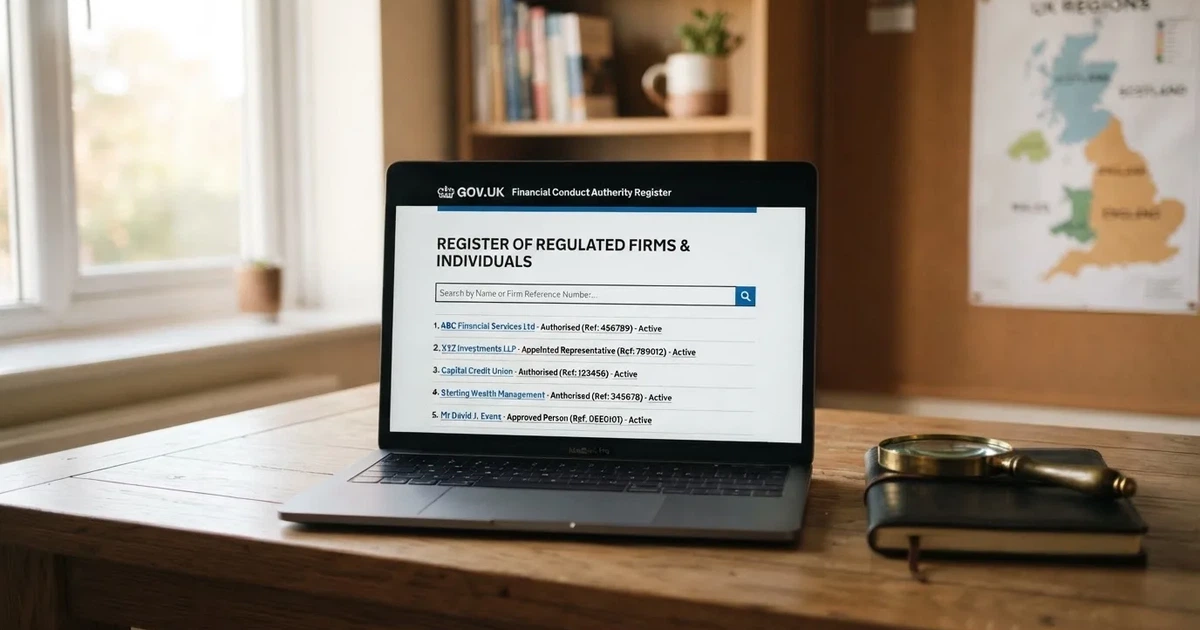
The register itself is the test. Anyone can search it. The Gambling Commission’s public register of gambling businesses, which can be downloaded in full as a CSV or Excel file, listed 139 businesses holding an active remote casino operating licence on 18 September 2026. Each licence number on the register follows a fixed shape: the leading six digits repeat the licence-holder’s account number, an “R” marks a remote (online) licence, and the suffix distinguishes multiple licences held by the same business. So a remote casino operating licence reads, for example, 045322-R-324275-019, where 45322 is Platinum Gaming Limited’s account and -019 marks the specific remote licence. That number is the only thing a player needs to check. The Commission also publishes a domain list that records each website against the licence account that runs it and gives it a status — Active, Inactive, or White Label — with 1,065 active and 361 white-label entries on 18 September 2026. A white-label site trades under another company’s licence, which means the brand name on the homepage may not be the company holding the licence, and the licence number on the register may belong to someone the player has never heard of.
A licence tells a player four things the offshore alternative cannot. It binds the operator into the GAMSTOP national self-exclusion scheme, so a six-month, one-year or five-year exclusion applies across every UK-licensed site at once and cannot be cancelled early. It forces the operator to run financial vulnerability checks using public data at £150 net deposits in a rolling 30-day window. It applies the Commission’s slot stake caps, which since 9 April 2025 set a £5 maximum stake per game cycle for players aged 25 and over and, since 21 May 2025, a £2 maximum stake for players aged 18 to 24. It opens a complaint route to the Commission and an approved ADR provider if the operator’s own service fails. None of these are the operator’s promise; all four are conditions written into the licence.
The opposite case is also worth stating plainly. A player on an offshore site is not a criminal and faces no penalty under the Act. What the player loses is the protection the regime is built to provide: no GAMSTOP enforcement on that site, no Commission complaint route, no ADR escalation, no automatic application of the stake cap, no vulnerability check, no anonymity — identity is verified before the first deposit at any Commission-licensed site, so the offshore site’s “no verification” pitch is a tell, not a feature. The Commission disrupts illegal sites through cease-and-desist notices, search-engine delisting and referrals to payment and hosting providers, but it does not have the power to block sites at UK ISP level. Players do get to the offshore site; what they don’t get is the regulator behind them.
Player protections the UK regime actually delivers
The responsible-gaming shelf sits before the ranking for a reason: the protection layer is what separates the two answer sets a reader can take from this page. A foreign casino site that takes UK customers without a UKGC licence offers none of the following in the same enforceable form. A GB-licensed site offers all of them, because each is a condition of the operating licence rather than a marketing claim.

GAMSTOP is the headline. Every online operator licensed by the Commission is required to take part, since 31 March 2020. A player who registers for self-exclusion picks one of three periods — six months, one year or five years — and the exclusion applies across every participating site at once. It cannot be cancelled early; the minimum is six months and the clock starts from the moment of registration. The point of the scheme is that a single registration stops the player from opening new accounts or logging back into existing ones, and the operator has no discretion to override it. On an offshore site the equivalent does not exist as a national scheme, and a self-exclusion request goes only to that one operator.
The stake caps and pace rules apply only inside the regime. Online slots carry a maximum stake per game cycle: £5 for players aged 25 and over (from 9 April 2025), £2 for 18-to-24-year-olds (from 21 May 2025). Auto-play is banned since 31 October 2021 — a slot spin may not be faster than 2.5 seconds, and losses disguised as wins are banned. There is no state-set deposit or loss ceiling, but operators must now prompt a customer to set a financial limit before the first deposit; that requirement took effect on 31 October 2025. So the deposit ceiling on a UK-licensed site is whatever the player sets for themselves, but the act of setting one is mandatory.
Financial vulnerability checks were extended in February 2025. From 28 February 2025, operators must run a check for players depositing £150 or more in a rolling 30-day window using publicly available data; the wider financial risk assessments that would use credit-reference data have been announced but are not yet in force. The check is a soft stop — the operator shares information about the player’s gambling with the player, and the player decides what to do — but it is automatic and unbypassable, unlike a pop-up the offshore site can choose to display.
The complaint route matters when something goes wrong. A UK-licensed site sits inside the Commission’s complaint framework, with an approved alternative dispute resolution provider as the final step. A player who cannot resolve a withdrawal, a bonus dispute or a self-exclusion breach with the operator can escalate. The offshore alternative has no such backstop on UK soil; the player is dealing with the operator’s own customer service and whatever local regulator sits in the operator’s home jurisdiction.
Identity verification sits at the front door. Since 7 May 2019 every licensed operator has to verify name, address and date of birth before the first deposit or any play. Anonymous play is not possible at a Commission-licensed site. The offshore pitch on this point tends to run the other way — “no ID required”, “play without documents” — and that pitch is the single clearest signal that the site is operating outside the UK regime. For most readers that is not a selling point; it is a tell that the protections in the preceding paragraphs will not apply.
There is no state-set deposit cap, but there is a national self-exclusion register. Players who want to set their own ceiling can use the deposit-limit prompt on first deposit, the reality-check pop-ups during play, time-out tools, and a full self-exclusion registration through GAMSTOP. The National Gambling Helpline (GamCare) and GambleAware offer support outside any single operator’s customer service. None of these are operator-specific offers; they are public infrastructure.
The 10 GB-licensed operators on the register
The comparison shelf is ten rows of what the Gambling Commission’s public register says about ten specific sites on 18 September 2026. None of these is a recommendation. The reader is the one choosing where to play; the register is the one telling them which sites are licensed to take their deposit. Every GB-licensed online casino takes part in GAMSTOP, runs the vulnerability check, applies the stake caps, and verifies identity before first deposit — that is the licence doing its job, and it is true of all ten in the same form. The table is the comparison the reader can verify with a single search.
| Brand | Licence holder and GB remote casino licence | Domain status on the register |
|---|---|---|
| Unibet | Platinum Gaming Limited (account 45322), 045322-R-324275-019 | Active |
| Betfair | PPB Games Limited (account 39411), 039411-R-319335-010 | Active |
| Sky Vegas | Bonne Terre Gaming Limited (account 65519), 065519-R-339675-002 | Active |
| MrQ | Tek Fox Ltd (account 60629), 060629-R-337532-004 | Active |
| Betway | Betway Limited (account 39372), 039372-R-319367-029 | Active |
| PokerStars | Stars Interactive Limited (account 39108), 039108-R-319334-026 | Active |
| Paddy Power | PPB Games Limited (account 39411), 039411-R-319335-010 | Active |
| Ladbrokes | LC International Limited (account 54743), 054743-R-330863-014 | Active |
| BetVictor | BV Gaming Limited (account 39576), 039576-R-319370-028 | Active |
| Betfred | Petfre (Gibraltar) Limited (account 39544), 039544-R-319290-010 | Active |
Three things follow from the table and matter more than the names in it. First, several of the ten share a single licensee — Paddy Power and Betfair are both run by PPB Games Limited, and Ladbrokes sits under LC International Limited. They are not independent operators even where the homepage treats them as separate brands, and any complaint or compliance issue is with the licensee, not with the consumer-facing brand. Second, the licensee named on the register can be a Gibraltar or other overseas company — Petfre (Gibraltar) Limited for Betfred — without changing the licence status. The licence is the Commission’s; the company holding it can sit anywhere. Third, a brand not on the register is not on this page. A “foreign casino accepting UK players” that does not appear here is not licensed by the Commission, whatever the homepage says, and the protections above do not apply.
The wider register held 1,065 active and 361 white-label domain entries on the same date, against 139 businesses holding an active remote casino operating licence. The fact that the active-domain count is more than seven times the licensee count tells the reader something useful: there are far more brands than operators in this market, and the same operator typically runs several of them. A site that talks like an independent brand is often one skin among several on the same licence.
Why the offshore alternative costs what it costs
A reader landing on this page because they searched “foreign casino” or “overseas casino” usually wants to know what they’d get that the UK-licensed sites don’t offer. The honest answer is: a different bonus, a different verification process, and a different complaint route — and the trade-offs that come with each. None of those three are inherently wrong. The reader has to weigh them.
A “no verification” pitch is the standard offshore tell. On a GB-licensed site, identity is checked before the first deposit or any play. On an offshore site the pitch is “play without documents” or “withdraw without ID”. The reader’s question is what they get in exchange. They do not get GAMSTOP enforcement on that site. They do not get the Commission’s complaint route. They do not get the £2 or £5 stake cap. They do not get the financial vulnerability check at £150 net deposits. They do not get an ADR escalation. They get, in exchange, a faster sign-up and an account the operator can close without a regulator’s complaint framework if a dispute arises.
The same shape applies to bonus terms. The Commission’s regime caps wagering requirements at 10x and bans mixed-product bonuses (the bet-on-sport, get-casino-spins kind) since 19 December 2025. An offshore site is free to set 30x, 40x, or higher wagering; free to attach a max-cashout cap; free to layer sport and casino into one offer. The reader’s question is whether the headline number on the bonus is worth the conditions attached, and whether the conditions attached are enforceable at all if the operator is outside the Commission’s reach. A bonus a player cannot actually turn into withdrawable cash is not the value the headline claims.
The credit-card ban since 14 April 2020 covers GB-licensed sites and the e-wallets that route through them. An offshore site may still take a credit card deposit in some cases. The Commission’s 2018 estimate was that around 800,000 UK consumers used credit cards to gamble, and that 22% of online gamblers who used credit cards to gamble were classed as problem gamblers. The Commission banned credit-card gambling on that evidence; the offshore site is not bound by that ban and is not subject to that evidence. A reader who wants to fund play with a credit card will find offshore operators that take one; a reader who wants the protection the ban provides will not.
A reader who lands on this page and chooses an offshore site anyway is making a conscious trade: they are giving up the protections above in exchange for whatever the offshore site offers in their place. There is no judgment in that — the page’s job is to make the trade visible, not to make it for the reader. The trade is real either way.
What an offshore casino site actually offers — and what it doesn’t
The overview shelf ties the licensing argument to a reader-facing decision: the question of what the offshore site does deliver, beyond “no UKGC licence”. The answer is mostly negative on the protection side and partly positive on the marketing side, and the reader’s job is to weigh the two.
A GB-licensed site cannot offer a credit-card deposit. An offshore site can. A GB-licensed site cannot offer a bonus with wagering above 10x or a mixed-product welcome package. An offshore site can. A GB-licensed site cannot offer a £50 slot spin. An offshore site can — the £2 / £5 cap does not apply outside the Commission regime. A GB-licensed site must verify identity before the first deposit. An offshore site may not. Each of those is a real difference the reader can feel.
The trade is symmetric. The GB-licensed side gives the reader the protections detailed above — GAMSTOP, vulnerability checks, stake caps, complaint routes, ADR escalation — in exchange for giving up the offshore side’s marketing flexibility. The offshore side gives the reader the marketing flexibility in exchange for giving up the protections. Neither side is “the right answer”; the question is which side the reader wants to be on.
A reader who is already registered with GAMSTOP has the answer built in: an offshore site does not enforce the exclusion, so a self-excluded player can still open an account and deposit. That is not an argument for offshore sites; it is a description of what they don’t do. A reader with a financial vulnerability concern has the answer built in differently: a GB-licensed site runs a check at £150 net deposits in 30 days; an offshore site does not. A reader who wants a complaint route has the answer built in differently again: the Commission complaint framework exists; the offshore route does not, on UK soil.
The reader’s task is to choose. The page’s task is to make sure the choice is informed. The rest of the page — the table, the calculation, the FAQ — exists for that.
The wagering cap and what it actually caps
The 10x wagering cap on bonuses took effect on 19 December 2025 and applies to every operator licensed by the Commission. The previous regime allowed wagering requirements of 30x, 40x and higher; the cap cuts the upper bound by a factor of three or four. For a £100 cash bonus, the cap means a player has to turn over £1,000 before the bonus is withdrawable. On a typical online slot with an average spin taking about five seconds, that’s around 200 spins of a £5 stake, which at the per-spin pace the Commission’s own rules set — a slot spin may not be faster than 2.5 seconds — works out to something close to 8 minutes of play. The arithmetic is rough because slots vary, but the order of magnitude is what a player should plan for.
The figure scales with the bonus. £50 and a 10x cap means £500 of turnover before withdrawal. £200 and a 10x cap means £2,000 of turnover before withdrawal. The cap is on the multiplier, not on the bonus size, so a larger bonus still requires more turnover in absolute pounds, but the ratio is fixed at 10. The cap is also on the bonus only, not on deposit plus bonus combined — a GB-licensed site’s bonus terms are written as a multiplier on the bonus, not on a “deposit + bonus” base, and the Commission cap applies to that multiplier as written.
The cap closes the worst-offending offers in the market, but it does not make a bonus free. A player who claims a £100 cash bonus with a 10x wagering requirement is committing to £1,000 of slot turnover before they can withdraw the bonus as cash, and on a slot with a 96% return-to-player the expected loss over that turnover sits close to £40. The expected-loss figure is a statistical estimate — an average over many spins at the stated assumptions — and not a guarantee of any single outcome, but it is the right scale to plan against. The bonus is not “free £100”; the bonus is “£100 if you turn over £1,000 of slots, on which the house edge takes around £40 in expectation”.
The mixed-product ban closes another route. A bet-on-sport, get-casino-spins offer used to be a common way to bundle bonuses across verticals; the ban since 19 December 2025 ends that. A GB-licensed site’s welcome offer now stays on the product the player signed up for. A reader comparing against an offshore site’s bundled welcome should weigh the bundle against the simplicity, and weigh the simplicity against the cap.
A reader who reads the headline “100% welcome bonus up to £100” on a UK-licensed site is reading a 10x-capped offer, not a 35x or 40x offer. The headline number is real; the multiplier is the protection. The point is that the cap is the protection that has already been applied, and the offshore site has not applied it.
Reading the register before depositing
The shelf is procedural rather than analytical: it tells a reader how to use the public register, and what to look for when they do. The register is the test. The rest of the page is interpretation.
The register can be searched online or downloaded as a CSV or Excel file from the Gambling Commission’s website. The download is the right tool for a reader who wants to verify more than one brand at a time. The search is the right tool for a single brand. Either way the test is the licence number, not the brand name — the licence number is what the Commission binds itself to, and what the conditions of the operating licence attach to.
Three checks matter for any brand. First, the licence number on the register matches the format of a remote casino operating licence: six digits, an “R”, more digits, a suffix. A licence number that does not match the format, or that points to a non-remote licence, is not the right kind. Second, the status of the domain is Active — Inactive or White Label are different cases, and a White-Label site trades under another company’s licence, so the brand name and the licensee are not the same entity. Third, the licence holder’s account number leads digits repeat in the licence number — the licence number for account 45322 starts with 045322, for example. That repetition is the structural proof that the licence belongs to the named licensee.
A reader who finds a brand they expected on the register but missing from it has their answer: the brand is not licensed by the Commission, the protections in this page do not apply, and the rest of the decision is theirs. A reader who finds a brand with a different licensee than the one the brand’s homepage names has a different question to ask: who actually holds the licence, and what does that licensee cover. The Commission’s register is the source of truth for both questions; the brand’s own marketing is not.
The register is updated continuously and the figures here reflect the snapshot on 18 September 2026. The number of active remote casino licence holders, the active-domain count, the white-label count, and the licence numbers themselves all move over time. A reader who reads this page in 2026+1 should expect the count to be different, and the licence numbers to be revised, and should treat the register itself as the up-to-date source.
Each operator on the register, briefly
The shelf below closes with a short verdict on each of the ten brands the table above covers. Each entry is built from what the register says plus the wider protection layer the licence guarantees. The verdicts are not recommendations; they are the page’s read of what the brand looks like as a choice.
Unibet — Platinum Gaming Limited, 045322-R-324275-019
Platinum Gaming Limited holds Unibet’s GB remote casino licence on the register, with the active domain unibet.co.uk listed against account 45322. The licence number repeats the account number in its leading digits, which is the structural proof on the register. The brand sits inside the Commission’s regime in the same form as every other GB-licensed operator — GAMSTOP enforced, vulnerability check at £150 net deposits, £2 / £5 stake cap, identity verified before first deposit. The relevant question for the reader is whether the brand’s product and bonus terms suit them; this protection package is standard for every operator on this list.
Betfair — PPB Games Limited, 039411-R-319335-010
Betfair sits on the register with PPB Games Limited as the licensee, account 39411. The same licensee also runs Paddy Power — both brands trade on the same remote casino operating licence, which is the kind of shared-licence case the register makes visible. A complaint or compliance issue with either brand is with PPB Games Limited as the licensee, not with either brand as a separate entity. These protections apply automatically, as required by the regulator.
Sky Vegas — Bonne Terre Gaming Limited, 065519-R-339675-002
Sky Vegas’s licence is held by Bonne Terre Gaming Limited on the register, account 65519, with Sky Vegas listed as an active domain. The licence number’s leading digits repeat the account number. The brand is part of the broader Sky commercial group on the consumer-facing side; on the regulator’s side, the licensee is Bonne Terre Gaming Limited and the operating licence is theirs.
MrQ — Tek Fox Ltd, 060629-R-337532-004
MrQ sits on the register with Tek Fox Ltd as the licensee, account 60629, and Mrq.com as the active domain. The licence is a smaller-number account than some of the established brands, which is consistent with a brand founded more recently. Every GB-licensed operator adheres to the same regulatory standards, making this brand a direct choice for players.
Betway — Betway Limited, 039372-R-319367-029
Betway’s GB remote casino licence is held by Betway Limited on the register, account 39372, with Betway.com listed as an active domain. The licence number repeats the account number in its leading digits. The brand has a long-established UK-facing presence and the licence status here reflects that.
PokerStars — Stars Interactive Limited, 039108-R-319334-026
PokerStars sits on the register with Stars Interactive Limited as the licensee, account 39108, and the Pokerstars.uk site as the active domain. The licence is held in the UK by a Stars Interactive Limited entity, which is the local-facing corporate structure behind the global brand. The Commission’s regime applies in full.
Paddy Power — PPB Games Limited, 039411-R-319335-010
Paddy Power shares the PPB Games Limited licence with Betfair. Both brands appear on the register against account 39411. The register’s structural test confirms the shared licence: both licence numbers begin 039411. A reader should treat Paddy Power and Betfair as the same operator at the licence level, even though the brands are separate at the consumer level.
Ladbrokes — LC International Limited, 054743-R-330863-014
Ladbrokes sits on the register with LC International Limited as the licensee, account 54743, and Ladbrokes.com as the active domain. LC International Limited also runs other major UK-facing brands on the same corporate structure. The licence number’s leading digits repeat the account number; players are guaranteed the same safeguards here as at any other Commission-regulated site.
BetVictor — BV Gaming Limited, 039576-R-319370-028
BetVictor’s GB remote casino licence is held by BV Gaming Limited on the register, account 39576, with Betvictor.com as an active domain. The licence number’s leading digits repeat the account number. The brand’s UK-facing structure sits inside the Commission’s regime.
Betfred — Petfre (Gibraltar) Limited, 039544-R-319290-010
Betfred’s GB licence is held by Petfre (Gibraltar) Limited, account 39544, with Betfred.com as an active domain. The licensee is incorporated in Gibraltar — the brand is licensed by the Commission even though the licensee is based outside the UK. This is the case that shows the licence test is not where the company is based but whether the Commission has issued an operating licence to it. Licensing conditions ensure a consistent experience across all regulated operators.
What a player actually loses on an unlicensed site
The shelf is the negative space: what an offshore site does not deliver, written out so the trade is visible rather than implied. The list below is not a moral judgement of offshore sites. It is a description of the gap between the two regimes on the points that matter to a UK player.
GAMSTOP is the first absence. An offshore site is not a participant in the national self-exclusion scheme. A player who has registered for six months, one year, or five years can still open an account and deposit on an offshore site. The exclusion is not enforced outside the Commission’s regime. For a player who registered with GAMSTOP because they wanted a stop, the offshore site is a hole in that stop.
Financial vulnerability checks are the second absence. The Commission’s check using public data does not run on an offshore site. The wider financial risk assessments using credit-reference data, which have been announced but are not yet in force on the licensed side, are not on the offshore side at all.
The stake cap is the third. The £2 maximum stake for 18-to-24-year-olds and the £5 maximum stake for players 25 and over do not apply on an offshore site. A player who has set a self-imposed stake cap on a licensed site will not find it enforced on an offshore site. The pace rules — auto-play banned, no spin faster than 2.5 seconds, no losses disguised as wins — are also Commission regime rules and do not bind offshore sites.
The complaint route is the fourth. A Commission-licensed site sits inside the Commission’s complaint framework with an approved ADR provider as the final step. An offshore site has no such backstop on UK soil; the player is dealing with the operator’s own customer service, and the operator’s home regulator where applicable.
Identity verification is the fifth. Since 7 May 2019 every Commission-licensed site has verified name, address and date of birth before the first deposit or any play. An offshore site’s “no ID required” pitch is a tell that this protection does not apply on that site.
The credit-card ban is the sixth. Since 14 April 2020 GB-licensed sites and the e-wallets that route through them have not accepted credit cards. The Commission’s 2018 estimate was that around 800,000 UK consumers used credit cards to gamble, and 22% of online gamblers who used credit cards were classed as problem gamblers. The offshore site is not bound by the ban and may still take a credit card deposit.
The wagering cap is the seventh. Since 19 December 2025 the Commission’s regime caps wagering requirements at 10x and bans mixed-product bonuses. The offshore site is free to set higher multiples and to bundle products in one offer. The headline number on the bonus is not the only number.
Players pay no UK tax on gambling winnings, so the absence is not financial. Operators pay Remote Gaming Duty, which the 2026 Budget raised from 21% to 40% from 1 April 2026 — but that is on operators and not on players, and the page’s job is to describe what changes for the player, not the operator’s tax bill.
The seven absences together form the trade. A player on an offshore site gets a different bonus, a faster sign-up, and a different verification posture, and gives up seven protections in exchange. The trade is the reader’s to weigh.
The credit-card question, in its wider form
The credit-card ban deserves its own shelf because the underlying evidence is what makes the ban readable, and the offshore alternative is what the evidence points at. The Commission’s 2018 estimate was that around 800,000 UK consumers used credit cards to gamble. Of online gamblers who used credit cards to gamble, 22% were classed as problem gamblers — a rate higher than for non-card-funded play. The Commission banned credit cards for gambling on 14 April 2020, including credit-card funding through e-wallets. Debit cards and bank transfers were unaffected.
The reader’s question, on this shelf, is what the offshore site does instead. An offshore site that is not bound by the Commission’s ban can still take a credit card deposit. The reader who wants to fund play with a credit card will find operators that take one. The reader who wants the protection the ban provides will not. The decision belongs to the reader; the trade belongs to this page.
A second credit-card-shaped fact is the shape of the underlying payment system itself. UK bank transfers typically run through the Faster Payments Service, which Pay.UK has operated since 2008 and which runs 24 hours a day, seven days a week, with most payments arriving instantly or within a couple of minutes. The Faster Payments scheme sets a £1,000,000 per-transaction limit, although individual banks can and do impose lower limits on their own customers. The Bank of England is not a direct participant in the scheme but oversees its safety and stability and provides final settlement. For a player funding play from a UK bank account, Faster Payments is the typical rail, and the £1,000,000 scheme-level limit is well above the deposit ceiling a player would set for themselves.
Apple Pay is a separate rail. Apple Pay was developed and operated by Apple Inc., launched on 20 October 2014, initially supporting only US-issued payment cards, and began supporting UK-issued cards on 14 July 2015. Apple Pay protects card data through tokenisation — the actual card number is replaced with a device-specific tokenised Device Primary Account Number, and a dynamic security code is generated for each transaction. In-store payments use near-field communication to communicate with contactless payment terminals. Apple Pay authentication on an iPhone with Face ID requires a double-click of the side button for in-store purchases; on Touch ID models, a double-click of the Home button. The US Consumer Financial Protection Bureau finalised a rule in November 2024 bringing large nonbank digital wallet operators, including Apple Pay, under bank-like federal oversight, and the European Commission opened a 2020 investigation into whether Apple abused its control of iPhone NFC hardware to block rival payment apps. For a UK player funding a casino account, the relevance of Apple Pay is that it is an option at GB-licensed sites that accept it, and that the tokenisation layer is what protects the card data, not the casino’s own systems.
AstroPay is the wider alternative. Founded in 2009 and headquartered in Uruguay, AstroPay operates as a global digital wallet offering online payments, virtual and physical debit cards, and peer-to-peer transfers. AstroPay spun off its payment-processing business, dLocal, as a separate company in 2016. AstroPay’s UK entity, Larstal Limited, is an electronic money institution authorised by the Financial Conduct Authority under the Electronic Money Regulations 2011; AstroPay’s Isle of Man entity, AstroPay Global (IOM) Limited, is licensed by the Isle of Man Financial Services Authority; the Brazilian entity is authorised by the Brazilian Central Bank; the Danish entity is authorised by the Danish Financial Supervisory Authority. AstroPay serves users across markets including Argentina, Australia, Brazil, Canada, Colombia, Denmark, Spain, the United Kingdom, the United States and Uruguay. For a UK player funding an offshore casino, the relevance of AstroPay is the cross-border infrastructure — the wallet can move funds into markets where the UK bank rails do not reach.
The three rails — bank transfer, Apple Pay, AstroPay — sit at different points on the protection layer. The bank-transfer rail is the one the Commission’s regime is built to interact with; the credit-card ban cuts one rail out; Apple Pay sits inside the device-level protection; AstroPay sits across the regulatory boundary. The reader’s job is to choose the rail that suits the operator they have chosen; the page’s job is to make the boundary visible.
How a player gets to a safe decision
The shelf is the practical sequence — the order in which a reader should work through this page if they are weighing whether to play on a GB-licensed site or an offshore one. The sequence is short because the underlying decision is short, but the order matters because each step depends on the previous one.
First, identify the brand. If the reader has already chosen a brand, the next step is to look it up on the Commission’s public register. If the brand is on the register as an active domain with a valid remote casino operating licence, the reader is on the GB-licensed side of the trade and the protections apply. If the brand is not on the register, the reader is on the offshore side and the protections do not.
Second, identify the licensee. The register names the licensee; the brand’s own marketing may name a different entity. Where they differ, the licensee on the register is the company the Commission’s conditions attach to. A reader who finds a licensee they were not expecting — a Gibraltar company for a UK-facing brand, for example — has the answer to “where is this company actually based”, which is a separate question from “is this company licensed by the Commission”.
Third, identify the bonus terms. The Commission’s 10x cap and the mixed-product ban apply on the GB-licensed side. A 35x or 40x wagering requirement, or a sport-plus-casino bundle, is not consistent with the licensed side. The reader’s job is to compare the headline number on the bonus against the multiplier and against any max-cashout cap, and to recognise the cost in turnover before deciding.
Fourth, identify the verification process. A GB-licensed site verifies name, address and date of birth before the first deposit or any play. An offshore site may not. The reader’s job is to recognise what the verification step is doing: on the licensed side, it is the front door of the protection layer; on the offshore side, its absence is the trade the reader is making.
Fifth, identify the self-exclusion posture. A reader who is registered with GAMSTOP is excluded from every GB-licensed site for the period chosen. The exclusion does not apply on an offshore site. The reader’s job is to decide whether the offshore site suits them in light of that, and the decision is theirs.
Sixth, identify the complaint route. The Commission’s complaint framework and approved ADR provider apply on the licensed side. They do not apply on the offshore side. The reader’s job is to decide what they would do if a withdrawal or bonus dispute went wrong, and to recognise that the answer is different on the two sides.
The sequence does not tell the reader which side to choose. It tells the reader how to know which side they are on. The choice is theirs.
What the data was checked against
The figures on this page come from the Gambling Commission’s public register of gambling businesses, downloaded on 18 September 2026 as a CSV file. The register’s snapshot on that date held 139 businesses with an active remote casino operating licence, 1,065 active domain entries and 361 white-label domain entries. The ten licence numbers in the table above are the active entries on that date, against the accounts and licensees named. The Commission’s website allows online search of the register and full CSV / Excel download for any reader who wants to verify or to check a date outside this snapshot.
The slot stake caps — £5 from 9 April 2025 for players aged 25 and over, £2 from 21 May 2025 for 18-to-24-year-olds — are Commission rules in force as of the snapshot date. Financial vulnerability checks took effect on 28 February 2025. The auto-play ban and the 2.5-second spin pace rule took effect on 31 October 2021. The mixed-product bonus ban and the 10x wagering cap took effect on 19 December 2025. The credit-card ban took effect on 14 April 2020. The minimum age of 18 and the pre-deposit identity verification rule have been in force since 7 May 2019. The deposit-prompt requirement took effect on 31 October 2025.
The Commission’s evidence base for the credit-card ban — around 800,000 UK consumers using credit cards to gamble in 2018, and 22% of online gamblers who used credit cards classed as problem gamblers — is published alongside the ban. The 22% figure is the rate for online gamblers who used credit cards to gamble; it is higher than the rate for online gamblers who did not. The evidence is what makes the ban readable; the offshore alternative is what the evidence points at.
The Remote Gaming Duty increase from 21% to 40% took effect on 1 April 2026 and applies to operators, not to players. Players pay no UK tax on gambling winnings. The duty rate is a model only — operators’ actual liability depends on their own structure, and the figure is not a player-facing number.
A reader reading this page in a year other than the snapshot year should expect the register’s counts and the licence numbers to have moved. The structure — the licence format, the active / inactive / white-label status, the conditions attached to the licence — is stable. The figures are a snapshot.
Frequently asked questions
What does it mean for a casino site to be based outside the UK?
A site based outside the UK is one whose operating company is incorporated in a jurisdiction other than the UK — Malta, Gibraltar, Curaçao, the Isle of Man. That tells the reader where the company is; it does not tell the reader whether the site is licensed to take UK customers. Since the Gambling (Licensing and Advertising) Act 2014, a site taking UK customers needs a Gambling Commission licence regardless of where the operator is based, and the test for the reader is the register, not the company’s address.
Do foreign casino sites accepting UK players hold a Gambling Commission licence?
Some do and some do not. A GB-licensed operator can be incorporated outside the UK — Petfre (Gibraltar) Limited holds Betfred’s licence, for example — and the licence is still a UKGC licence. A site that markets to UK players without a UKGC licence is offering an unlicensed product, and the protections detailed above do not apply. The Commission’s public register is the test: if the brand’s domain is not on the register as an active entry against a valid remote casino operating licence, the site is unlicensed for UK purposes.
What protections does a UK player lose by using a foreign casino site?
The seven absences are GAMSTOP enforcement, the £150 net-deposit financial vulnerability check, the £2 / £5 slot stake cap, the 2.5-second spin pace rule and the auto-play ban, the Commission complaint route with ADR escalation, the pre-deposit identity verification, and the credit-card ban. None of these apply on an unlicensed site; the offshore site is not bound by them. The reader’s task is to weigh the trade — what the offshore site offers in exchange — and the decision is theirs.
Is a Malta or Curaçao licence the same as a UK Gambling Commission licence?
No. A Malta Gaming Authority or Curaçao Gaming Control Board licence is a real authorisation in its home jurisdiction, but it does not substitute for a Gambling Commission licence for the purpose of taking UK customers. The two regimes set different stake caps, different bonus conditions, different self-exclusion schemes and different complaint routes. A site that holds one of the offshore licences alone is an unlicensed site for UK purposes, and the Commission’s protections do not apply on it.
Can a UK player self-exclude through GAMSTOP on a foreign casino site?
No. GAMSTOP is the national online self-exclusion scheme operated as a mandatory condition of every Commission licence. An offshore site that does not hold a Commission licence is not a participant in GAMSTOP, and a self-exclusion registration does not apply on it. A player who has registered for six months, one year or five years with GAMSTOP can still open an account and deposit on an offshore site; the exclusion is enforced only on GB-licensed sites.
Why would a foreign casino site still market itself to UK players?
An offshore site can offer a faster sign-up, a different verification posture, higher bonus multiples, mixed-product welcome packages and stake sizes the Commission’s regime caps. Some readers want those features and accept the trade. The Commission’s regime binds operators licensed by it; offshore operators are not bound. Marketing a site to UK players is not the same as being licensed to take UK players, and the test for the reader is the register, not the marketing.
Written by the editors at livecasinoguideuk.