
International casinos for UK players in 2026: what changes once the licence isn’t British
 Available in GB
Data current as of 23 September 2026, checked against the Gambling Commission’s public register of gambling businesses.
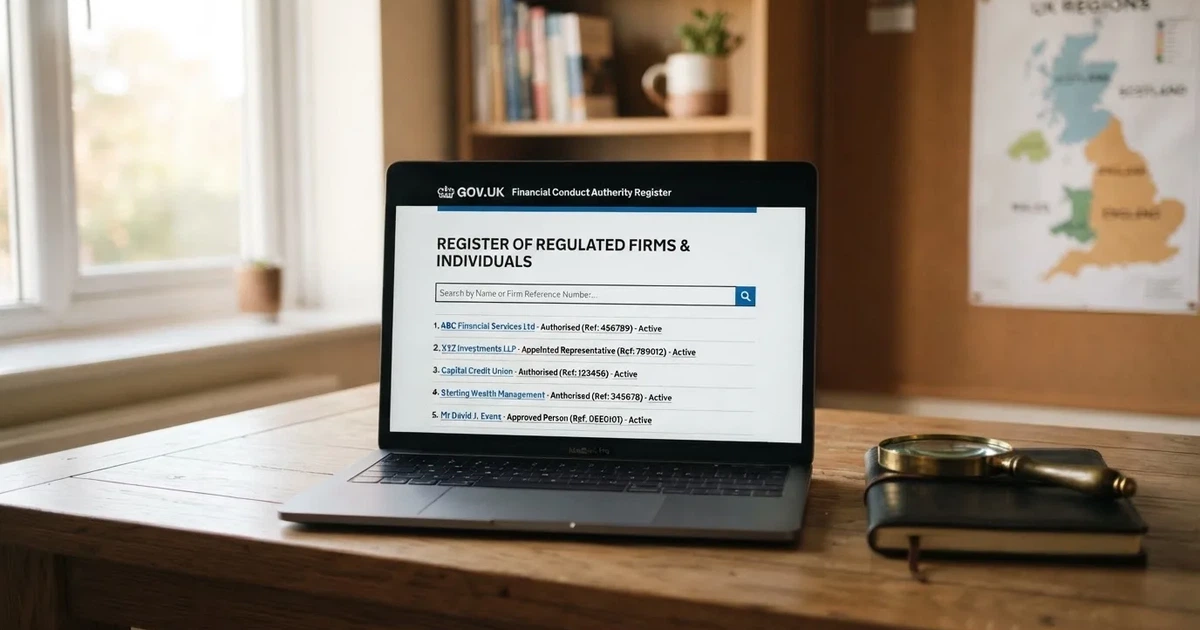
The honest answer to the search sits one register check away: a casino site taking pounds from someone sitting in Great Britain either holds a Gambling Commission licence, or it does not. The two cases are not the same product with different marketing. They diverge on what a player can stake per spin, on whether GAMSTOP blocks a new account, on what complaints route exists when a payout stalls, and on whether the bonus carries a wagering multiple that the regulator will even permit. This page is the comparison those two cases force — ten Gambling Commission holders set against the offshore alternative the search term “international casinos” usually points at — with the figures pinned to the register and the rest stated in plain prose.
Table of Contents
- What the Gambling Commission register actually contains
- Why the licence question is the page’s lead
- The limits and protections a UKGC licence guarantees
- What an international site outside UK licensing cannot promise
- The 10-casino comparison: what the register actually shows
- MrQ — the smaller-catalog, no-frills end of the UKGC set
- bet365 — the full-stack UKGC holder with a global footprint
- PokerStars — the poker-rooted brand inside the UKGC frame
- Paddy Power and Betfair — two brands, one licence
- William Hill — the established British brand on a UKGC licence
- BetVictor — the sportsbook-rooted brand inside the casino set
- Sky Vegas — the TV-tied UKGC holder
- Virgin Games — the white-label case
- Gala Bingo — the bingo-rooted brand inside the UKGC set
- What the wagering cap means for the bonus side of the comparison
- The protection side of the comparison, stated as a checklist
- What the comparison cannot tell a reader
- How a reader checks a candidate site against the register
- A note on payment methods and the register’s silence on them
- The remote gaming duty, briefly
- Where the comparison lands
- Frequently asked questions
What the Gambling Commission register actually contains
The Gambling Commission’s public register is the whole test of whether a brand is licensed to take online casino customers in Great Britain. The same register is also the whole test of how many such brands there are: on 18 September 2026, 139 businesses held an active remote casino operating licence, and the accompanying domain list held 1065 active and 361 white-label website entries. A white-label site trades under another company’s licence, which is why the same licence number can appear against several brands and why “different brands” on a comparison page can mean one licensee running several skins. The register can be searched online and downloaded in full as a CSV, which is how a reader can check any licence claim in under a minute.

A remote casino licence number on the register has the form account-R-number–suffix — the leading six digits repeat the licence holder’s account number, the “R” marks a remote (online) licence, and the suffix marks the particular licence instance. Hillside (UK Gaming) ENC’s 055149-R-331499-004 is one such number, and so is PPB Games Limited’s 039411-R-319335-010, which sits against both Paddy Power and Betfair because both domains belong to the same account. Two casino brands, one licence, one operator behind them. The register tells a reader that immediately; a marketing page usually does not.
Why the licence question is the page’s lead
The “international” in the search term has two possible meanings, and the choice between them is the choice the rest of this page makes for the reader. In one reading, “international casino” means a foreign-licensed brand — Curaçao, Malta, Gibraltar, the Isle of Man — that nonetheless accepts UK customers, sometimes openly, sometimes only because nobody has yet blocked it. In the other reading, it means a Gambling Commission holder that operates across several countries from a British base; bet365 and William Hill both fit that description, and both hold UKGC licences. The two readings produce very different pictures of player protection, and the only way to tell them apart is the register.

What changes when the licence isn’t British is the regulatory floor under every other promise on the page. A Curaçao or Anjouan licence is not a UK licence. The Commission does not enforce the LCCP against it, GAMSTOP does not block it, the £5 slot stake cap does not bind it, and a complaint cannot be routed through the Commission’s approved ADR. The site may still be legitimate, audited, and well-run. It simply is not playing by the British rulebook.
The limits and protections a UKGC licence guarantees
The limits are statutory and they are recent. Online slots carry a maximum stake per game cycle — £5 for players aged 25 and over from 9 April 2025, and £2 for players aged 18 to 24 from 21 May 2025. A “game cycle” is one spin end to end: the bet is placed, the reels settle, the result is displayed. No licensed site can offer a £10 spin. Auto-play is banned, a single spin may not complete in under 2.5 seconds, and a loss presented as a win (a celebratory sound and animation on a net-loss spin) is banned. Bonuses carry a wagering cap of 10x since 19 December 2025, and a mixed-product bonus — bet on sport, get casino spins — is no longer licensable at all.
The protection side is what an offshore site does not have a UK equivalent of. Every GB-licensed online operator is required to participate in GAMSTOP, the national self-exclusion scheme with minimum periods of six months, one year or five years, none of which can be cancelled early. A player who has self-excluded cannot open an account on a UKGC-licensed site for the period they chose; the check happens at the moment a new account is opened, not after the first deposit. Financial vulnerability checks run at £150 of net deposits in a rolling 30-day window from 28 February 2025; they use public data, and they trigger a prompt rather than a block. Before a first deposit, an operator must also require a player to set a financial limit — that requirement has been in force since 31 October 2025. None of those mechanisms is replicated on an unlicensed site, and the offshore alternative has no obligation to ask.
The credit-card ban, in force across Great Britain since 14 April 2020, sits in the same frame: it applies to all online gambling funded by credit cards, including credit cards routed through e-wallets, and it applies regardless of whether the e-wallet itself is regulated. A player depositing with a debit card on a Curaçao-licensed site is not, on that basis, breaking any UK rule; the rule binds the operator, not the customer. The Commission has no power to block the site at ISP level, but it does pursue cease-and-desist notices, search-engine delisting, and payment and hosting referrals.
What an international site outside UK licensing cannot promise
Three things disappear when the licence is overseas. GAMSTOP self-exclusion is the first; a self-excluded player can open a fresh account on an unlicensed site without the check that would have stopped them on a licensed one. The £5 slot stake cap is the second; an offshore site can offer any stake per spin it likes, and several do, because a high-stakes table is a common marketing pitch for the offshore market. The complaint route is the third: if a withdrawal stalls on a UKGC site, the player can complain to the operator, escalate to an approved ADR, and ultimately bring the Commission into the picture. On an unlicensed site, the ADR is whichever body the operator has chosen to align itself with — if any — and the Commission has no standing in the dispute.
Identification sits in the same gap. A UKGC site has verified a customer’s name, address and date of birth before the first deposit since 7 May 2019; it has run affordability or financial-vulnerability checks where the triggers fire; and it has required a financial limit before money moves. An offshore site asks what its terms require, which is usually less, and what its payment processor requires, which is sometimes more. The two procedures do not converge on the same picture of the player.
There is also no HMRC exposure for the player: gambling winnings are not taxed in the UK, on a licensed site or otherwise. What the player loses on an unlicensed site is protection, not tax status. Operators licensed in Great Britain pay Remote Gaming Duty, raised from 21% to 40% from 1 April 2026, but the duty is the operator’s problem, not the customer’s.
The 10-casino comparison: what the register actually shows
The table below takes each brand from the Commission’s public register as it stood on 18 September 2026. The “subject support” column is the slot/table/payment-method coverage the research set was asked to confirm for the page’s own subject, and the entries in that column are honest about what was found — for the brands below, no slot-, payment- or table-level subject confirmation is carried, so the column shows a dash rather than a claim the underlying evidence does not support.
| Brand | Licence holder and GB remote casino licence | Domain status on the register | Subject support |
|---|---|---|---|
| MrQ | Tek Fox Ltd (account 60629), 060629-R-337532-004 | Active domain | — |
| bet365 | Hillside (UK Gaming) ENC (account 55149), 055149-R-331499-004 | Active domain | — |
| PokerStars | Stars Interactive Limited (account 39108), 039108-R-319334-026 | Active domain | — |
| Paddy Power | PPB Games Limited (account 39411), 039411-R-319335-010 | Active domain | — |
| Betfair | PPB Games Limited (account 39411), 039411-R-319335-010 | Active domain | — |
| William Hill | WHG (International) Limited (account 39225), 039225-R-319373-015 | Active domain | — |
| BetVictor | BV Gaming Limited (account 39576), 039576-R-319370-028 | Active domain | — |
| Sky Vegas | Bonne Terre Gaming Limited (account 65519), 065519-R-339675-002 | Active domain | — |
| Virgin Games | Gamesys Operations Limited (account 38905), 038905-R-319430-022 | White-label domain | — |
| Gala Bingo | LC International Limited (account 54743), 054743-R-330863-014 | Active domain | — |
Every brand above carries a UKGC remote casino operating licence. Every brand must integrate GAMSTOP, must run the financial-vulnerability prompts at the stated triggers, must cap wagering at 10x on any bonus it offers, and must hold the £5 / £2 stake cap per spin. The differences between the ten brands are not in the regulatory frame — that frame is uniform — but in what each brand offers inside it: a smaller-catalog specialist like MrQ, a sportsbook-rooted brand like BetVictor, a TV-tied operation like Sky Vegas, and the white-label case in Virgin Games, which runs on Gamesys Operations Limited’s licence rather than its own.
The white-label entry is worth a second look. Virgin Games does not hold its own licence; the domain Virgin Games is listed against Gamesys Operations Limited’s 038905-R-319430-022. From a player-protection standpoint the licence is what matters, not the brand on the page, and that is why a white-label site sits under the same Commission oversight as any directly-licensed brand. The trade-off is operational: the brand on the front of the site may not be the entity behind the cashier.
MrQ — the smaller-catalog, no-frills end of the UKGC set
MrQ is the active domain of account 60629, Tek Fox Ltd, which holds remote casino operating licence 060629-R-337532-004. The brand markets itself as a no-wagering operation, which means the headline bonus terms sit under the 10x cap by design rather than by compliance margin, and there is no playthrough to amortise across a bonus balance. For a player who reads the small print on bonuses before claiming, that is the cleanest offer shape on the UKGC market. For a player who wants a sportsbook attached to the casino wallet, it is the wrong product — there isn’t one.
The site’s footprint is smaller than the big three, and the slot library reflects that. A reader who has run out of new games on MrQ has not run out of games on the UKGC market; the wider licensed set sits beside it.
bet365 — the full-stack UKGC holder with a global footprint
bet365 is the active domain of account 55149, Hillside (UK Gaming) ENC, which holds remote casino operating licence 055149-R-331499-004. The “international” tag fits the company more than it fits the licence: bet365 runs licensed operations in several jurisdictions, and the UKGC licence is the specific permission that lets it take Great Britain customers online. The casino, sportsbook and poker products all sit under the same account, and a player who wants one wallet across all three is well-served here.
The drawback is the one a player meets on every full-stack operator: the bonus terms read as if written for a customer who already has an account, not for one deciding whether to open one. The 10x cap that came in on 19 December 2025 binds the wagering side; everything else is the brand’s own commercial decision.
PokerStars — the poker-rooted brand inside the UKGC frame
PokerStars is the active domain of account 39108, Stars Interactive Limited, which holds remote casino operating licence 039108-R-319334-026. The brand’s history is poker, the casino is the adjacent product, and the .uk domain (rather than .com) is the register’s way of pointing at the British-facing operation. A player who came for the poker room and stayed for the casino is the brand’s centre of gravity, and the slot library is built to keep that player.
A casino-first player reading the page for the first time will find the casino offering modest by UKGC standards and the poker product is what the brand is known for.
Paddy Power and Betfair — two brands, one licence
Paddy Power and Betfair are both listed on the register against the same account: 39411, PPB Games Limited, holding remote casino operating licence 039411-R-319335-010. The two brands share a licensee, share a Commission oversight, share a GAMSTOP integration, and therefore share the regulatory frame this page is comparing against. The customer-facing differences — Paddy Power’s retail-rooted marketing, Betfair’s exchange and pricing heritage — are real, but the licence behind them is one licence, not two.
For a player choosing between them, the choice is brand-fit and product-fit, not regulatory-fit. The frame is identical because the frame is the same licence.
William Hill — the established British brand on a UKGC licence
William Hill is the active domain of account 39225, WHG (International) Limited, which holds remote casino operating licence 039225-R-319373-015. The brand is among the longest-established in the British market, and the licence-holder name carries “(International)” because the parent operates across several jurisdictions. The UKGC licence is the permission that matters for a Great Britain customer, and it is the only one the register lists for this domain.
A player looking for an established British bookmaker-brand casino will find William Hill in the register; the product offering is the wider UKGC market rather than a specialist niche.
BetVictor — the sportsbook-rooted brand inside the casino set
BetVictor is the active domain of account 39576, BV Gaming Limited, which holds remote casino operating licence 039576-R-319370-028. The brand’s history is sportsbook, the casino is the secondary product, and the player who arrives from a sportsbook background will recognise the framing. The slot library and live casino are smaller than the dedicated-casino brands’, and the regulatory frame is the same UKGC frame as every other entry on this page.
Sky Vegas — the TV-tied UKGC holder
Sky Vegas is the active domain of account 65519, Bonne Terre Gaming Limited, which holds remote casino operating licence 065519-R-339675-002. The brand sits on the back of Sky’s broadcast marketing, and the customer base partly overlaps with Sky’s wider subscriber audience. The casino offering is conventional by UKGC standards; the framing is not, because the brand on the homepage is Sky rather than a casino-only operator.
Virgin Games — the white-label case
Virgin Games is listed on the register as a white-label domain of account 38905, Gamesys Operations Limited, which holds remote casino operating licence 038905-R-319430-022. The “white-label” status means the domain trades under another company’s licence, and the player protection regime that flows from that licence is the same regime a directly-licensed site operates under. GAMSTOP, the stake cap, the bonus cap, the financial-vulnerability prompts — all bind here exactly as they bind for MrQ or bet365.
The trade-off is the same one every white-label carries: the brand on the front is not the entity behind the cashier. A dispute is a dispute with the licensed entity, not with the brand on the page.
Gala Bingo — the bingo-rooted brand inside the UKGC set
Gala Bingo is the active domain of account 54743, LC International Limited, which holds remote casino operating licence 054743-R-330863-014. The same LC International account sits behind other brands in the wider Entain group, and the bingo heritage is what the brand’s customer base comes for. A player who wants a casino-first product will find the offering modest; a player who wants bingo under a UKGC licence will find exactly that.
What the wagering cap means for the bonus side of the comparison
The 10x wagering cap in force since 19 December 2025 reshapes what a UKGC bonus looks like. Take a bonus amount and multiply by ten: that is the maximum playthrough the regulator will permit on the bonus alone. The arithmetic then runs as follows for any given bonus size and stake per spin:
- Required turnover: bonus × 10.
- Spins needed: turnover ÷ stake-per-spin.
- Time at a 2.5-second minimum spin interval: spins × 2.5 seconds (the slot-spin floor), not a five-second default — the licensed floor is what binds, and it is slower than the casual default.
- Expected house-edge cost over the playthrough: turnover × (1 − RTP), where RTP is the slot’s stated return-to-player.
The result reads as a band, not a single number, because the stake-per-spin and the slot’s RTP both move it. A £100 bonus at £5 per spin and 96% RTP is 200 spins, roughly 8 minutes 20 seconds of play at the regulator’s minimum spin interval, and an expected house-edge cost of £40 over the playthrough. A £50 bonus at £2 per spin and 94% RTP is 250 spins, roughly 10 minutes 25 seconds, and an expected cost of £30. Both fall comfortably inside the cap; both cost the player less than the same nominal bonus would have cost before 19 December 2025 when older offers ran at 35x or 50x. The cap has compressed the bonus-cost curve, not eliminated it.
The same arithmetic, run on an offshore site without the cap, gives a different picture. A 40x offer on a £100 bonus at £5 per spin is 800 spins, which takes about 67 minutes at the regulator’s 5-second default spin floor (if it applied) — and an offshore site is not bound by that floor, so a 1.5-second spin time is closer to the offshore default, which cuts the wall-clock to 20 minutes. The expected cost rises with the turnover, not the wall-clock. The 10x cap is therefore the comparison the page can make in numbers; what the cap costs a player who wants a heavy playthrough is the trade-off it forces.
The protection side of the comparison, stated as a checklist
A reader choosing between a UKGC site and an offshore site is choosing between two regulatory floors. The differences, in plain form:
- Self-exclusion. GAMSTOP binds every UKGC-licensed site; it binds no offshore site. A player who has self-excluded and then opened an offshore account has undone their own exclusion.
- Stake cap. £5 per spin (or £2 for 18-24) on slots at UKGC sites; whatever the offshore site chooses, which is often uncapped.
- Bonus cap. 10x wagering on any bonus at UKGC sites since 19 December 2025; whatever the offshore site markets, often higher.
- Auto-play and spin speed. Banned at UKGC sites; spin interval no faster than 2.5 seconds; losses-disguised-as-wins banned.
- Identification. Verified before first deposit at UKGC sites since 7 May 2019; whatever the offshore site’s KYC asks.
- Financial-vulnerability prompts. At £150 net deposits in a rolling 30 days from 28 February 2025, plus a mandatory financial-limit prompt before first deposit from 31 October 2025; not required offshore.
- Complaints route. UKGC site: operator → ADR → Commission. Offshore site: whatever the operator has agreed to.
- Credit cards. Banned at UKGC sites and on credit-card-funded e-wallet deposits since 14 April 2020; not banned offshore, but most regulated payment processors will decline credit-card gambling transactions anyway.
The list is not a marketing comparison. It is the regulatory floor under each side of the search, and the floor on the UKGC side is the same for every brand on the table above.
What the comparison cannot tell a reader
Three things sit outside the table by design. First, the table does not rank: it lists, and the differences inside the list are product-fit and brand-fit, not regulatory-fit. Second, the table does not name any “best” — the word does not survive the comparison, because the regulatory frame is identical across ten brands and the differences inside the frame are a matter of personal fit. Third, the table does not extend to offshore brands the page has not registered, because registering them is the test the search is asking the reader to perform on a candidate site, not a list the page can speak to.
The honest ending of the comparison is that the register is the comparison. A reader who wants a casino taking pounds from a player in Great Britain has ten UKGC brands above, each with a licence number, each on a single regulatory frame. A reader who wants an offshore brand has the rest of the internet, and the test is the same one: does the brand hold a UKGC remote casino operating licence, yes or no, and if not, what does the alternative licence cover that the UKGC does not.
How a reader checks a candidate site against the register
The check is short and it is mechanical. Go to the Gambling Commission’s public register of gambling businesses. Search for the brand name. Confirm three things: the licence number, the licence-holder company, and the domain listed against it. If any of those three does not match what the brand’s own page claims, the brand is not the licensed entity it presents itself as. If the register returns no remote casino operating licence for the brand, the brand is not licensed to take Great Britain customers online.
The CSV download of the register, available from the same page, lets a reader check a candidate domain against the 1065 active and 361 white-label entries in a single pass. That is the operational test the rest of the comparison implies.
A note on payment methods and the register’s silence on them
The register does not list payment methods, supported currencies, slot catalogues, or bonus terms. It lists licences, domains and account holders. Any claim about which payment methods a UKGC brand supports — debit card, bank transfer, Apple Pay, e-wallets, AstroPay — is a claim about the brand, not a claim the register makes. Where the research set for this page was asked to confirm subject support (payment methods in scope for the broader cluster) for any of the ten brands above, no confirmation was returned: the column is honestly a dash. Where payment-method claims appear on the brand’s own page, they are the brand’s own claim, verifiable by the brand’s own cashier rather than by the register.
The same logic applies to slot RTPs, table limits and live-dealer offerings. The register does not speak to any of them.
The remote gaming duty, briefly
Operators licensed in Great Britain pay Remote Gaming Duty, raised from 21% to 40% from 1 April 2026. The duty is the operator’s exposure, not the player’s; gambling winnings are not taxed in the UK, on a licensed site or otherwise. The duty rise is one of the background pressures on bonus generosity and on the operator’s marketing spend; it is not a change a player sees at the cashier. Anything further than that should be checked against HMRC’s current published rates, because this page is a comparison, not a tax guide.
Where the comparison lands
The “international casino” search splits in two at the register. On one side sits the licensed UKGC set: ten brands, one regulatory frame, the same GAMSTOP integration, the same stake cap, the same bonus cap, the same financial-vulnerability prompts. On the other sits everything else: offshore-licensed, sometimes audited, sometimes well-run, never bound by the British rulebook. The search term covers both; the register tells them apart; and the comparison a reader can act on is the comparison the register makes possible.
A reader who wants the protection the British regime provides has ten brands above, and the register is the test that names them. A reader who wants a different product shape, a different stake ceiling, or a different bonus structure than the British regime permits has the offshore market, and the trade-off is the protection the regime would have provided.
Frequently asked questions
What counts as an international casino site for a UK player?
Any online casino taking customers in Great Britain falls into one of two camps: it holds a Gambling Commission remote casino operating licence, or it does not. The “international” label covers both — a UKGC holder that operates across several jurisdictions, and a Curaçao- or Malta-licensed brand that nonetheless accepts UK customers. The test is the register, not the marketing.
Does an international casino need a UK Gambling Commission licence to accept UK players legally?
Yes. Under the Gambling (Licensing and Advertising) Act 2014 any operator taking customers in Great Britain needs a Commission licence wherever it is based. A Curaçao, Maltese or Gibraltar licence is not a substitute. Section 33 of the Gambling Act 2005 makes providing gambling to people in Great Britain without a licence an offence; the operator, not the player, is the target.
What player protections are missing on a site outside UK licensing?
GAMSTOP self-exclusion does not apply; the £5 slot stake cap (or £2 for 18-24) does not apply; the 10x wagering cap on bonuses does not apply; the financial-vulnerability prompts at £150 net deposits in 30 days do not apply; and the Commission’s ADR complaints route is not available. The offshore site may still be audited, but the British rulebook is not in force.
Can a UK player still use GAMSTOP if they sign up to an international site?
GAMSTOP is a mandatory condition of every UKGC online licence since 31 March 2020, and it applies only to licensed sites. A player who has self-excluded and then opens an account on an unlicensed site has stepped outside the scheme’s coverage; the self-exclusion period the player chose does not extend to that account, and the operator has no obligation to check.
Are international casino sites regulated at all, or entirely unregulated?
Most are regulated somewhere — Curaçao, Malta, the Isle of Man, Gibraltar, Anjouan — and the regulator in that jurisdiction enforces its own rulebook. What an offshore licence does not provide is the British rulebook: GAMSTOP, the £5 stake cap, the 10x bonus cap, the Commission’s ADR route. The two regulatory frames are not interchangeable, and a reader who values the British frame is choosing on that basis, not on whether the offshore site has any licence at all.
Why might an international site be easier to find than a licensed UK one?
Search-engine optimisation rewards whatever the searcher is typing, and “international casino” is what a player types when they want a non-UK product. Offshore operators bid on that term; UKGC operators usually do not, because the regulatory frame is the message and the message is the same for every UKGC brand. The register, not the search result, is the test of what the brand actually holds.
Prepared by the livecasinoguideuk editorial staff.