
How UK Online Casino Tournaments Work — Leaderboard Formats, Prize Payouts and the Brands Behind Them
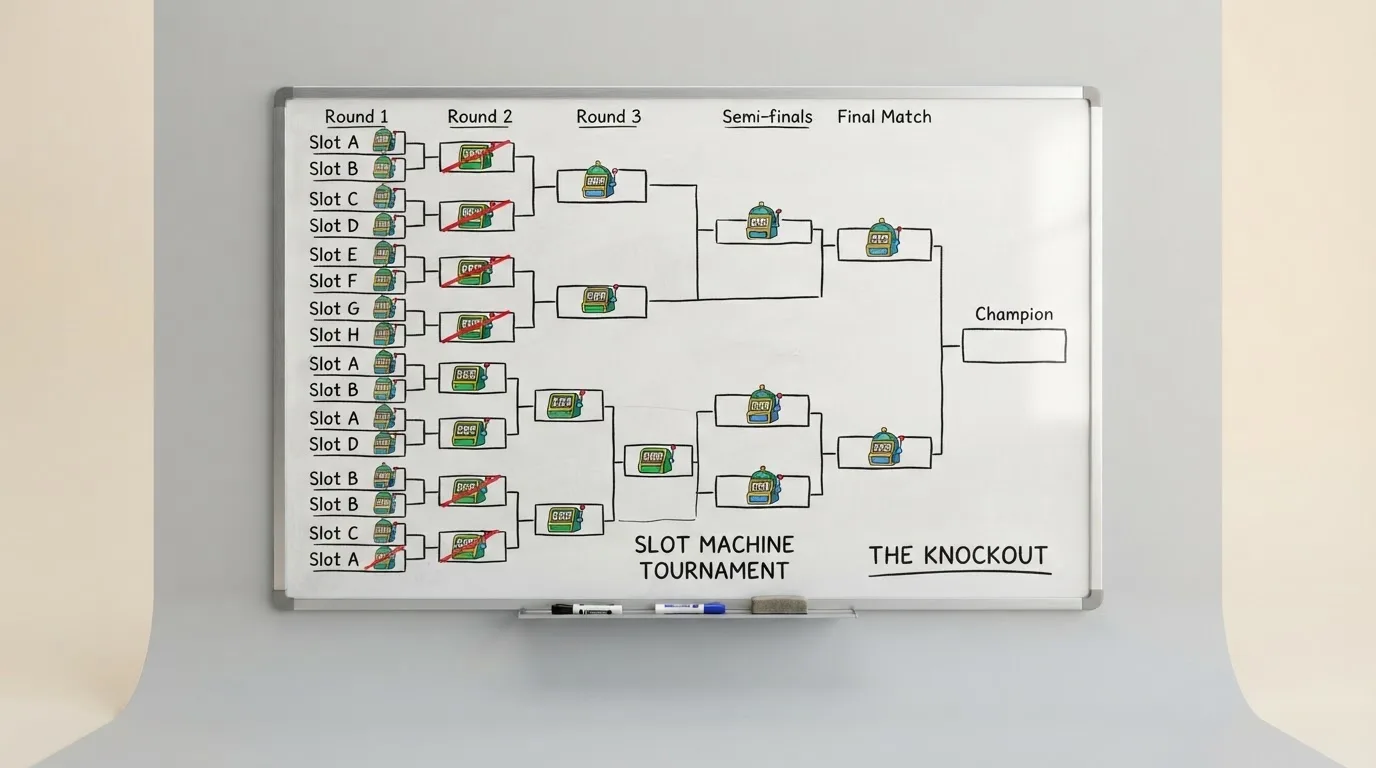
A slot tournament is a timed competition. Every entrant plays the same slot (or a short list of slots) over a fixed window, and whoever racks up the highest score, measured in cumulative wins, biggest single hit, or points converted from wagers, takes the top prize on a published leaderboard. The shape is simple; the value behind it is not, because tournaments are promotional scaffolding bolted onto games that already have a house edge, and the prize pool is a marketing budget rather than a share of the money players lose.
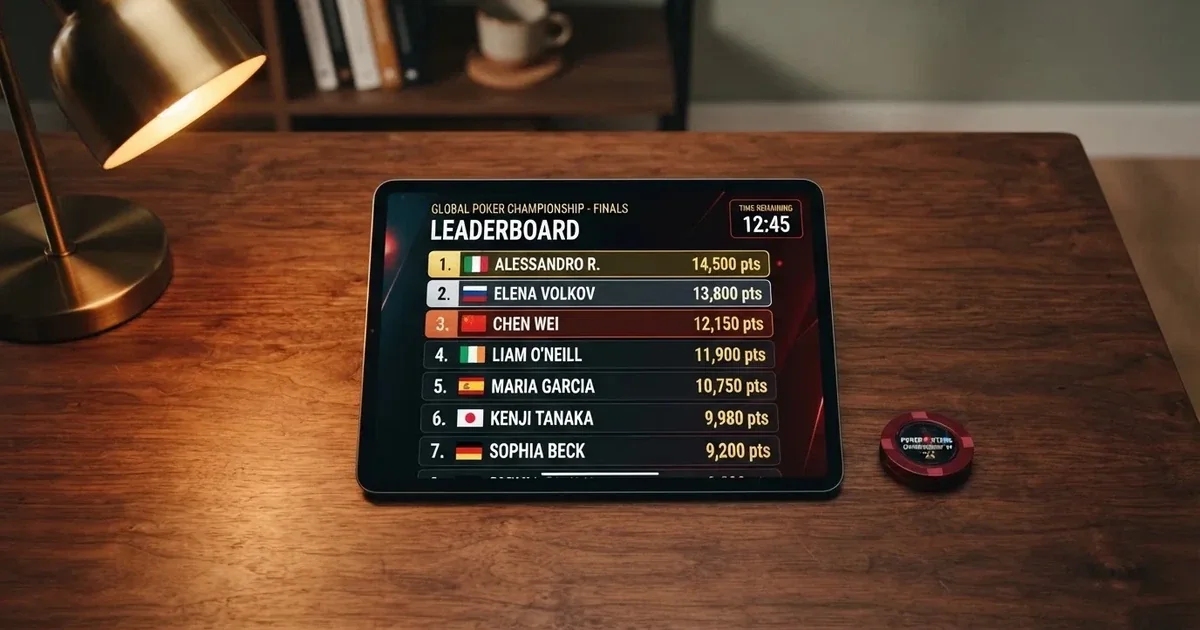
This page is built around the choice a British player actually faces: which tournament formats are worth the entry, how quickly the prizes land, and which licensed brands are running them. Data current as of 7 November 2026, checked against the Gambling Commission’s public register.
Table of Contents
- UK Gambling Law and the Tournament Operator
- Responsible Play Around Competitive Leaderboards
- Crypto Deposits and Tournament Entry
- Payout Speed: How Tournament Prizes Reach a Player
- Bonus Structures on Tournament Promotions
- Slot Titles and Providers That Appear in Tournaments
- Comparing UK Online Casino Tournaments: Brand by Brand
- What Tournament Play Actually Costs
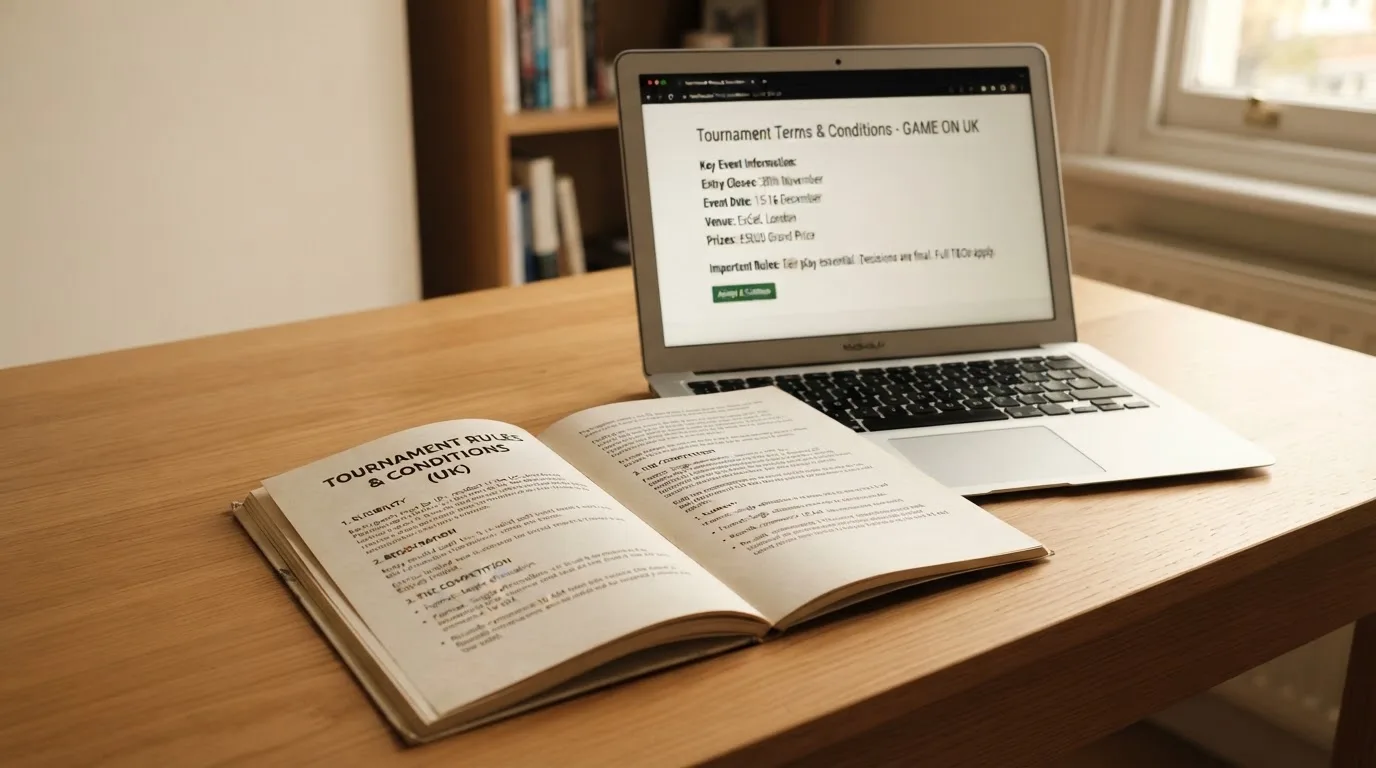
- How to Read a UK Slot Tournament’s Terms
- The Overview: How UK Tournaments Compare to the Wider Market
- Frequently Asked Questions
UK Gambling Law and the Tournament Operator
The legal frame around a slot tournament is not a frame around tournaments. It is the licence that authorises the operator to take a British deposit, and the same licence covers every tournament the brand runs. Understanding the rules of a slot tournament starts with understanding the licence under which it exists.
The Gambling Commission and the Remote Casino Licence
The Gambling Commission (UKGC) regulates commercial gambling in Great Britain under the Gambling Act 2005, sponsored by the Department for Culture, Media and Sport. Since the Gambling (Licensing and Advertising) Act 2014 any operator taking customers in Great Britain must hold a Commission licence, regardless of where the operator itself is based. A Curaçao, Malta or Gibraltar licence is not a substitute. Great Britain here means England, Scotland and Wales; Northern Ireland runs on its own regime.
A remote casino operating licence is the specific permission an operator needs to run online casino games, including slot tournaments, for British customers. On 18 September 2026 the Gambling Commission’s public register listed 139 businesses holding an active remote casino operating licence. The register is searchable online and downloadable in full as CSV or Excel files, and it is the only authoritative source for whether a brand is licensed. The licence number itself follows a fixed format: the leading six digits repeat the licence holder’s account number, followed by an “R” for remote, then a sequence number and suffix (for example 039411-R-319335-010).
Stake Caps, Speed Limits and the Game Cycle
Every game an operator offers, including every tournament spin, is bound by the Commission’s stake and speed rules. Online slots carry a maximum stake per game cycle, which is the unit of play the Commission defines: £5 for players aged 25 and over (from 9 April 2025) and £2 for players aged 18–24 (from 21 May 2025). There is no state-set deposit or loss ceiling, but operators must prompt a customer to set a financial limit before the first deposit, a rule that took effect on 31 October 2025.
Auto-play has been banned since 31 October 2021, and a single spin may not resolve faster than 2.5 seconds. Losses disguised as wins, where a spin returns less than the stake but the game celebrates it with a fanfare, are also banned. These limits apply inside a tournament exactly as they apply to ordinary slot play. A “turbo” tournament format that asks a player to spin faster than the rules allow is not a legitimate format at a licensed site. The fastest legitimate pace is the 2.5-second minimum spin interval, and over a one-hour tournament that is 1,440 spins at most.
What a Licence Means for a Tournament Prize Pool
Tournament prizes are paid by the operator, not by the slot provider, and the operator spends from a marketing budget rather than from a share of player losses. The wagering requirements that govern how those winnings become withdrawable cash are subject to the Commission’s bonus rules: since 19 December 2025, wagering requirements are capped at 10x for any casino bonus, and mixed-product bonuses (for example, a free bet credited as casino spins) are banned. The cap covers deposit bonuses, free-spin winnings, and tournament prize funds that carry a wagering requirement.
The deposit side has its own constraint. Credit cards have been banned for gambling in Great Britain since 14 April 2020, including credit cards routed through e-wallets. Debit cards and bank transfers are unaffected. Any tournament that asks for a credit-card deposit is asking for something the operator is not licensed to accept.
Offshore Sites and What the Licence Is Actually Buying
Providing gambling to people in Great Britain without a Commission licence is a criminal offence under section 33 of the Gambling Act 2005. The Commission disrupts unlicensed sites through cease-and-desist notices, payment and hosting referrals, and search-engine delisting, but it has no power to block sites at the ISP level. No penalty falls on the player; what an unlicensed site lacks is the protection framework.
GAMSTOP, the national online self-exclusion scheme, has been a mandatory condition of every online licence since 31 March 2020. The Commission’s complaint and ADR (alternative dispute resolution) route, the financial vulnerability checks, the reality checks, the stake caps: these exist because a brand holds a licence. An offshore tournament site runs on its own house rules, with no obligation to honour a self-exclusion, no ADR to appeal to, and no recourse if a prize is not paid. The licence is the reason these safeguards exist; the offshore alternative does not provide them.
Responsible Play Around Competitive Leaderboards
A leaderboard is built to keep a player spinning. That is its function. The competitive framing — climbing past other entrants, watching the score tick up, seeing how close the cutoff sits — pushes play past the point a player would otherwise stop, and the Commission’s responsible gambling guidance is blunt about it.
Why a Tournament Costs More Than Its Entry Fee
Most slot tournaments charge an entry fee or require a minimum number of qualifying spins. The cost of playing is not the entry fee alone. It is the cost of the spins the format incentivises, which run from the moment the tournament starts until either the window closes or the player runs out of credits. A player who buys in for £10 and finishes mid-table has spent that £10 on entry and lost whatever the qualifying spins cost on top.
The arithmetic of how much a tournament can cost depends entirely on the spin size and the number of qualifying spins, and both are set by the operator. The Commission’s stake caps (the £5 ceiling for adults 25 and over and the £2 ceiling for 18–24s) put a ceiling on the damage, but a player at the upper stake tier spinning for an hour can still turn over £5 × 1,440 = £7,200 in bets during the session, against which the prize pool is a fraction.
Setting Limits Before Entering
The single most useful step a player can take before entering a tournament is to set a time limit, because the format punishes stopping. A player who decides to play for 30 minutes has a clear endpoint; a player who decides “until I move up the leaderboard” does not. The Commission’s 2.5-second minimum spin interval means a slot session runs at a predictable pace, and a player can plan around it.
Operators must prompt for a financial limit before the first deposit (from 31 October 2025). This is a useful guardrail, but it applies at deposit, not at tournament entry, so a player should consider setting a separate limit on tournament play. Financial vulnerability checks fire at £150 net deposits across a rolling 30-day window (from 28 February 2025), using publicly available data. These checks can interrupt a session or require further verification, and a player who knows the threshold can plan around it.
GAMSTOP and Self-Exclusion
GAMSTOP is the national online self-exclusion scheme, and participation is a condition of every GB remote operating licence. Self-exclusion periods are six months, one year or five years, and cannot be cancelled early. Once a player registers with GAMSTOP, every licensed operator is required to block them, which means no tournament entry at any of the brands covered in this guide. Offshore sites are not bound by GAMSTOP, and a self-excluded player who needs the block to hold should not look there. The National Gambling Helpline (0808 8020 133, run by GamCare) and GambleAware provide confidential support, and a player who feels their tournament play is drifting can reach out before the session does.
Crypto Deposits and Tournament Entry
Crypto deposits are a marginal channel for British tournament play, and the reason is the licensing frame around it. A GB-licensed casino is bound by the Commission’s rules on customer identification, and anonymous play is not possible at a licensed site. Name, address and date of birth are verified before the first deposit or any play, a requirement in force since 7 May 2019. A player who funds the account in Bitcoin still has to clear the same verification as a player who funds it in sterling.
Where Crypto Fits in Practice
The brands covered on this page all hold GB remote casino operating licences and are bound by the same identification rules. A player who holds crypto can deposit it at any operator that accepts it, where the operator’s payment processor converts the deposit to sterling (or another settled currency) at the point of receipt. The deposit clears like any other; tournament entry rules are not adjusted for the funding method. The only material difference is the time and fee profile of the deposit itself, and on the payout side, whether the operator offers crypto as a withdrawal option.
A crypto-funded player who wants to enter a no-deposit freeroll still has to pass verification, and the freeroll’s prize (free spins, bonus funds, or a cash prize pool) carries the same wagering rules regardless of how the player’s account is funded. Crypto is a deposit rail; it does not change what a tournament is or what it pays.
Why Crypto Does Not Buy Anonymity at a Licensed Site
The trade-off for a player who wants anonymity is the trade-off for an unregulated site: no GAMSTOP coverage, no Commission complaint route, no ADR, and the risk that an unpaid prize has no enforcement behind it. For tournament play specifically, the additional issue is that a tournament’s score is recorded on the operator’s servers and tied to a verified account, so even a player who funded in crypto is recorded by name. Crypto at a licensed site is a payment preference; crypto at an offshore site is one of several signals that the site does not hold a GB licence.
Payout Speed: How Tournament Prizes Reach a Player
Tournament prize money is money the operator owes the winner, and the speed at which it arrives depends on whether it is credited as withdrawable cash, as bonus funds with a wagering requirement, or as free spins whose winnings are then converted. The terms of the prize determine the wait.
Cash Prizes and the Withdrawal Window
A tournament that pays its prize as withdrawable cash, no wagering requirement, is the cleanest format. The winnings land in the player’s cash balance within minutes of the leaderboard finalising, and the player can withdraw immediately subject to the operator’s standard withdrawal time.
UK bank withdrawals typically run through the Faster Payments Service, launched in 2008 and operated by Pay.UK. The service operates 24 hours a day, seven days a week, and most payments arrive instantly or within a couple of minutes, though transfers can occasionally take up to two hours. The Faster Payments scheme sets a £1,000,000 per-transaction limit, though individual banks impose lower limits on their customers. For a typical tournament prize (a few hundred pounds to low four figures), the rail is rarely the bottleneck.
The actual hold-up is the operator’s internal review. Even a licensed operator runs fraud, source-of-funds and identity checks on withdrawals, and a player who has not completed full verification can see a withdrawal paused until the paperwork clears. A tournament winner who deposits, plays, and withdraws without ever having verified their identity is asking for a delay: verification before the first deposit or any play has been mandatory since 7 May 2019, and any gap in the record will surface at withdrawal.
Bonus Prizes and the Wagering Cap
A tournament that pays its prize as bonus funds is a different animal. The winnings land in the bonus balance, and the player must work through the wagering requirement before the balance converts to withdrawable cash. Since 19 December 2025, the maximum wagering requirement a GB-licensed operator can attach to any casino bonus is 10x. The cap applies to the bonus amount: a £20 bonus requires £200 of qualifying wagers before the balance becomes withdrawable. Mixed-product bonuses (a free bet that credits as casino spins, for example) have been banned under the same rule change.
A player looking at a tournament prize should read the terms for how the prize is paid. “Bonus” with a 10x requirement is one shape; “free spins” with no wagering is another; “cash” with no requirement is the third. The marketing copy can blur these — a “£500 prize pool” says nothing about what each entrant’s share is paid in, and the small print is where that answer lives.
No-Deposit and Free Tournament Entry
No-deposit tournaments (sometimes called freerolls) pay their prizes in the same way paid-entry tournaments do, and the wagering cap still applies if the prize is a bonus. A no-deposit freeroll with a £100 bonus prize and a 10x wagering requirement requires £1,000 of qualifying play before the winnings become withdrawable. A freeroll that pays cash requires nothing further. The entry method does not change the prize structure.
The deposit-side rule is what defines a no-deposit tournament: no purchase or deposit is necessary to enter. A “free entry” that requires a deposit code or a qualifying wager in the 24 hours prior is not a no-deposit tournament, and a player who reads the terms carefully will not be caught by the distinction.
Bonus Structures on Tournament Promotions
Tournament prizes are promotions, and the bonus rules that govern ordinary casino bonuses apply. The 10x wagering cap (from 19 December 2025) and the ban on mixed-product bonuses (from the same date) are the two rules that shape what a tournament prize can look like. They also shape the comparison a player makes between tournaments.
What a 10x Wagering Cap Means in Practice
The cap is applied to the bonus amount, not to the deposit. A player who receives a £50 tournament prize as bonus funds must wager 50 × 10 = £500 before the bonus converts. At the £2 stake ceiling for 18–24s, clearing the wagering requirement takes several hundred spins at the minimum 2.5-second pace; at the £5 ceiling for adults 25 and over, it takes significantly fewer. The pace of clearing the bonus is rarely the issue at a slot’s standard RTP. The cost of clearing it is.
A slot at a 96% return-to-player rate retains 4% of every pound wagered as house edge. Over the £500 turnover required to clear a £50 bonus, the expected loss is 500 × (1 − 0.96) = £20, which is 40% of the bonus’s face value. The arithmetic is the same whether the player is wagering a deposit bonus or a tournament prize, and the reader should expect any bonus prize to cost them roughly that proportion of its face value in expected play before it converts. This is the calculation the wagering cap was designed to bound, but 40% of face value is still a significant haircut.
The Time Cost of Clearing a Tournament Prize
The mechanical cost of clearing a bonus is the wagered amount multiplied by the house edge; the time cost is the number of spins multiplied by the 2.5-second interval. At the £5 spin ceiling, the £500 turnover for a £50 bonus requires 100 spins, or about 4 minutes and 10 seconds of continuous play. At a 20p spin (a more realistic tournament-style pace for a casual player), the same turnover requires 2,500 spins, or about 1 hour and 44 minutes. The figure is a band rather than a single answer because no player can know in advance what stake size the tournament terms will reward, but the bracket is useful for setting expectations: a £50 bonus prize, cleared at a small stake, is a near-two-hour commitment at minimum spin pace.
Mixed-Product Promotions and the December 2025 Rule Change
Before 19 December 2025, a tournament prize could be bundled with a free bet, or a sportsbook free bet could convert to casino spins on deposit. The Commission banned the practice in the same rule change that introduced the 10x cap, and any promotion still carrying mixed-product terms is either grandfathered (a rare case) or non-compliant. A player looking at a current tournament should expect the prize to be one product, paid in one form.
Slot Titles and Providers That Appear in Tournaments
Tournaments are not tied to specific games by Commission rule. The operator picks the eligible title or short list of titles, and that choice shapes the format. The same slot can sit inside a tournament at one operator and a normal-money game at another, with no change to the underlying math.
How Operator Choice Shapes the Field
The slots that recur most often in tournaments are high-volatility titles with large max-win potential: a tournament measured by biggest single win rewards a player who catches a bonus feature on the right spin, and a low-volatility slot simply does not deliver those. The slot’s RTP, volatility, and feature frequency are unchanged by being in a tournament; what changes is what the operator is rewarding. A tournament that scores by cumulative wins can run on any slot; a tournament that scores by biggest single multiplier rewards variance.
There is no Commission-published data on which titles appear in how many tournaments, and the operator-by-operator list shifts week to week. The more durable pattern is which studios structure their games for tournament play: providers who design slots with frequent small wins and visible point multipliers tend to dominate freerolls and small-stake tournaments, while providers whose games have rare but large wins dominate the bigger prize pools.
Live Dealer Tournaments
Live dealer game shows, the Evolution-style wheel-spinning and card-based formats, run their own leaderboard events. The scoring is usually points per round played, with multipliers for side bets or special outcomes. The Commission treats these as casino games under the same remote operating licence, so the same stake caps apply; the £5 ceiling for 25-and-over players and £2 for 18–24s bind exactly as they do on slots. Live dealer tournaments are less common than slot tournaments but follow the same rules.
Comparing UK Online Casino Tournaments: Brand by Brand
The brands below all hold active GB remote casino operating licences on 18 September 2026, drawn from the Gambling Commission’s public register. The table covers each one’s licensing status, domain status on the register, and support for the tournament subject (where the register carries no tournament-specific data, the column is left as the article-language no-data marker rather than fabricated). Several brands share a single licensee: Ladbrokes, Coral and Gala Bingo all sit under LC International Limited, and that overlap matters for any cross-brand comparison.
| Brand | Licence holder & GB remote casino licence | Domain status on the register | Tournament support |
|---|---|---|---|
| Paddy Power | PPB Games Limited (account 39411) · 039411-R-319335-010 | Active | — |
| Ladbrokes | LC International Limited (account 54743) · 054743-R-330863-014 | Active | — |
| MrQ | Tek Fox Ltd (account 60629) · 060629-R-337532-004 | Active | — |
| Coral | LC International Limited (account 54743) · 054743-R-330863-014 | Active | — |
| bet365 | Hillside (UK Gaming) ENC (account 55149) · 055149-R-331499-004 | Active | — |
| Betfred | Petfre (Gibraltar) Limited (account 39544) · 039544-R-319290-010 | Active | — |
| Casumo | Recro Limited (account 61549) · 061549-R-336718-002 | Active | — |
| 888casino | 888 UK Limited (account 39028) · 039028-R-319297-014 | Active | — |
| Jackpotjoy | Gamesys Operations Limited (account 38905) · 038905-R-319430-022 | Active | — |
| Gala Bingo | LC International Limited (account 54743) · 054743-R-330863-014 | Active | — |
The register’s domain list is itself worth a note: on 18 September 2026 it held 1,065 active and 361 white-label domain entries, where a white-label site trades under another company’s licence rather than holding its own. A player comparing brands should expect the licensed universe to be wider than the ten names here; this is a featured set, not a comprehensive list.
Paddy Power — The Established Brand
Paddy Power is listed on the Gambling Commission register as an active domain of PPB Games Limited (account 39411), which holds the active remote casino operating licence 039411-R-319335-010. PPB Games Limited is the modern operating entity for the brand in Great Britain. The licence carries the full responsibility of any GB remote casino licence: GAMSTOP coverage, Commission complaint and ADR route, financial vulnerability checks, and the December 2025 wagering and mixed-product rules. Paddy Power’s tournament schedule has historically included both free-entry freerolls and paid-entry events.
Ladbrokes — One Licence, Three Brands
Ladbrokes is listed as an active domain of LC International Limited (account 54743), which holds the active remote casino operating licence 054743-R-330863-014. The same licence covers Coral and Gala Bingo, meaning there is one operating company behind three brand fronts. The tournament calendar across the three is likely to share themes, terms, or pool structures.
MrQ — The Independent Underdog
MrQ is listed as an active domain of Tek Fox Ltd (account 60629), which holds the active remote casino operating licence 060629-R-337532-004. Tek Fox is a standalone licensee, and MrQ has historically marketed itself around transparency — no wagering on certain bonus types, clear terms, and a smaller game library than the major brands.
Coral — LC International’s Casino-Facing Brand
Coral sits under the same LC International Limited licence as Ladbrokes and Gala Bingo (054743-R-330863-014), but its identity has historically skewed more casino-facing than Ladbrokes’ sportsbook-heavy positioning. Coral’s tournament schedule tends to feature slot-led events with prize structures aimed at casual players.
bet365 — The Largest UK-Licensed Operator
bet365 is listed as an active domain of Hillside (UK Gaming) ENC (account 55149), which holds the active remote casino operating licence 055149-R-331499-004. bet365 is the largest operator in the GB licensed market by customer base, and its scale shapes its tournament offerings: the prize pools are at the top end of what a player will find at a licensed site.
Betfred — The Heritage Brand
Betfred is listed as an active domain of Petfre (Gibraltar) Limited (account 39544), which holds the active remote casino operating licence 039544-R-319290-010. The licensee is Gibraltar-incorporated, which is permitted under the Gambling (Licensing and Advertising) Act 2014. The operator’s place of incorporation does not change what the licence requires.
Casumo — The Casino-Native Operator
Casumo is listed as an active domain of Recro Limited (account 61549), which holds the active remote casino operating licence 061549-R-336718-002. Recro is a casino-first operator, and the brand’s identity has been built around gamified loyalty mechanics. That positioning tends to attract a tournament-friendly audience.
888casino — The Established Casino Brand
888casino is listed as an active domain of 888 UK Limited (account 39028), which holds the active remote casino operating licence 039028-R-319297-014. 888 UK Limited is part of the wider 888 Holdings group, and the casino brand has one of the longest continuous presences in the GB licensed market.
Jackpotjoy — The Bingo-Rooted Brand
Jackpotjoy is listed as an active domain of Gamesys Operations Limited (account 38905), which holds the active remote casino operating licence 038905-R-319430-022. Gamesys is a bingo-first operator, and Jackpotjoy’s brand identity is built around bingo and slot games.
Gala Bingo — The Third LC International Brand
Gala Bingo sits under the same LC International Limited licence as Ladbrokes and Coral (054743-R-330863-014). The shared licence means Gala’s tournament calendar can draw on the same promotional infrastructure as its sister brands, and the regulatory standing is identical.
What Tournament Play Actually Costs
The honest assessment of tournament play comes down to two numbers: what the entry fee buys, and what the prize is worth after the wagering requirement (if any) is met. Both are matters of arithmetic, not marketing language.
What a Player Is Paying For
A paid-entry tournament charges an entry fee in exchange for a seat at the leaderboard. The fee buys time on a specific slot, a shot at the prize pool, and the operational cost of the leaderboard system. It does not buy a positive expected return; tournaments are structured so the prize pool is smaller than the total entry fees (after the operator’s cut), and the house edge on the slot still applies to every spin the player makes. A player paying £10 to enter a tournament with a £1,000 prize pool and 200 entrants has paid £2,000 in entry fees for a chance at part of £1,000.
For a freeroll (no entry fee), the player is paying with their time rather than cash, and the cost is the expected loss on the spins the format requires. The figure varies by slot and by how many spins the tournament’s window allows, but it is never zero.
The Wagering Cap as a Price Ceiling
The 10x wagering cap introduced on 19 December 2025 is not a player-friendly gesture in the abstract. It is a ceiling on how much of a bonus’s face value the operator can require the player to churn before withdrawing. At 10x, a £50 bonus requires £500 of qualifying wagers, and at a 96% RTP slot the expected loss over those wagers is £500 × (1 − 0.96) = £20. The player receives £50 of bonus face value and pays an expected £20 to convert it: 40% of the bonus is consumed by the house edge on the turnover.
Before the cap, wagering requirements of 30x, 40x, or higher were common, and the conversion cost was proportionally larger. The cap is a real improvement, but the underlying arithmetic is unchanged: any bonus prize has a cost, and the cost scales linearly with the wagering requirement.
Where Tournaments Sit on the Cost Curve
Compared with a deposit bonus, a tournament prize is generally cheaper for the player because the entry fee (or qualifying deposit) is smaller than a deposit match, and the prize carries the same wagering cap. Compared with a straight cashback offer, a tournament prize is more expensive because cashback usually has no wagering requirement and converts immediately. The honest position is that tournaments are a promotional format with a promotional price, and the price is set by the wagering requirement plus the slot’s house edge on the qualifying play.
How to Read a UK Slot Tournament’s Terms
The terms page is where the actual value of a tournament lives, and the small print is more informative than the headline prize figure. A player who reads five key clauses can price any tournament accurately.
The Scoring Method
The scoring method determines what the leaderboard rewards. “Cumulative wins” rewards consistent play; “biggest single win” rewards variance; “wins-to-wager ratio” rewards efficient play on low-volatility slots; “points-per-spin” rewards time at the reels. The right slot to play depends on the scoring method, and a player who enters a cumulative-wins tournament on a high-volatility slot is competing on the wrong axis.
The Prize Structure
The prize structure determines what each placing pays. A “top 10” structure with a £1,000 top prize and equal payouts down the table rewards finishing in the top 10; a “top 3” structure with a £900 top prize and £50 each for second and third rewards taking first or second. The shape of the payout curve matters as much as the headline figure.
The Wagering Requirement
The wagering requirement determines whether the prize is cash or bonus. “No wagering” means the prize is credited to the cash balance and withdrawable immediately. “10x bonus” means the prize carries the maximum wagering requirement allowed under the Commission’s December 2025 rules. Anything higher than 10x is either grandfathered or non-compliant.
The Entry Fee and Qualifying Conditions
The entry fee sets the floor cost. The qualifying conditions set the ceiling: how many spins, at what stake, within what window. A tournament with a £5 entry fee and a minimum of 200 qualifying spins at 20p requires £40 of slot play, so the total floor cost is £45, not £5. A player who reads the qualifying conditions accurately knows the actual cost before entering.
The Game Eligibility
The game eligibility determines which slots count toward the leaderboard. A single-eligible-game tournament is simpler to track; a multi-game tournament lets the player pick a slot that suits their style and the scoring method. A tournament that excludes the player’s preferred slot is worth less than one that includes it.
The Overview: How UK Tournaments Compare to the Wider Market
Tournament play at a GB-licensed operator sits inside the most regulated online gambling market in Europe. The Commission caps stakes, caps wagering requirements, mandates GAMSTOP, mandates financial vulnerability checks, and enforces identity verification before play. The bonus rules from December 2025 bound how much of a promotional offer’s face value the operator can claw back through wagering, and the credit-card ban since April 2020 closes off the highest-risk funding rail.
What the Regulatory Frame Buys the Player
The regulatory frame buys three things the player cannot get elsewhere: enforced identity verification (which prevents underage play and supports self-exclusion), mandatory GAMSTOP coverage (which enforces a self-exclusion decision across the whole licensed market), and an ADR route for disputes (which gives a player somewhere to go if a prize is not paid). These are not abstractions; they are the mechanisms that handle the failure cases.
For tournament play specifically, the regulatory frame also caps how much a player can be asked to churn through wagering. The 10x cap is the bound on a bonus prize’s conversion cost, and the stake caps (the £5 ceiling for adults 25 and over and £2 for 18–24s) bound the damage a player can do on a single spin during the tournament window. Neither bound is tight — a player at the upper stake tier can still turn over £7,200 in an hour of tournament play — but they are bounds, and the unlicensed alternative has none.
Where British Tournament Play Is Heavier Than Other Markets
The December 2025 bonus rules (the 10x wagering cap and the mixed-product ban) are among the strictest in any major online gambling market. The credit-card ban (since April 2020) is also stricter than most comparable jurisdictions. The combined effect is that a GB-licensed tournament prize is typically cheaper to clear than the same offer at an offshore operator, because the wagering requirement is capped at a level that reflects the Commission’s view of what a player can reasonably be asked to churn through.
The trade-off is promotional generosity. Offshore sites can run bonuses with 30x or 40x wagering requirements, which means larger headline offers but a higher conversion cost. The unlicensed site’s larger headline is not a better deal; it is a worse deal at a higher conversion price. The Commission’s cap binds the GB-licensed market to a more honest arithmetic, and that is the frame the rest of this page sits inside.
The Honest Position
Tournaments are a marketing format. The prize pool is a marketing budget, and the entry fee (or qualifying deposit) is the cost of a chance at part of it. The math is the math: a 96% RTP slot retains 4% of every pound wagered, a 10x wagering requirement costs roughly 40% of a bonus’s face value to clear, and a player’s expected outcome is determined by the spin count, the stake size, and the slot’s house edge. The Commission’s rules bound the cost of a bonus and the speed of a spin, but they do not change the underlying edge.
For a player who enjoys the competitive format and treats the entry fee as the cost of entertainment, tournaments are a reasonable way to play slots. For a player who is choosing a format on expected return alone, no promotional format beats the underlying game’s RTP, and no promotional format converts at a rate that benefits the player. The honest position is that the value of a tournament is the value of the time spent playing, with the prize pool as a bonus rather than as the point.
Frequently Asked Questions
How do online slot tournaments work at UK casinos?
A slot tournament is a timed competition on a specific slot (or short list of slots), with a published leaderboard and a fixed prize pool. The scoring method — cumulative wins, biggest single hit, or points-per-spin — determines what the leaderboard rewards, and the prize pool is divided according to a published structure (top 3, top 10, or wider). Entry may be free, paid, or deposit-gated, and the tournament window can run from a few minutes to several days.
Can I enter a slot tournament without making a deposit?
Yes, at the freeroll tournaments that several GB-licensed operators run. A freeroll charges no entry fee and requires no deposit, though it may require a verified account and may exclude players who have previously claimed certain welcome offers. The prize structure is the same as a paid-entry tournament, but the prize pool is usually smaller because no entry fees fund it.
What determines my ranking on a tournament leaderboard?
The scoring method, which is published in the tournament terms. Common methods include cumulative win amount (highest total payout across all spins), biggest single win (highest payout on one spin), and wins-to-wager ratio (best return relative to amount wagered). The slot’s volatility and feature frequency interact with the scoring method, and a player should pick a strategy that fits the method the operator has chosen.
How quickly are tournament prizes paid out?
A tournament that pays its prize as withdrawable cash typically credits the winnings within minutes of the leaderboard finalising, and UK withdrawals run through the Faster Payments Service, which usually completes within a couple of minutes. A tournament that pays its prize as bonus funds credits the bonus balance immediately but requires the player to meet the wagering requirement (capped at 10x under the Commission’s December 2025 rules) before the balance converts to withdrawable cash.
Do crypto deposits count towards tournament entry the same as card payments?
Yes, at the GB-licensed operators that accept crypto. The deposit method does not change the tournament’s entry rules, scoring method, or prize structure, and the player must still complete the Commission’s mandatory identity verification (in place since 7 May 2019) before play. Crypto at a licensed site is a payment rail, not an exception to the licensing rules, and an unlicensed site that offers crypto entry is operating outside the GB regulatory frame.
What tips help with slot tournament strategy?
The first tip is to read the scoring method and pick a slot that suits it. The second is to set a time limit before entering, because the competitive format pushes play past the point a player would otherwise stop. The third is to read the wagering requirement on the prize and decide whether the conversion cost is worth the entry fee. The fourth is to recognise that no strategy changes the slot’s house edge; the math is the math, and a player who treats the entry fee as entertainment will enjoy the format more than a player who treats it as an investment.