
A doubled first deposit: how 100% casino bonuses actually work in Britain
A 100% deposit bonus doubles whatever a player puts in, pound for pound, up to whatever cap the operator sets. The £10 becomes £20, the £50 becomes £100, and a player who tops up the maximum walks away with twice the bankroll they paid for, at least on paper. The catch is what the casino asks for in return: a wagering requirement that has to be cleared before any of the bonus money can be withdrawn, plus the usual reality that the house still has an edge on every spin.

Verified against the Gambling Commission’s public register on 18 September 2026. Data valid as of 7 November 2026 according to the Gambling Commission public register.
Table of Contents
- What a 100% match bonus is, and what it costs
- The 10x cap, in practice
- Payment methods that unlock a 100% bonus
- How GAMSTOP fits into claiming a bonus
- Financial vulnerability checks and the £150 threshold
- What to check before claiming
- The licensed landscape at a glance
- Offshore and the unlicensed alternative
- What happens if a player stops playing
- How a 100% bonus compares to a smaller match
- Setting a budget before the bonus is claimed
- What this looks like in practice
- The limits the Commission sets on play
- How long a bonus lasts
- What a 100% bonus does not cover
- The difference between casino and bingo welcome offers
- Where the bonus terms are usually found
- What a player should do before depositing
- What changes if a player self-excludes during a bonus
- What the Commission does not do
- The shape of a typical 100% bonus
- The case for a smaller match at a lower wagering multiple
- What “active domain” means on the register
- What a remote casino licence number tells the player
- The offshore alternative, restated
- Frequently asked questions
What a 100% match bonus is, and what it costs
A 100% match bonus is the simplest shape a casino welcome offer takes: deposit £X, play with £2X. Some operators set the match against the first deposit only. Others spread it across the first two or three. The headline number is the match rate, the number underneath it is the cap, and the number in the small print is the wagering multiplier — and on this last point, the UK market changed at the end of 2025.
Since 19 December 2025, no online casino licensed by the Gambling Commission can attach a wagering requirement higher than 10x the bonus amount. That ceiling closed a gap that had run for years, when offers at 30x, 40x or even 65x were routine and a deposit could end up locked behind several thousand pounds of required turnover. A 10x cap does not make a bonus cheap to clear; it makes the cost knowable in advance. A £100 bonus at 10x means £1,000 of qualifying bets before withdrawal. At 65x it would have meant £6,500. The arithmetic has not disappeared; it has come down by a factor that genuinely changes who can afford to take the offer.
The shape of the wagering requirement
The way a casino counts turnover varies. Some sites count every spin, win or lose, at full stake. Others strip out the contribution from certain games (live dealer tables, often, or a handful of high-RTP slots). A small number of sites exclude blackjack and roulette almost entirely. The figure printed as “wagering requirement” is therefore an upper bound, not a true cost — the real cost depends on what gets counted and what does not.

A second complication: most offers separate “bonus funds” from “real funds” in the account. Real funds can usually be withdrawn at any time; bonus funds cannot, until the requirement clears. If a player wins on a bonus-funded spin, the winnings may sit in the bonus bucket and stay unwithdrawable for the full duration of the wagering period. Some sites let a player forfeit the bonus and withdraw their deposit plus any winnings from real-money play; others do not, and the bonus is sticky. The terms page is the only place this is set out plainly.
How long it takes to clear
The time it takes to clear a wagering requirement depends on stake size, spin speed and the games allowed. The Commission’s Remote Technical Standards set a minimum spin interval of 2.5 seconds per game cycle (no auto-play), so a player running at full speed manages around 1,440 spins an hour. At £1 per spin, that is £1,440 of turnover an hour, and a £1,000 wagering requirement would take roughly 42 minutes of continuous play. At £0.10 per spin, the same turnover would take seven hours.
Most welcome bonuses expire after seven to thirty days, depending on the operator. A bonus that cannot be cleared in time is forfeit, and with it any winnings that sat in the bonus bucket. The expiry window is the one number that does not appear in marketing copy and the one that determines whether the offer is reachable.
The 10x cap, in practice
The 10x wagering cap took effect on 19 December 2025, part of a wider package of Commission reforms that also closed mixed-product bonuses (the “bet on football, get 50 casino spins” structure that had bundled products together) and tightened the rules on bonus visibility. The cap applies to every bonus the Commission regulates, including those funded by e-wallets, prepaid cards and bank transfers.
The band the cap creates is straightforward to describe. A £100 bonus at the maximum 10x requires £1,000 of turnover before withdrawal. The same bonus at 5x — which some sites offer, often as a smaller headline match — requires £500. The range is narrow, but the gap between the lower and upper end is what determines whether the bonus is reachable on a small bankroll in the time available.
The turnover band, stated as a band
For a 100% match at the maximum wagering multiple currently in force, the required turnover sits between five and ten times the bonus amount. A £50 bonus therefore means £250 to £500 of qualifying bets before withdrawal is possible; a £200 bonus means £1,000 to £2,000. The lower figure is achievable, the higher figure is the legal ceiling, and any offer that exceeds 10x is not licensed for the British market.
Mixed-product bonuses are out
The same reform package that introduced the 10x cap also removed mixed-product bonuses from the licensed market. A welcome offer that bundles a sportsbook free bet with casino spins, or that mixes poker rakeback with slot bonus funds, no longer complies. Players comparing offers will see fewer compound packages than they did a year ago, and what remains is closer to a single-product shape: a casino bonus for casino play, with its own turnover requirement.
Payment methods that unlock a 100% bonus
The deposit that triggers a 100% match can come from a debit card, a bank transfer through the Faster Payments system, an e-wallet, or a prepaid card. The Commission banned credit cards for gambling from 14 April 2020 — including credit cards routed through digital wallets, where the wallet’s funding source is a credit card — so any deposit that originates in a credit balance is excluded by law rather than by operator choice.
Most licensed operators accept Visa Debit, Mastercard Debit, Apple Pay, Google Pay, bank transfer, PayPal, Skrill, Neteller, AstroPay and paysafecard. The minimum deposit to claim a 100% match typically sits between £5 and £20; the exact figure varies by brand and is set on the terms page. The Commission does not set a deposit ceiling — operators must prompt a customer to set a personal financial limit before the first deposit, since 31 October 2025, but the figure is the player’s choice rather than a regulatory floor.
Paysafecard and the spending-limit point
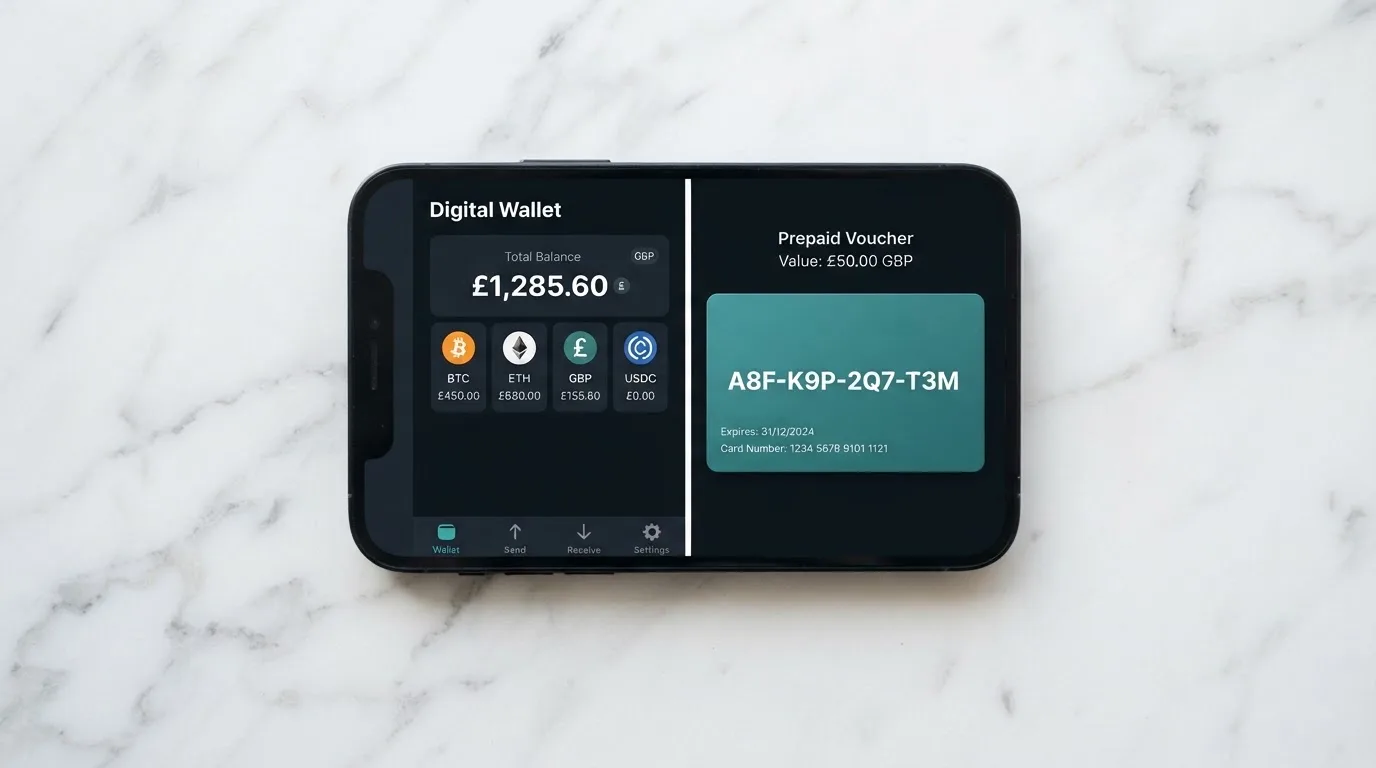
A paysafecard deposit is a prepaid voucher, purchased from a retailer with cash or a debit card and redeemed by entering a 16-digit PIN at the casino cashier. It is widely accepted by licensed UK operators. What it does not do is exempt the deposit from the player’s own spending limit. The limit a player sets before their first deposit applies across payment methods, and a paysafecard deposit counts towards it in the same way a debit card deposit does. The voucher is a way of paying, not a way of avoiding the controls the Commission and the operator put in place.
Paysafecard’s appeal is partly psychological: a player buys a £10 or £25 voucher, knows exactly what they are spending, and stops when the voucher runs out. That clarity of budgeting is real and useful. What the voucher does not change is the wagering requirement that sits on top of the bonus, nor the expiry window in which it has to be cleared.
Crypto deposits and the licensed market
Crypto-funded welcome offers exist in the unlicensed market, where a Curaçao- or Costa Rica-based operator can take Bitcoin, Ethereum or USDT and attach a bonus of any size with any wagering multiple. The licensed British market does not work that way. A Commission-licensed casino cannot take crypto deposits, because the Commission’s anti-money-laundering framework requires customer funds to flow through regulated payment institutions. A crypto casino advertising itself to British players, with or without a 100% match offer, is operating outside the British regime.
The protections that follow from a British licence are concrete. The customer funds are held in segregated accounts. Disputes go to an approved alternative dispute resolution (ADR) provider. Self-exclusion via GAMSTOP is enforced across every licensed site at once. The site is subject to the Commission’s social responsibility code. None of these protections reach a player who chooses the offshore alternative, whatever the headline bonus figure looks like.
Apple Pay and the wallet question
Apple Pay became available for UK-issued cards on 14 July 2015 and works on licensed UK casino sites that have integrated it at the cashier. The deposit is funded from a debit card registered to Apple Pay, not from a credit balance — a credit card routed through Apple Pay is still a credit card deposit for the purposes of the 14 April 2020 ban. The wallet’s tokenisation layer (where the actual card number is replaced by a device-specific Device Primary Account Number, and each transaction carries its own dynamic security code) does not change the regulatory status of the underlying funding source.
A small number of licensed sites restrict Apple Pay from the bonus trigger, on the grounds that bonus abuse via wallet mule accounts has historically been a problem in the industry. Where that is the case, the restriction is named on the bonus terms page and a debit card or bank transfer deposit is the alternative path to the 100% match. Players who specifically want to use Apple Pay should check the terms before depositing, because the cashier accepting the wallet is not the same question as the bonus accepting it.
Bank transfers and the Faster Payments ceiling
A bank transfer deposit moves through the Faster Payments Service, which is operated by the payments body Pay.UK around the clock and which most UK banks complete within minutes. The scheme carries a £1,000,000 per-transaction ceiling, well above any casino deposit, and the Bank of England provides final settlement even though it is not a direct participant in the scheme. For larger deposits — a player topping up several hundred pounds to clear the cap on a 100% match — bank transfer is the method that does not run into card-issuer daily limits or wallet-imposed maximums.
Some operators prefer bank transfer for withdrawals, even when they accept cards or wallets for deposits, because the return path avoids interchange fees and the funds arrive in the player’s current account within hours. The two directions are independent: a debit-card deposit does not force a debit-card withdrawal, and a player who paid in by Apple Pay can usually cash out by bank transfer.
AstroPay and other e-wallets
AstroPay, founded in 2009 and headquartered in Uruguay, operates as a digital wallet with a UK entity authorised by the Financial Conduct Authority under the Electronic Money Regulations 2011. Its UK footprint is one of several e-wallet options at licensed casinos; Skrill, Neteller and PayPal are the more familiar names, and each carries its own conditions. E-wallets are commonly excluded from welcome bonuses by smaller operators, on the same anti-abuse logic that occasionally excludes Apple Pay — the deposit must come from a method that traces back unambiguously to the named account holder.
How GAMSTOP fits into claiming a bonus
GAMSTOP is the national online self-exclusion scheme, and a Commission licence is not granted without a GAMSTOP integration. Every player registering with a licensed casino is checked against the GAMSTOP database; if the player’s name and address match an active exclusion (periods of six months, one year or five years, none of which can be cancelled early), the account is refused.
The check happens before the first deposit, which is also when the welcome bonus can be claimed. A player who has self-excluded and is still within the exclusion period cannot get past the registration screen, regardless of which bonus is on offer. The exclusion is not a per-site setting; it covers every Commission-licensed online operator at once.
Financial vulnerability checks and the £150 threshold
Since 28 February 2025, the Commission has required operators to run a financial vulnerability check at £150 of net deposits in a rolling 30-day window, using publicly available data. The check looks for signs of financial distress visible in public records — such as county court judgments or insolvencies — and triggers a conversation if indicators are present. It is designed to be light-touch, avoiding access to sensitive financial files or bank accounts, with the £150 threshold chosen to catch early risks before they escalate.
A player depositing £20 to claim a 100% match on a £20 deposit will not, on that single transaction, trip the threshold. A player depositing regularly over a month will. The threshold is independent of the bonus and applies whether the deposit is funded by a debit card, a bank transfer or a paysafecard voucher.
What to check before claiming
Three things deserve attention before a player commits a deposit to a 100% match offer:
- The wagering multiple and what counts towards it. 10x is the legal ceiling; lower is friendlier. Some games count at zero, and a player who plans to play blackjack rather than slots needs to know whether the blackjack stake is contributing.
- The expiry window. Seven to thirty days is the typical range; a bonus that has to be cleared in seven days on a £200 match at 10x is roughly 41 minutes of spins per day at £1 stakes — not impossible, but a tight schedule for anyone not sitting at the screen for the full period.
- The minimum deposit to trigger the match. The headline figure (“100% up to £200”) is meaningless if the minimum deposit to claim it is £50 and the player only intended to deposit £20. A £20 deposit against a £50-minimum match yields no bonus at all.
A fourth point worth checking, less often mentioned: whether the bonus funds are “sticky”. A non-sticky bonus sits in its own bucket and can be forfeited to release real funds; a sticky bonus stays attached until the requirement is cleared, and any withdrawal request before that forfeits the bonus along with any winnings from bonus play. The terms page names this; the marketing copy does not.
The licensed landscape at a glance
The Commission’s public register lists every operator it has licensed. On 18 September 2026, that list held 139 businesses with an active remote casino operating licence. The same register’s domain list recorded 1,065 active and 361 white-label domain entries — the white-label figure being sites that trade under another company’s licence. A licence number on the register has the shape account number-R-sequence number-suffix, with the leading six digits repeating the licence holder’s account number and the “R” marking a remote (online) licence.
The table below covers ten of the licensed brands British players encounter most often. It is not a ranking; it is a snapshot of who holds what on the register and whether the domain is listed as active. Several brands sit under one licensee — Ladbrokes and Gala Bingo, for instance, both run under LC International Limited — and that consolidation matters when comparing welcome offers, because a single licence-holder often runs a shared bonus platform across its brands.
| Brand | Licence holder and remote casino licence | Domain status on the register | Paysafecard support |
|---|---|---|---|
| Sky Vegas | Bonne Terre Gaming Limited · 065519-R-339675-002 | Active | — |
| Midnite | Dribble Media Limited · 042647-R-321653-022 | Active | — |
| PokerStars | Stars Interactive Limited · 039108-R-319334-026 | Active | — |
| Unibet | Platinum Gaming Limited · 045322-R-324275-019 | Active | — |
| Ladbrokes | LC International Limited · 054743-R-330863-014 | Active | — |
| BetVictor | BV Gaming Limited · 039576-R-319370-028 | Active | — |
| Jackpotjoy | Gamesys Operations Limited · 038905-R-319430-022 | Active | — |
| 888casino | 888 UK Limited · 039028-R-319297-014 | Active | — |
| Gala Bingo | LC International Limited · 054743-R-330863-014 | Active | — |
| Casumo | Recro Limited · 061549-R-336718-002 | Active | — |
| Bonus Term | Market Standard |
|---|---|
| Wagering Requirement | 5x to 10x |
| Expiry Window | 7 to 30 days |
| Min Deposit | £5 to £20 |
| Max Bet during Wagering | £5 (for 25+) |
Sky Vegas
Bonne Terre Gaming Limited holds Sky Vegas’s licence on the register, under account 65519, and the Sky Vegas domain is listed active. Sky sits on the larger Flutter Entertainment platform, which means its welcome offer tends to be set centrally and shared across sister brands — the wagering multiple, the minimum deposit and the eligible games are usually the same as a player would find at Paddy Power or Betfair. For a player who already has a Flutter account, Sky’s offer is essentially interchangeable with those sister sites and the choice between them comes down to game catalogue and loyalty programme rather than bonus terms.
Midnite
Dribble Media Limited runs Midnite under account 42647; the Midnite domain sits active on the register under licence 042647-R-321653-022. Midnite entered the UK market as a sportsbook-led brand and has expanded its casino product since. Its welcome offer structure is lighter on casino-only players than the larger bookmaker-casino hybrids — the headline match is competitive, but the free-spins allocation on top is small. A player whose interest is slots rather than sportsbook will find the casino half of Midnite thinner than a casino-first operator’s offering.
PokerStars
Stars Interactive Limited operates PokerStars under account 39108 and licence 039108-R-319334-026. Stars’ casino product sits inside a brand most players know for poker, and the casino welcome offer is positioned as an alternative path into the same wallet. The 100% match is on the smaller side — modest cap, modest wagering — because Stars’ business model is built on retaining players in its poker ecosystem, not on outsized casino bonuses to attract them. A player looking for the largest possible match will find bigger numbers elsewhere; a player who plays both poker and casino will find the single-wallet convenience useful.
Unibet
Platinum Gaming Limited holds Unibet’s licence under account 45322, with unibet.co.uk active on the register under 045322-R-324275-019. Unibet is part of the Kindred Group and runs a casino product alongside its sportsbook. Its welcome offer is generally a 100% match with a wagering multiple at or below the 10x cap. A player who wants a casino brand with a serious sportsbook behind it — and who may want to move funds between products under one roof — finds Unibet fits that brief; a casino-only player may find the sportsbook framing an irrelevance.
Ladbrokes
LC International Limited runs Ladbrokes under account 54743, licence 054743-R-330863-014. Ladbrokes and Gala Bingo share this licence-holder, and that matters when comparing welcome offers: a player who has already claimed a Ladbrokes bonus may find the Gala Bingo offer unavailable because the operator treats the two brands as one account for bonus purposes. Ladbrokes’ 100% match is competitive on cap but the wagering multiple tends to sit at the 10x ceiling rather than below it. A player planning to clear the bonus needs to budget for the full turnover, not the lower-band estimate.
BetVictor
BV Gaming Limited holds the BetVictor licence under account 39576, with BetVictor active under 039576-R-319370-028. BetVictor is independently operated and tends to set its bonus terms with more flexibility than the larger bookmaker-casino hybrids — the wagering multiple is sometimes below the 10x cap, and the eligible-games list is broader. The trade-off is that BetVictor’s casino game catalogue is smaller than the Flutter or Entain brands, so a player who wants breadth may need to look elsewhere. A player who values lower wagering over catalogue depth will find BetVictor’s terms favourable.
Jackpotjoy
Gamesys Operations Limited operates Jackpotjoy under account 38905, licence 038905-R-319430-022. Jackpotjoy’s roots are in bingo and its casino product carries some of that flavour — the game mix leans towards slots and instant-win games rather than live dealer. Its welcome offer is structured as a 100% match with a smaller cap than the headline casino brands, which suits a player with a modest first deposit rather than a player looking to maximise the bonus at the maximum stake. The wagering multiple sits within the legal ceiling.
888casino
888 UK Limited runs 888casino under account 39028, licence 039028-R-319297-014. 888 is one of the longer-established casino brands in the British market and its welcome offer tends to be one of the larger 100% matches, with a higher cap than most competitors. The wagering multiple is at or near the legal ceiling. A player whose priority is the largest possible bonus amount will find 888’s cap competitive; a player whose priority is clearing the bonus quickly will need a larger bankroll and a longer play session to do so.
Gala Bingo
LC International Limited operates Gala Bingo under the same account 54743 and licence 054743-R-330863-014 as Ladbrokes. The product is bingo-first, with a casino section alongside. As with Ladbrokes, the welcome offer is a 100% match with wagering at the 10x ceiling, and the cross-brand bonus restriction (one bonus per licence-holder) applies. A player who plays both Gala’s bingo and Ladbrokes’ casino has to choose which welcome offer to claim, not both.
Casumo
Recro Limited runs Casumo under account 61549, licence 061549-R-336718-002. Casumo’s brand is built around an adventure-style loyalty structure, with the welcome bonus positioned as the entry point into that ongoing programme. The 100% match cap is mid-range, the wagering multiple is below the 10x ceiling, and the value proposition is the long-term loyalty mechanic rather than the headline bonus figure. A player who wants a single welcome bonus and no further engagement will find Casumo’s offer competent; a player who plans to stay with one operator for months will find the loyalty layer adding to the overall return.
Offshore and the unlicensed alternative
The British regime rests on the Gambling (Licensing and Advertising) Act 2014, which brought every operator taking customers in Great Britain under the Commission’s authority regardless of where the operator is based. A Curaçao- or Malta-licensed casino is not licensed for the British market unless it also holds a Commission licence; advertising to British players without one is an offence under section 33 of the Gambling Act 2005.
The Commission disrupts unlicensed sites through cease-and-desist notices, payment and hosting referrals and search-engine delisting. It does not have ISP-blocking power, so unlicensed sites remain reachable, and players who seek them out can still place deposits. What the player loses in doing so is the protection layer: no GAMSTOP enforcement, no ADR complaints route, no segregated customer funds, no social responsibility code. The penalty falls on the player rather than the operator, which is the structural risk of the offshore alternative.
A 100% bonus advertised by an unlicensed operator is not subject to the 10x cap. The wagering multiple can be 30x, 40x or higher; the bonus funds are usually sticky; the withdrawal conditions are whatever the operator chooses to publish. The headline figure looks generous against the licensed market, and the terms page is the place the generosity runs out.
What happens if a player stops playing
The Commission’s responsible-gambling framework is not optional. Three layers apply to a player at a licensed site:
- A financial limit set before the first deposit. The Commission requires the operator to prompt the player to set one; the player can refuse, set a daily or weekly limit, or set a monthly limit. The limit applies across payment methods — debit card, bank transfer, paysafecard, e-wallet all count.
- A reality check at regular intervals during play. The player is shown session duration and net position, and must acknowledge the check before continuing.
- GAMSTOP self-exclusion, available on request. Six months, one year or five years. Cannot be cancelled. Enforced across every Commission-licensed online operator.
Beyond player-facing controls, the operator performs a financial risk check whenever net deposits reach £150 within a 30-day window. This process uses public data to prompt a conversation rather than blocking activity directly. None of these measures replaces the player’s personal responsibility, but they establish the minimum safety standard the Commission mandates for every licensed site.
How a 100% bonus compares to a smaller match
A 100% match is the most common shape for a welcome offer, but it is not the only one. A 200% match on a smaller cap can deliver more bonus money per pound deposited, at the cost of a higher relative cap; a 50% match on a larger cap delivers more bonus money in absolute terms but matches a smaller share of the deposit.
For a player depositing £100, a 100% match up to £200 delivers £100 of bonus money. A 50% match up to £500 delivers £50. A 200% match up to £100 delivers £100. The headline shape of the offer is one number; the deposit size relative to the cap is what determines the actual return. A player who always deposits £20 is indifferent between a 100% match up to £50 and a 200% match up to £100 — both deliver £40 of bonus. A player who deposits £500 finds the 50% match up to £500 worth £250, more than either of the others.
Setting a budget before the bonus is claimed
A 100% match bonus is a marketing offer, and the marketing is built to make a deposit feel more attractive than it is. The bonus is a way of selling the deposit, not a gift on top of it. A player who treats the deposit as the cost and the bonus as the marketing recognises the shape of the transaction; a player who treats the bonus as the value and the deposit as an afterthought has the picture inverted.
The budget that matters is the total amount the player is willing to lose on casino play, deposit and bonus together. Once that figure is set, the deposit is a fraction of it, and the bonus funds are a marketing layer rather than an additional budget. The wagering requirement is the work the player has to do to convert the bonus layer into withdrawable cash; the work has a real cost in time and a statistical cost in expected loss.
The Commission’s mandatory pre-deposit limit prompt is the formal version of this discipline. A player who sets a limit at the cashier and sticks to it has done the budgeting before the bonus was even offered; a player who skips the prompt is gambling without a floor.
What this looks like in practice
A player who deposits £50 at a 100% match up to £200 and clears the bonus at the 10x ceiling has wagered £500 of bonus turnover. At a £1 slot stake, that is 500 spins; at a £0.10 stake, 5,000. The Commission’s 2.5-second minimum spin interval caps the spin rate at 1,440 spins an hour, which puts the 500-spin scenario at around 21 minutes of continuous play and the 5,000-spin scenario at roughly three and a half hours.
The same player, playing a slot with a 96% RTP across those spins, faces an expected loss of £20 of the £500 turnover — 4% of the amount wagered. The bonus delivers £50 of additional bankroll, and the cost of clearing it is roughly £20 in expected loss. The player ends the wagering period with the £50 deposit, the £50 bonus cleared, and £20 less than they started with on a statistical average. On any individual session, the actual outcome varies around that average.
A different player who deposits £200 and clears the same bonus at 10x wagers £2,000 and faces an expected loss of £80 against the same 96% RTP. The bonus delivers £200, the cost is £80, and the net position on average is the same shape as the smaller deposit at a different scale.
The variables behind the expected loss
The 96% RTP figure is a placeholder. Slots licensed for the UK market typically sit between 94% and 97%, with a small number above 97% and a small number below 94%. Every percentage point shifts the expected loss by the same percentage of turnover — a 95% RTP adds £5 to the cost of clearing the £500 bonus above what a 95% slot costs versus a 96% slot, and subtracts the same from a 97% slot. Game selection is therefore a lever, not a detail.
The stake-per-spin is the other lever. A £1 stake runs through the wagering requirement faster than a £0.10 stake, in spins and in time, but each spin costs ten times as much in expected loss. The faster path clears the bonus at a higher per-spin cost; the slower path costs less per spin but takes longer to clear and risks the expiry window.
Neither lever changes the structural point: the bonus funds are not free money. They are a marketing layer on top of a deposit that already costs the player something to play through. The Commission’s 10x cap has compressed the cost into a range that is reachable and predictable; it has not eliminated it.
The limits the Commission sets on play
A player who has reached the bonus wagering requirement and is now playing with real funds faces two further limits the Commission has set. The maximum stake per game cycle on an online slot is £5 for players aged 25 and over (from 9 April 2025) and £2 for players aged 18 to 24 (from 21 May 2025). Auto-play is banned, and a slot spin cannot be faster than 2.5 seconds. Losses disguised as wins — slot animations that celebrate a spin that returned less than the stake — are not permitted.
These limits apply to every Commission-licensed operator. They do not apply to offshore sites, which set their own stake ceilings and run without the Commission’s spin-interval or stake-cap rules. A player who has experienced the licensed market and then tries the offshore alternative will notice the difference immediately: higher stakes, faster spins, auto-play enabled. That difference is not an upgrade; it is the absence of the protections the Commission requires.
How long a bonus lasts
Expiry windows vary by operator, and the variation matters. A seven-day window on a £200 bonus at 10x wagering requires £2,000 of turnover, which is 2,000 spins at £1 stakes — roughly 83 minutes of play per day across the week, or one longer session of around five and three-quarter hours. A player who cannot commit that time forfeits the bonus and any winnings that sat in the bonus bucket.
A thirty-day window on the same bonus is far more forgiving. The daily turnover requirement drops to around £67, which is 67 minutes of play at £1 stakes or six and a half hours spread across the month. For most players with a day job, the thirty-day window is the shape the bonus needs to be in to be reachable.
The terms page is where the expiry window is stated. The marketing email and the bonus banner usually omit it. A player who reads only the marketing material has the wrong picture of how reachable the bonus actually is.
What a 100% bonus does not cover
Three things commonly assumed about a 100% bonus are not true in the licensed UK market:
- It does not exempt the player from the financial limit they set at registration. The limit applies across the deposit and any bonus-funded play.
- It does not override the GAMSTOP exclusion if one is in force. GAMSTOP runs at the registration step, before any deposit or bonus can be claimed.
- It does not waive the mandatory financial vulnerability check when a player hits £150 in net deposits within a 30-day period. This check is operator-led and applies regardless of whether a bonus is currently active.
Each of these is set out in the Commission’s social responsibility code or the LCCP. Each is enforced by every licensed operator. A bonus that promised any of them would be advertising outside what the licence permits.
The difference between casino and bingo welcome offers
A casino welcome offer is paid in bonus funds and free spins on slot games. A bingo welcome offer is paid in bingo tickets and bonus funds usable in the bingo room. The 100% match shape is similar across both products, but the wagering requirement is structured differently: bingo bonus funds typically clear at a faster rate because the stake-to-bonus ratio in a bingo room is higher than in a slot.
A player who intends to play bingo rather than slots should look at a bingo welcome offer rather than a casino one, because the wagering requirement on a casino bonus, cleared through bingo play, may not count at all or may count at a reduced rate. A casino bonus cleared through slots is the shape that delivers what the marketing describes; a casino bonus cleared through anything else is a different proposition.
Where the bonus terms are usually found
Three locations carry the terms of a 100% bonus. The casino’s promotions page, the bonus-specific terms page linked from the cashier, and the general bonus policy linked from the footer. Each has a different role: the promotions page is the marketing layer, the bonus-specific terms page is the binding document, and the general bonus policy is the cross-cutting rules that apply to every offer.
The bonus-specific terms page is the one that names the wagering multiple, the minimum deposit, the eligible games, the expiry window, the maximum bet during the wagering period and the maximum withdrawal from bonus winnings. It is the document the player’s dispute will be measured against if something goes wrong. Reading it before depositing is the single habit that prevents most bonus disappointments.
What a player should do before depositing
A short list, in order:
- Read the bonus-specific terms page, not the promotions page. The terms page names the wagering multiple, the minimum deposit, the eligible games and the expiry window.
- Decide the deposit relative to the cap. A deposit below the cap leaves bonus money on the table; a deposit above the cap wastes anything above the cap because the match stops at the cap.
- Set the financial limit at the cashier. The Commission’s mandatory pre-deposit prompt is the formal version of the budget.
- Check the eligible games list. A player who plans to play live blackjack needs to know whether the bonus counts blackjack at all, and at what rate.
- Confirm the expiry window. Seven days is tight on a large bonus; thirty days is comfortable.
A player who has done those five things has the information they need to decide whether the bonus is worth taking. A player who has not is making the decision on the marketing copy alone.
What changes if a player self-excludes during a bonus
A GAMSTOP exclusion takes effect across every Commission-licensed online operator at once. A player who self-excludes while a bonus is in progress loses access to the bonus funds and any winnings that sat in the bonus bucket. The deposit, if it has not been wagered, may be returned depending on the operator’s withdrawal policy; the bonus layer is forfeit.
The exclusion cannot be cancelled. The six-month, one-year and five-year periods run their full course. A player who self-excluded impulsively has no recourse until the period ends.
What the Commission does not do
The Commission does not set a deposit ceiling. The financial limit a player sets at the cashier is the player’s own choice, and a player who sets it at £1,000 a day has done so within the rules. The Commission’s role is to require the prompt and to require the operator to honour whatever limit the player chose; the figure itself is not regulated.
The Commission does not set a loss ceiling either. A player who loses £5,000 in a session has not breached any Commission rule, provided the operator’s affordability checks have been run, the deposit limit was respected, and the reality checks fired at the required intervals. The Commission’s interest is in the process, not the outcome.
The Commission does not block advertising. A licensed operator can advertise its welcome offer in whatever channel it chooses, subject to the advertising codes the Commission shares with the Advertising Standards Authority. What the Commission regulates is the offer’s terms, not its visibility.
The shape of a typical 100% bonus
A typical 100% bonus at a licensed UK operator, in the post-19 December 2025 environment, looks like this: a deposit of £10 to £20 minimum triggers the match; the match rate is 100% up to a cap of £50 to £200; the wagering requirement is 5x to 10x the bonus amount; the expiry window is seven to thirty days; the eligible games are slots at 100% contribution, with live dealer and table games either excluded or contributing at a reduced rate; the maximum bet during the wagering period is £5 (the Commission’s stake ceiling for over-25s); the maximum withdrawal from bonus winnings is uncapped on most welcome offers, though some operators apply a cap on free-spin winnings specifically.
That shape is consistent across most of the brands in this comparison, because the 10x wagering cap and the £5 stake ceiling apply to all of them. The differences are in the cap size, the minimum deposit, the expiry window and the eligible-games list, and those are the four numbers a player should compare before choosing between offers.
The case for a smaller match at a lower wagering multiple
A 100% match at 10x is the legal ceiling. A 50% match at 5x is half the bonus on twice the deposit, and the same £500 of turnover to clear. For a player depositing £200, the 50% match delivers £100 of bonus money at £500 of wagering; the 100% match at a £100 cap delivers £100 of bonus money at £500 of wagering. Both clear in the same time, with the same expected loss.
The choice is which cap a player’s deposit hits. A player depositing £100 finds the 100% match up to £100 more rewarding; a player depositing £300 finds the 50% match up to £500 more rewarding. The wagering requirement is the same; the cap is what differs.
What “active domain” means on the register
An “active” listing on the Commission’s domain register means the domain is currently operating under the licence. An “inactive” listing means the licence is held but the domain is not currently in use. A “white-label” listing means the domain trades under another operator’s licence — the brand on the site is not the licence-holder. The status is set by the Commission and is the single source of truth on whether a particular website is licensed at any given moment.
A domain that moves from active to inactive is still licensed, but the website is not currently trading. A player who lands on an inactive domain has reached a site that is not operating, regardless of its licence status. The register is updated continuously and the CSV download reflects the position at the date of download.
What a remote casino licence number tells the player
The licence number on the Commission’s register has the form account-R-number-suffix. The leading six digits are the licence holder’s account number; the “R” marks a remote (online) licence; the digits after the R are the licence’s own sequence number; the suffix marks the particular licence within the account.
A player who wants to verify a brand’s licence can take the licence number from the operator’s website (usually in the footer) and search the register for it. The match either confirms or does not. Where it does not confirm, the brand is either unlicensed, licensed under a different account number, or trading under a domain that is not currently active. Each of those is a different problem, and the register is the place the question gets answered.
The offshore alternative, restated
A player who chooses an offshore casino gives up the Commission’s protection layer. No GAMSTOP enforcement, no ADR route, no segregated funds, no social responsibility code, no £5 stake ceiling, no 2.5-second spin interval, no 10x wagering cap. The headline bonus figure on an offshore offer is often larger than the licensed equivalent, sometimes by a factor of two or three. The cost is the difference between the licensed market and the unlicensed one, paid by the player rather than the operator.
The Commission’s enforcement against unlicensed sites is real — cease-and-desist notices, payment referrals, hosting referrals, search-engine delisting — but the player is not the Commission’s enforcement target. The player is the one who loses the protection layer. That is the shape of the trade.
Frequently asked questions
How does a 100% casino bonus work?
A 100% match bonus doubles the deposit, pound for pound, up to a cap the operator sets. A £50 deposit against a 100% match up to £100 gives the player £100 to play with — £50 of real funds and £50 of bonus funds. The bonus funds are held separately and cannot be withdrawn until a wagering requirement is cleared. Since 19 December 2025 the maximum wagering requirement at a Commission-licensed casino is 10x the bonus amount, so a £50 bonus means £500 of qualifying bets before the bonus converts to real, withdrawable funds.
Is there a maximum amount a 100% match bonus will cover?
Yes, and the cap varies by operator. Most 100% welcome offers at licensed UK casinos cap between £50 and £200, with a few reaching £500 or higher. The cap is the upper limit on the bonus, not on the deposit — a player can deposit more than the cap, but only the capped amount is matched. The terms page on the operator’s website names the exact figure, and that page is the binding document rather than the marketing banner.
Can I claim a 100% bonus using paysafecard?
Paysafecard is accepted by most licensed UK casinos as a deposit method, and a deposit funded by a paysafecard voucher can trigger a 100% match bonus on the same terms as a debit-card deposit. The minimum deposit to claim the bonus is the same regardless of payment method. The deposit counts towards the player’s own financial limit, set at the cashier before the first deposit, and the same vulnerability check—triggered at £150 of net deposits within 30 days—applies whether the deposit is a voucher or a card.
What wagering requirement applies to a 100% deposit match under current UK rules?
Since 19 December 2025, the maximum wagering requirement at any Commission-licensed online casino is 10x the bonus amount. Some operators set the requirement lower — 5x is not unusual — and the lower figure is friendlier for players with smaller bankrolls. The wagering requirement counts turnover from eligible games only; some games contribute at zero, particularly live dealer tables, and the terms page names the contribution rate for each game category.
Do crypto deposits qualify for the same 100% welcome offer?
Crypto-funded welcome offers exist at unlicensed offshore casinos, where wagering requirements and bonus sizes are not regulated. A Commission-licensed UK casino cannot take crypto deposits, because the Commission’s anti-money-laundering framework requires customer funds to flow through regulated payment institutions. A British player seeking a 100% bonus at a licensed site will be depositing by debit card, bank transfer, e-wallet or prepaid card; a British player depositing in crypto is operating outside the British regime and forfeits the Commission’s protection layer.
How long do I have to use a 100% bonus before it expires?
Expiry windows at licensed UK casinos typically run from seven to thirty days from the date the bonus is claimed. A player who has not cleared the wagering requirement by the expiry date forfeits the bonus funds and any winnings that sat in the bonus bucket. The expiry window is stated on the bonus-specific terms page and is not usually repeated in the marketing copy. A seven-day window on a large bonus is a tight schedule for most players; a thirty-day window is more forgiving.