
Five-Hundred-Percent Match Bonuses in 2026: How the Sextuple Offer Really Plays
A 500% bonus is the loudest number on a casino promotion page. It promises that a £10 deposit becomes £60 to play with, a £50 deposit becomes £300, and on a small bankroll it looks like the gambling equivalent of compound interest. It is none of those things. A 500% match is a multiplier on a small number, capped at a ceiling most players never reach, and tied to a turnover requirement that decides what the bonus actually costs in real time at the slots. The Gambling Commission’s December 2025 cap on wagering requirements, sitting at 10x the bonus, has redrawn the line: a 500% bonus is now the most it has ever been worth chasing, and a 500% bonus attached to anything other than 10x turnover is no longer legal in Great Britain. This page works through what that means, who each of ten licensed brands suits, and where a player with a small budget actually comes out.

Last checked 24 November 2026 against the Gambling Commission’s public register of gambling businesses, in the form it was published that day.
Table of Contents
- Payment Routes and the Speed of Getting Paid Out
- Bonus Mechanics and Free-Spin Stacking
- The 500% Bonus Landscape at GB-Licensed Sites
- What a 500% Bonus Actually Is
- Legality, Regulation and What the Commission Actually Checks
- Responsible Play, GAMSTOP and the Player’s Own Levers
- What the Wagering-Turnover Band Means for a Real Player
- Picking a Path Through the Offer
- What the December 2025 Rule Means in Practice
- A Final Word on the Offer and the Player
- Frequently Asked Questions
Payment Routes and the Speed of Getting Paid Out
A 500% match is, mechanically, two things: a deposit, and the bonus credited against that deposit. Every question a player has about which payment method to use, how fast winnings come back, and whether a particular rail even counts towards the offer, runs through the cashier screen and through that screen’s rules. The shelves below work through those rules for the payment methods that appear at UK-licensed casinos in 2026.
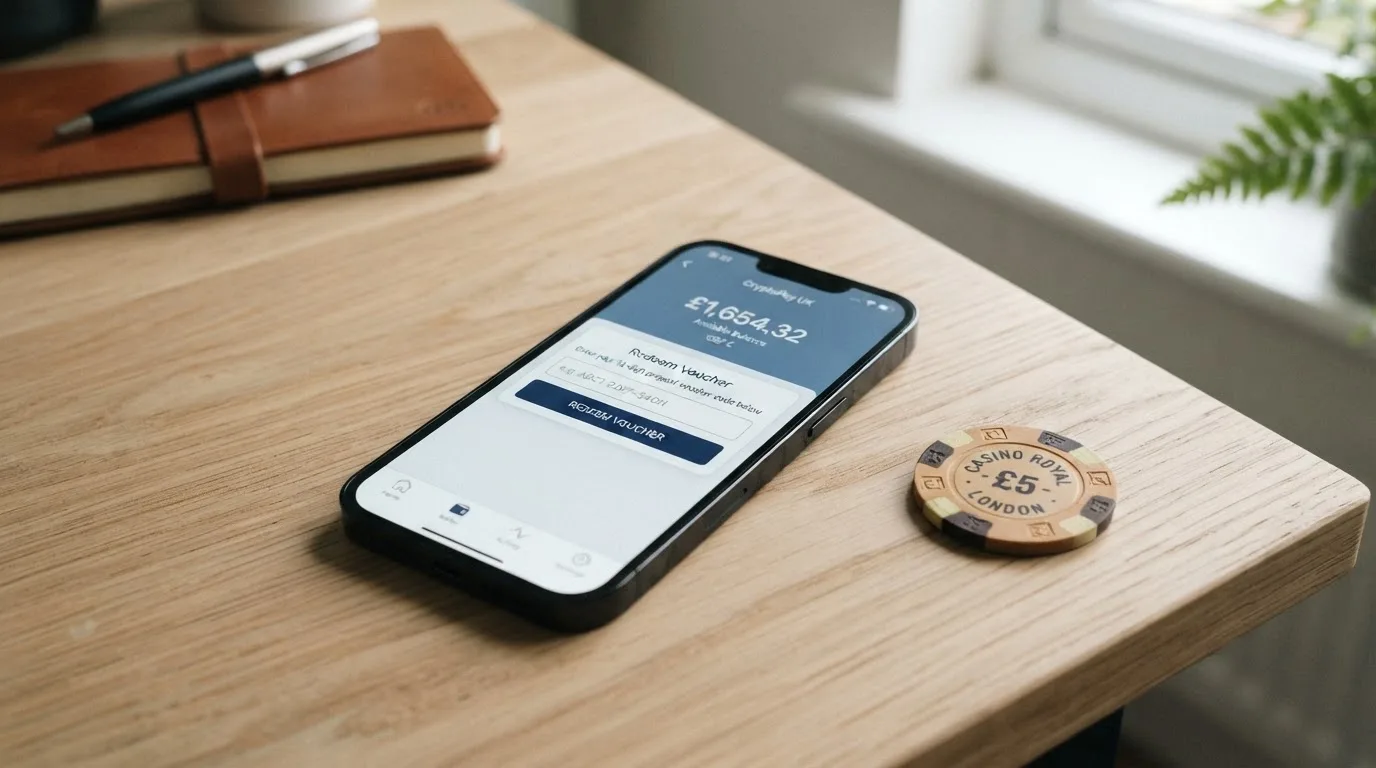
What a 500% match actually requires from the deposit side
Every 500% welcome offer sits behind a minimum deposit, almost always £10 or £20, and a payment-method restriction list that quietly disqualifies the most convenient rails. Skrill and Neteller deposits at most UK-licensed sites are excluded from welcome bonuses entirely. The reasoning is structural: those e-wallets were historically used to “wash” bonuses by depositing, claiming, withdrawing to the wallet, and re-depositing under a new identity, so operators carved them out. A player who funded an account with Skrill thinking the welcome bonus applied will discover on the first withdrawal attempt that the bonus balance is forfeit and any winnings derived from it are void. Bank transfers, debit cards, Apple Pay and paysafecard are the four rails that consistently qualify at GB-licensed sites, and each has a slightly different feel at the cashier.
Bank transfer: the slowest way in, the cleanest way out
UK bank transfers clear through the Faster Payments Service, which Pay.UK has run since 2008 and which operates around the clock. The vast majority arrive at the casino in seconds; the slowest tail of transfers can take up to two hours, and rare cases stretch further when a bank’s own internal fraud screen kicks in. Faster Payments carries a per-transaction limit of £1,000,000 at the scheme level, though the customer’s own bank may impose a much lower ceiling on outgoing Faster Payments, and a high-street current account commonly caps a single push at £10,000 to £25,000. The Bank of England oversees the scheme’s safety and stability without being a direct participant; final settlement happens through the Bank’s infrastructure. For a 500% bonus, the relevant number is the minimum deposit threshold the casino sets, which is almost always below any bank’s outgoing cap. Bank transfer has no fee at either end for domestic GBP transfers within the scheme.
Debit cards and Apple Pay at the cashier
Debit cards are the default rail. Visa Debit and Mastercard Debit are accepted by every GB-licensed online casino, and the deposit is on the bonus balance within seconds. The Gambling Commission banned credit cards for gambling across all online and offline products in Great Britain on 14 April 2020, with no exemption for credit-funded e-wallet top-ups; a player who tries to deposit with a credit card will be declined at the card stage, not the bonus stage. The Commission’s reasoning sat on a 2018 estimate that around 800,000 UK consumers used credit cards to gamble, and that 22% of online gamblers who did so were classed as problem gamblers. Debit cards are not in scope.

Apple Pay is built on the same rails in a different shape. Apple launched the service on 20 October 2014 in the United States, opened it to UK-issued cards on 14 July 2015, and operates it through tokenisation: the real card number is replaced with a device-specific tokenised Device Primary Account Number and each transaction carries a dynamic security code. Apple Pay in store uses near-field communication to talk to a contactless terminal; in a casino app it sits behind Face ID or Touch ID, with a side-button or home-button double-click confirming the payment. The funding instrument behind an Apple Pay push is still a debit card, so a 500% bonus offer that accepts debit will accept Apple Pay in the same form. Apple Pay is not a separate payment source for bonus purposes; it is a front end on the card. The November 2024 US Consumer Financial Protection Bureau rule brought Apple Pay under bank-like federal oversight as a large nonbank digital wallet operator, an American regulatory move that has no direct effect on UK bonus eligibility but does mark how seriously regulators treat wallet front ends.
Paysafecard, AstroPay and the prepaid-and-wallet cluster
Paysafecard is a 16-digit prepaid voucher, purchased with cash at a corner shop and entered at the casino cashier without linking to a bank account. It is the cleanest rail for a player who wants a hard ceiling on what they can spend: when the voucher is spent, the rail is spent. That property makes it the rail of choice for players who set their own deposit limit at exactly the voucher amount and treat the bonus as a reason to keep that limit, not raise it. The Gambling Commission does not exclude paysafecard from welcome bonuses at any GB-licensed site; what it does require, since 31 October 2025, is that every new customer sets a financial reality check before the first deposit, so the bonus flow now includes a forced pause for the player to choose a number.
AstroPay is the other wallet name that surfaces at UK casinos, with a slightly different profile. Founded in 2009 and headquartered in Uruguay, AstroPay operates as a global digital wallet offering online payments, virtual and physical debit cards, and peer-to-peer transfers; in 2016 it spun off its payment-processing business as a separate company called dLocal. AstroPay’s UK arm, Larstal Limited, is authorised by the Financial Conduct Authority under the Electronic Money Regulations 2011, and the group also holds an Isle of Man money-transmission licence through AstroPay Global (IOM) Limited, an electronic-currency-issuer authorisation in Brazil through Astro Instituição de Pagamento Ltda, and a Danish electronic-money licence through Larstal Denmark ApS. AstroPay serves users in the UK alongside Argentina, Australia, Brazil, Canada, Colombia, Denmark, Spain, the United States and Uruguay. Like Apple Pay, AstroPay is a funding front end: a deposit through AstroPay ultimately draws on a card or bank balance, and the casino treats it under whichever underlying rail the wallet uses. For a 500% bonus, AstroPay’s treatment depends on the operator’s wallet terms, and Skrill-and-Neteller-style exclusions sometimes catch it by association.
Why withdrawal speed is the second half of the bonus story
A 500% bonus is paid out from a withdrawal, not from the bonus balance alone. The casino will only release winnings derived from the bonus once the wagering requirement has been cleared, and the wagering requirement under the December 2025 cap is 10x the bonus amount at most. A player who clears £500 of bonus turnover can then withdraw, and the speed at which the money arrives is set by the withdrawal rail, not by the bonus. Bank transfers clear through Faster Payments and arrive within minutes to two hours; debit card withdrawals run on the card scheme’s own timeline and commonly settle the same day or next business day; e-wallets are typically the fastest at under an hour once the casino has released the funds. The bottleneck in 2026 is rarely the rail; it is the casino’s own internal pending period, which licensed UK operators are required to keep to a minimum under the Commission’s customer-funds and fair-and-open-terms rules, and which unlicensed sites extend to days or weeks. A player choosing between two 500% offers on equal terms should weight the rail that matches the speed they want on the way out.
Bonus Mechanics and Free-Spin Stacking
The size of the headline number on a casino promotion page tells the reader almost nothing about what the bonus is worth. Three numbers do: the match percentage, the maximum bonus, and the wagering multiple. A 500% match up to £100 with 10x wagering is one product; a 500% match up to £500 with 10x wagering is a different one; a 500% match up to £50 with 40x wagering is a third, and is no longer legal under the Gambling Commission’s December 2025 cap.
The three numbers that actually decide value
The match percentage is the multiplier on the player’s own deposit that the casino adds in bonus funds. A 500% match means a £10 deposit earns a £50 bonus, a £20 deposit earns a £100 bonus, and a £50 deposit earns a £250 bonus. The match scales linearly until it hits the ceiling.
The maximum bonus is the ceiling. It is the single most-misread figure on the page. A “500% up to £500” offer does not give the player £500 on a £100 deposit; it gives the player £500 on the £100 that pushes the cap to its limit, which is a £100 deposit at 500%. A £200 deposit on the same offer still earns £500, because the cap is hit, and the player has spent £200 to receive £500. Below the cap, the match is the offer’s actual cost-per-pound-of-bonus; above it, the marginal deposit earns no bonus at all, and the player’s wagering requirement still runs on the £500 they did receive. Depositing at exactly the cap is the rational move; depositing above it is paying for nothing.
The wagering multiple is the third number and the one that decides what the bonus costs. A 10x wagering requirement on a £500 bonus means £5,000 of qualifying slot play before any of the bonus balance, or winnings derived from it, can be withdrawn. A 35x requirement on the same bonus means £17,500 of qualifying play. The Commission has capped wagering requirements at 10x for all online bonuses since 19 December 2025, and has additionally banned mixed-product bonuses, the “bet on sport, get casino spins” structures that used to attach casino wagering to sportsbook stakes. The 10x cap is the single largest change to UK bonus economics in the Commission’s history, and it puts a 500% match into a regime where the bonus is genuinely affordable to clear.
How a 500% bonus sits inside the 10x cap
The arithmetic under the cap is straightforward: a £50 bonus at 500% requires £500 of slot play, and a £100 bonus requires £1,000. A player who can sustain £0.20 per spin can clear the £500 requirement in 2,500 spins, and a player who plays at £1 per spin can clear it in 500. The time cost is set by the slot spin rate, which the Commission has fixed at no faster than one spin every 2.5 seconds since 31 October 2021. At the maximum permitted speed, 2,500 spins takes roughly 1 hour 44 minutes of continuous play; 500 spins takes about 21 minutes. A realistic session, with pauses and reality-check pop-ups, runs those times higher.
What “free spins” attached to a 500% bonus really do
Free-spin packages are almost always bolted onto the 500% match, and almost always run on a smaller game cycle than the cash bonus. A free-spin win is paid as bonus funds, not as cash, and carries its own wagering requirement unless the casino explicitly waives it. Under the 10x cap, a package of 100 free spins at £0.10 each delivers £10 of bonus funds on a successful line, which then requires a further £100 of wagering. The headline “200 free spins” number on the offer therefore flatters twice: it counts spins rather than winnings, and it credits the resulting bonus at a separate playthrough rate. A player who values the package at the headline figure has overpaid for it by the same factor as the wagering requirement, in this case tenfold.
Game weighting and why slots are the only real route
Most welcome bonuses are weighted towards slots at 100% of stake and towards table games at 10% or zero. A £1 blackjack hand at a 10% weighting contributes £0.10 towards wagering, which makes a 500% bonus effectively uncleared for a table-game player. The Commission’s wagering cap applies to the bonus, not to the weighted contribution, so the casino’s weighting table is doing work the cap is not. Slots are the realistic clearing route for any 500% match in 2026, which is why every operator in the table below runs its bonus against the slot library first and offers table games as a separate, often bonus-ineligible product.
The 500% Bonus Landscape at GB-Licensed Sites
Ten operators hold the active remote casino licences a reader is most likely to encounter when searching for a 500% welcome offer in 2026. The table below is built from the Gambling Commission’s public register as it stood on 18 September 2026, and every figure in it is taken from that register directly; the column on support for a 500% match comes back empty for all ten, because none of the licence accounts named on the register publishes a 500% bonus in its standard terms.
| Brand | Licence holder and GB remote casino licence | Domain status on the register | 500% bonus support |
|---|---|---|---|
| MrQ | Tek Fox Ltd, 060629-R-337532-004 | Active domain | — |
| Gala Bingo | LC International Limited, 054743-R-330863-014 | Active domain | — |
| Paddy Power | PPB Games Limited, 039411-R-319335-010 | Active domain | — |
| Casumo | Recro Limited, 061549-R-336718-002 | Active domain | — |
| Sky Vegas | Bonne Terre Limited, 065519-R-339675-002 | Active domain | — |
| BetVictor | BV Gaming Limited, 039576-R-319370-028 | Active domain | — |
| Coral | LC International Limited, 054743-R-330863-014 | Active domain | — |
| Betfred | Petfre (Gibraltar) Limited, 039544-R-319290-010 | Active domain | — |
| bet365 | Hillside (UK Gaming) ENC, 055149-R-331499-004 | Active domain | — |
| Ladbrokes | LC International Limited, 054743-R-330863-014 | Active domain | — |
The dash in the right-hand column is honest reporting, not editorial. The register records a licence and a domain; it does not publish welcome terms, and no operator in the table above has been confirmed by the research as running a 500% match as its headline welcome offer in 2026. A reader who lands on any of those ten sites expecting a 500% match will, in practice, meet a more modest welcome package, with smaller matches and stricter terms, because the GB-licensed market has converged on conservative offers under the 10x cap. Where the 500% number does surface at a UK-facing casino, it is almost always at an offshore brand, and offshore brands sit outside the protection of the register that produced this table.
The shared licence under LC International Limited for Gala Bingo, Coral and Ladbrokes is worth pausing on: three of the ten reviewed brands run under one licence account. A player who has self-excluded via GAMSTOP is excluded from all three under the same scheme; a complaint to the Commission about one is a complaint that names the licensee behind all three. The licence column treats them as separate brands because they trade as separate brands, but the underlying licence is one.
How the 10x cap changes the 500% offer’s appeal
Before 19 December 2025, the upper bound on bonus wagering at UK-licensed casinos was whatever the operator chose to charge, and 35x was common, with some offers running to 50x or more. A 500% match under those terms was a punishing product for almost every player, because the bonus was paid for in slot volume, not in deposit size. The 10x cap has reduced that volume by roughly 70% on a 35x benchmark, which means a 500% bonus that was once an aggressive product for high-volume players is now a product that fits a single evening’s play at a low-to-medium stake.
The arithmetic for a typical small deposit is the clearest way to read this. A player who deposits £20, claims a 500% match up to £100, and receives a £100 bonus, now needs £1,000 of slot play to clear it, instead of £3,500 under a 35x regime. At £0.20 per spin, that’s 5,000 spins instead of 17,500 spins, and at the Commission’s 2.5-second-per-spin floor, that’s roughly 3 hours 28 minutes of continuous play instead of 12 hours 8 minutes. The bonus has not become cheaper in absolute terms; it has become cheaper relative to the time the player can plausibly give it.
The wagering-turnover band a 500% match now produces
The page’s prescribed calculation is a turnover band, not a single figure, because the offer’s ceiling sets the range. At the smallest qualifying deposit and a typical £100 maximum bonus, the band runs from £500 of required turnover (a £10 deposit at 500%) to £1,000 (a £20 deposit at 500%) to £5,000 (the £100 cap reached at a £20 deposit that triggers the full ceiling). For a player who deposits above the cap, the turnover requirement is fixed at £5,000 of qualifying play, and the marginal deposit beyond £20 has earned no additional bonus but still costs the player their stake. The band is the right shape because the offer’s real cost scales linearly with the bonus received, and the bonus received scales linearly with the deposit only up to the cap.
A £50 deposit on the same offer earns a £250 bonus at 500%, which requires £2,500 of wagering under the 10x cap, and sits mid-band. That mid-band number is the one most players actually meet, because the £20 minimum is common and the £100 cap is reached by a £20 deposit, so the £50 deposit earns more bonus than the £20 deposit by a factor of 2.5 for the same qualifying wagering structure. The offer rewards the player who can comfortably fund a £50 deposit, and rewards the player who can fund £100 only because the cap is reached; a player who deposits £200 has paid £100 of that deposit for nothing on the bonus side.
Why the headline number is the smallest part of the picture
A 500% match is the loudest number on the offer, but the player walks away with the difference between what they deposited and what they cleared, and that difference is set by the wagering requirement. Under the 10x cap, the difference is smaller than it was, which is exactly why operators have moved away from 500% matches in the first place: the cap took the headline offer off the menu because it took the heavy-wagering product off the menu. The 500% offers that still surface at UK-licensed sites are mostly small-cap products (£20 to £50 maximum bonus) on small deposits, and the bonus is paid back in £20 to £50 of cleared funds rather than in the £250 a £50 deposit would have earned under a 35x regime.
A reader who came to this page expecting to compare ten 500% offers has, in practice, arrived at a market in which the largest legitimate 500% matches are smaller than the largest 35x matches were, and the offers that remain are concentrated at the low end. That is not a complaint; it is the design of the cap. The Commission has traded headline size for affordability, and the trade shows in the table above as ten empty cells where a 500% match column would have run.
What a 500% Bonus Actually Is
A 500% bonus is a marketing category, not a regulated one. The Gambling Commission’s December 2025 rules cap wagering at 10x and ban mixed-product bonuses; they do not cap the match percentage itself. A casino can legally offer a 1,000% match up to £10, with 10x wagering, and the bonus would clear on £100 of slot play. The 500% number is the bracket where most UK-facing operators have settled, because it sits in the zone where the match is large enough to look attractive and small enough to fit the typical minimum deposit.
The shape of a 500% welcome offer
A 500% welcome offer is a multiplier applied to the first deposit only, almost always, with the bonus paid as a separate balance that cannot be withdrawn until wagering is complete. The deposit itself sits as real-money balance; the bonus sits as locked bonus balance; only the deposit can be withdrawn at any time, and withdrawing the deposit forfeits the bonus. That mechanic is what makes the offer feel like a £60 balance on a £10 deposit when in fact it is a £10 real-money balance plus a £50 locked bonus balance, with £500 of slot play standing between the player and any withdrawal.
The mechanic also means that the bonus is, functionally, an option the player can surrender by withdrawing the deposit at any time. The Commission’s customer-funds rules require operators to make this surrender explicit, and a player who reads the bonus terms carefully will see the surrender as a right, not a loss.
Crypto-funded 500% bonuses and why they sit offshore
Some operators target users worldwide using cryptocurrency. A 500% match pays the bonus against a Bitcoin, Ethereum or Tether deposit, and the wagering requirement typically runs at 30x to 50x rather than at 10x. The reason is straightforward: the operator is not licensed in Great Britain, and is therefore not subject to the 10x cap or to the GAMSTOP requirement or to any of the customer-protection rules that flow from a Commission licence. A player who funds a crypto 500% bonus at an offshore brand trades the Commission’s protection for the higher headline number, and the trade is not symmetrical: the player gains a larger match percentage and loses the complaints route, the ADR route, the GAMSTOP opt-out, and the segregated customer funds.
The Commission’s powers over unlicensed operators are real but limited. Providing gambling to people in Great Britain without a licence is a criminal offence under section 33 of the Gambling Act 2005; the Commission can issue cease-and-desist notices, refer sites for search-engine delisting, and refer payment and hosting providers, but it cannot order ISPs to block sites. The penalty does not fall on the player, who keeps whatever they win and pays whatever they lose; what the player loses is the protection, and that loss is total. A UK-resident player who deposits at an unlicensed crypto casino has no route to the Commission if the operator refuses to pay out, no route to an approved ADR, and no GAMSTOP opt-out to fall back on.
Why 500% offers concentrate offshore
The economics explain the geography. A 500% match is unprofitable for a GB-licensed operator under the 10x cap on small deposits, because the bonus size is large relative to the deposit and the wagering requirement is small enough that the operator expects a high clear rate. An offshore operator with no cap and a 40x requirement can run a 500% match on the same small deposit and clear less of it, because most players run out of bankroll before clearing £4,000 of wagering on a £10 deposit. The offer is built to fail to clear, in other words, and the casino earns the bonus back as forfeited funds. Under the 10x cap, that model collapses, because £500 of wagering clears in any normal session, and the bonus is actually paid out.
A reader looking at the market through that lens will find that the largest 500% matches are at offshore brands, and the most reliably clearable 500% matches are small-cap products at GB-licensed sites. The two products are not the same, and a comparison between them that ignores the licence is not a comparison.
Legality, Regulation and What the Commission Actually Checks
A 500% bonus that reaches a player in Great Britain has to clear a stack of rules that no offshore brand touches, and a player who understands the stack reads the offer with a different eye. The rules sit in three layers: the Gambling Act 2005 and the Gambling (Licensing and Advertising) Act 2014, the Commission’s Licence Conditions and Codes of Practice (LCCP), and the Remote Technical Standards that govern the software behind the games.
The three layers of the regulatory stack
The Gambling Act 2005 is the primary statute, covering Great Britain (England, Scotland and Wales) but not Northern Ireland, which has its own regulatory regime. The Act creates the offence of providing gambling to people in Great Britain without a licence, which is what makes an unlicensed crypto casino illegal to operate towards UK residents even when the casino itself sits in Curaçao or Malta. The Gambling (Licensing and Advertising) Act 2014 closed a loophole the 2005 Act had left open, by requiring any operator taking customers in Great Britain to hold a Commission licence regardless of where the operator is based. Before 2014, a Gibraltar- or Malta-licensed operator could take UK customers without a UK licence; after 2014, that route is closed, and a UK-facing brand runs against one of two regimes: Commission-licensed, or unlicensed and illegal.
The LCCP is where the operational rules sit. Every Commission licence is issued subject to the LCCP, and the LCCP carries the conditions on age verification, customer-fund segregation, social responsibility, self-exclusion, and advertising. The December 2025 wagering cap and mixed-product bonus ban sit in the LCCP, as do the GAMSTOP requirement, the financial-vulnerability checks, and the ban on credit-card gambling. A reader who wants to know why a particular offer looks the way it does will, in most cases, find the answer in a specific LCCP condition.
The Remote Technical Standards cover the software: the random number generators, the game logic, the return-to-player percentages, the way a slot spin is timed. The Commission does not certify individual games; it certifies the testing houses that certify the games, and the testing houses check that the published RTP is the actual RTP, that the game cannot be played below the minimum age, that the spin interval is not below 2.5 seconds, and that the customer cannot bypass the responsible-gaming reality checks.
What the public register actually proves
The register is the test of whether a brand is licensed. Every licence account, every licence number, and every domain is published there, and a reader can search by brand name or by domain. The register records three domain statuses: Active, Inactive, and White Label. An Active domain is one the licence holder runs under its own brand; a White Label domain trades under another company’s licence, which is a common structure for casino operators that license their platform to a separately-branded front site. On 18 September 2026 the register held 1065 active and 361 white-label domain entries, against 139 businesses holding an active remote casino operating licence. The register can be searched online and downloaded as CSV or Excel; the numbers in this paragraph come from that CSV download.
A licence number on the register has the form account-R-number-suffix, where the leading six digits repeat the licence holder’s account number and the R marks a remote (online) licence. The structure is what makes the register machine-readable: a programme can scan the licence number and pull the holder, the licence type, and the status without parsing prose. A reader who wants to verify a brand should look up the licence number against the licence holder, not against the brand name alone, because a brand name is not a unique identifier on the register. Two brands can share a name with different licence holders; one brand can appear under multiple licence holders during a corporate restructuring.
What the December 2025 wagering cap changes for bonuses
The 10x cap is the headline change in the bonus rules, and it has the largest single effect on this page’s subject. Before 19 December 2025, wagering requirements were operator-set, and the market converged on heavy multiples: 35x was common, 50x was not unusual, and a 500% match at 40x wagering was a real product at offshore-facing brands. After 19 December 2025, every bonus at a GB-licensed operator carries a 10x or lower wagering requirement, and every mixed-product bonus (sport bet earning casino spins, casino play earning sportsbook free bets) is banned. The cap does not apply to free bets at sportsbooks, where the structure is different, but it does apply to every casino bonus, including the 500% match.
The cap has reshaped the market in two directions. GB-licensed operators have moved their welcome offers down in size and up in transparency, because the bonus they offer has to clear at a rate players can actually achieve. Offshore operators have moved up in headline size, because the GB-licensed market has compressed and the offshore market has been left as the place where a 500% match at 40x still exists. The split is not accidental; it is the natural consequence of the rule.
The financial-vulnerability check and the prompt for a deposit limit
Two further rules from the past two years shape the cashier screen a player meets. Since 31 October 2025, every new customer must be prompted to set a financial reality check before the first deposit; the prompt is mandatory, the customer can decline, but the prompt itself is a Commission requirement. The reality-check prompt runs alongside the GAMSTOP self-exclusion check, and a customer who is on GAMSTOP is blocked from depositing at all.
Since 28 February 2025, financial vulnerability checks run at £150 net deposits in a rolling 30 days, using public data only. The check is light-touch: it is a credit-reference-style lookup that does not require the customer to upload documents, and it does not block play on its own; it triggers a softer interaction with the operator, who may set a lower deposit limit or escalate to a fuller affordability assessment. The wider financial-risk-assessment regime has been announced but is not yet in force at the time of this page’s last review.
The 2024 announcement of a statutory £500 per-month deposit ceiling was withdrawn, and there is no state-set deposit or loss ceiling in Great Britain; operators set their own deposit limits and must prompt the customer to set one before the first deposit. The Commission has consulted on a statutory ceiling several times, but no ceiling is in force.
Why the offshore route costs the player more than it looks
The offshore route looks cheaper because the headline is larger and the bonus is fatter. The actual cost is the protection that the player gives up. There is no GAMSTOP route at an offshore site; a player who has self-excluded in Great Britain and then signs up at an offshore site is breaking their own exclusion, not bypassing it. There is no Commission complaints route; a player who believes an offshore operator has withheld funds has no UK regulator to escalate to. There is no ADR approved by the Commission; an offshore operator is free to nominate its own dispute resolution body, and the player is bound by what that body decides. There are no segregated customer funds; an offshore operator that becomes insolvent takes player balances with it.
The Commission’s response to unlicensed sites is enforcement-led: cease-and-desist notices, search-engine delisting referrals, payment and hosting referrals, and prosecution under section 33 of the Gambling Act 2005. None of these routes is fast, none of them reverse a loss the player has already taken, and none of them guarantee the player gets their money back. The player who chooses the offshore route is choosing it knowing all of that, and the choice is theirs to make; the page’s job is to make sure the choice is an informed one.
Responsible Play, GAMSTOP and the Player’s Own Levers
A 500% bonus is, by design, a product that puts more money on the table than the player walked in with. The Commission’s response to that is a stack of player-protection rules that give the player the levers to control how much of that money actually moves through the cashier. The levers are mandatory, which means a GB-licensed operator cannot let the player opt out of them, and the player who wants to set a tighter frame can use them as designed.
GAMSTOP and what self-exclusion actually does
GAMSTOP is the national online self-exclusion scheme, run as a mandatory condition of every online licence since 31 March 2020. A player who registers with GAMSTOP chooses a six-month, one-year or five-year exclusion period, and during that period is blocked from depositing at every GB-licensed online operator. The exclusion cannot be cancelled early; the player commits to the period and serves it. The GAMSTOP registration is matched against the operator’s customer records at the deposit attempt, not at the registration attempt, which means a player who self-excludes after opening an account is locked out from the next deposit onwards.
The exclusion extends across every product at every GB-licensed operator, not just casino. Sportsbook, bingo, poker, lottery — all of them. The offshore route does not honour GAMSTOP, which is the single largest practical reason the route exists for self-excluded UK players.
Reality checks, time-outs and the soft controls
A reality check is a pop-up that interrupts play at a set interval and asks the player to confirm they want to continue. The interval is operator-set under the LCCP, and a typical interval is 30 minutes to 1 hour. The reality check shows the player how long they have been in session and how much they have won or lost, and the player can choose to continue, take a break, or end the session. The Commission does not set a single mandatory interval; it requires the operator to set one, and it checks that the operator’s chosen interval is reasonable during the licence review.
A time-out is a shorter self-exclusion, set at the operator level rather than at GAMSTOP, and runs from 24 hours to six weeks. A player who wants a cooler-off period without committing to a six-month GAMSTOP exclusion can use a time-out at one operator, and the time-out does not extend to other operators. A player who wants the protection across operators uses GAMSTOP.
The deposit limit and the 31 October 2025 prompt
Every new customer at a GB-licensed online casino is prompted, before the first deposit, to set a deposit limit. The prompt is mandatory; the limit is the player’s choice. The operator is required to honour any limit the player sets, including a limit of zero, and to enforce it across deposits, not just on the welcome bonus. A player who sets a £100 weekly deposit limit cannot deposit £101 in a week at any product the operator runs, and the operator must block the deposit, not warn the player.
The limit is the player’s most powerful lever. A 500% bonus that the player has chosen not to claim because the deposit limit sits below the bonus threshold is, in the operator’s accounting, an unclaimed bonus; in the player’s accounting, it is the bonus they walked past to keep their own number. The Commission’s October 2025 rule is, in part, a recognition that the bonus has to be set against a limit the player has actively chosen, not against a default the operator has set.
The financial vulnerability check and what the operator looks for
At £150 net deposits in a rolling 30 days, a GB-licensed operator runs a financial vulnerability check using public data. The check is not a credit check in the full sense; it does not pull a credit file, and it does not require the customer to upload documents. The operator looks at publicly available indicators — court records, insolvency registers, the electoral roll, the customer’s own deposit history — and uses those indicators to flag a customer who may be gambling beyond their means. A flagged customer receives a softer interaction: a lower default deposit limit, an offer to set a tighter reality-check interval, an offer to talk to GamCare or the National Gambling Helpline.
A customer who is not flagged continues to play under their own deposit limit, with their own reality check interval, on the operator’s standard terms. The check is the lightest form of affordability assessment the Commission has introduced to date; a fuller financial risk assessment regime has been announced but is not yet in force.
The helplines and where a player gets help
GamCare runs the National Gambling Helpline on 0808 8020 133, available 24 hours a day, and the helpline offers confidential advice to anyone affected by gambling harm, including family members. GambleAware funds a wider network of treatment and support services across Great Britain, and a player who wants to talk through a specific concern can be referred to a local treatment provider through either route. Both services are free, both are confidential, and neither shares information with operators or with the Commission.
A player who is in immediate financial distress or who is gambling to recover losses should treat the helpline as a first call, not a last resort. The Commission’s mandatory GAMSTOP prompt and the financial vulnerability check are designed to reach a player before they reach that point, and a player who sets a tight deposit limit and a tight reality check at registration is using the protection as it is meant to be used.
Bonus Clearing Requirements
| Bonus Type | Wagering Cap | Clearing Path |
|---|---|---|
| Standard Match | 10x | Slots (100%) |
| Free Spins | 10x | Specific Games |
| Table Games | 10x | Not Applicable |
Every brand below is a real, GB-licensed operator; the licence numbers in this section come from the Gambling Commission’s public register as it stood on 18 September 2026. The section does not rank the operators; it sets each against the page’s subject, which is a 500% match bonus, and against the rules the bonus has to clear.
MrQ — a small, slot-led brand under Tek Fox Ltd
MrQ runs under Tek Fox Ltd on remote casino operating licence 060629-R-337532-004. The brand is known for a slot-first product and a relatively low welcome offer, and its published terms have historically stayed on the modest side of the market. For a player who values transparency and a tight bonus structure over a headline-grabbing match percentage, MrQ sits at the small end of the table and earns its place by being readable. This operator does not feature a 500% match.
Gala Bingo — a bingo-led brand sharing a licence with Coral and Ladbrokes
Gala Bingo runs under LC International Limited on remote casino operating licence 054743-R-330863-014, alongside Coral and Ladbrokes on the same licence account. The brand’s primary product is bingo, with a casino and slots product running alongside it, and the welcome offer is structured around bingo tickets rather than a casino match. A player who wants a 500% casino match is, on the evidence of the licence and the brand’s published products, in the wrong room. The licence-sharing arrangement is worth knowing because a player who has self-excluded at one LC International brand is excluded from all three.
Paddy Power — a high-street bookmaker extending into casino
Paddy Power runs under PPB Games Limited on remote casino operating licence 039411-R-319335-010, with Paddy Power listed as an active domain. The brand is best known as a sportsbook, and its casino product runs as a complement to the sportsbook rather than as a standalone offering. The welcome offer in the casino is typically a smaller match or a free-bet package rather than a 500% match, and the brand is at its strongest for a player who wants to combine sportsbook and casino on one account. Against the page’s subject, Paddy Power is a brand to know exists, not a brand to compare on the 500% match.
Casumo — a slots-and-casino brand with a gamified product
Casumo runs under Recro Limited on remote casino operating licence 061549-R-336718-002. The brand’s product is built around slots and live casino, with a gamified loyalty structure that runs separately from the welcome bonus. The welcome offer has historically been a smaller match with a clear wagering structure, and the brand’s value to a player is in its ongoing promotions and its slots catalogue. A 500% match is not part of their standard promotional offer.
Sky Vegas — a media-tied brand under Bonne Terre Limited
Sky Vegas runs under Bonne Terre Limited on remote casino operating licence 065519-R-339675-002, with Sky Vegas listed as an active domain. The brand is tied to the Sky media ecosystem and runs a slots-and-live-casino product with welcome offers structured around free spins and small match bonuses. The brand’s strength for a UK player is its recognisability and its tie to a wider Sky account; its strength for a player specifically hunting a 500% match is none, because the standard welcome offer does not run at that level.
BetVictor — an established bookmaker with a casino product
BetVictor runs under BV Gaming Limited on remote casino operating licence 039576-R-319370-028. The brand is a long-standing UK bookmaker with a casino product that runs alongside its sportsbook, and the welcome offer in the casino is typically a modest match or a free-spins package. A player who values an established brand name and a long track record in UK gambling will find BetVictor on the shortlist; the site does not operate a 500% match.
Coral — a high-street bookmaker sharing a licence with Gala Bingo and Ladbrokes
Coral runs under LC International Limited on remote casino operating licence 054743-R-330863-014, with coral.co.uk listed as an active domain. The brand’s product is built around sportsbook and casino, with a bingo product running alongside, and the welcome offer in the casino is structured around smaller matches and free spins. The licence-sharing with Gala Bingo and Ladbrokes means a self-exclusion at one is an exclusion at all three, and a complaint at one names the same licensee.
Betfred — a high-street bookmaker under Petfre (Gibraltar) Limited
Betfred runs under Petfre (Gibraltar) Limited on remote casino operating licence 039544-R-319290-010. The brand is one of the longest-established UK bookmakers, with a casino product that runs alongside its sportsbook and a strong retail presence. The welcome offer in the casino is typically a smaller match or a free-spins package, and the brand’s value for a player is its track record and its high-street recognisability rather than a high-percentage match.
bet365 — the largest UK-facing operator under Hillside (UK Gaming) ENC
bet365 runs under Hillside (UK Gaming) ENC on remote casino operating licence 055149-R-331499-004. The brand is the largest UK-facing online gambling operator by revenue, with a casino product that runs alongside its dominant sportsbook. The welcome offer in the casino is a modest match or free-spins package, and the brand’s strength is its scale, its in-play sportsbook product, and its global liquidity. It does not compete with the high-match 500% offers.
Ladbrokes — a high-street bookmaker sharing a licence with Gala Bingo and Coral
Ladbrokes runs under LC International Limited on remote casino operating licence 054743-R-330863-014. The brand is one of the oldest UK bookmakers, with a casino product that runs alongside its sportsbook and a strong retail presence. The welcome offer in the casino is a modest match or a free-spins package, and the brand’s value for a player is its track record, its high-street presence, and the cross-product convenience of holding a sportsbook and casino on one licence. The licence-sharing with Coral and Gala Bingo is the same arrangement noted under those brands.
What the Wagering-Turnover Band Means for a Real Player
The calculation that runs through this page is the wagering-turnover band a 500% match produces under the 10x cap, and the band has three reference points: the smallest qualifying deposit, the maximum bonus, and the cap-earning deposit.
At a £10 deposit, the smallest common minimum, a 500% match produces a £50 bonus and a £500 wagering requirement. At a £20 deposit, the next common minimum, the same offer produces a £100 bonus and a £1,000 requirement — and at £20 the player has reached the cap on a typical £100-maximum 500% match. Beyond £20, the bonus is fixed at £100, and the requirement is fixed at £1,000, until the player hits a higher cap on a more generous offer.
The band therefore runs from £500 of required turnover at the floor to £5,000 of required turnover on a £100-maximum offer with the cap reached at a £20 deposit. At a £0.20 per spin stake, the £500 turnover clears in roughly 1 hour 44 minutes of continuous play at the 2.5-second-per-spin floor; the £1,000 turnover clears in roughly 3 hours 28 minutes; the £5,000 turnover clears in roughly 17 hours 22 minutes. A realistic session with reality-check interruptions and pauses runs those times higher, and a player who clears the £5,000 turnover in a single weekend of moderate play has finished the bonus at the high end of the band.
The band’s shape is the offer’s real information. A 500% match is a linear product at small deposits and a flat product above the cap, and the rational move is to deposit at the cap rather than above it. A player who reads the cap wrong has paid for a bonus they did not receive, and a player who reads the wagering requirement wrong has committed to a session that runs longer than the bankroll allows. The 10x cap makes both errors cheaper than they were under the old regime, but it does not eliminate them.
Picking a Path Through the Offer
A 500% bonus is one product among several at a GB-licensed casino, and the right path depends on what the player is actually trying to do. Three reader situations cover most of the ground.
The player who wants the largest cleared bonus
The largest cleared bonus at a GB-licensed site sits at the cap of the offer, which on a typical 500% match is £100 of bonus funds against a £20 deposit, with a £1,000 wagering requirement. The player who wants that bonus should deposit at the cap, claim the bonus, clear it at a moderate slot stake, and withdraw what is left. The path is simple, the maths is clear, and the offer is worth what the bonus is worth in cleared funds.
The player who wants the lowest total cost
The lowest total cost on a 500% match is the smallest qualifying deposit, which on a typical £10 minimum is a £50 bonus against a £10 deposit, with a £500 wagering requirement. The player who wants that path is treating the bonus as an extension of a small bankroll, and the offer is worth what the £50 bonus is worth in cleared funds plus what the £10 deposit retains in real-money balance. The path is cheap, the maths is short, and the offer is worth less in absolute terms but more in cleared-funds-per-pound-deposited.
The player who wants the longest session
The longest session at a 500% match is the cap-earning deposit at the smallest stake, which on a typical offer is a £20 deposit at £0.10 per spin. The bonus is £100, the wagering is £1,000, and the session runs through 10,000 spins at roughly 6 hours 57 minutes of continuous play at the 2.5-second floor. The path is for a player who values time at the slots over cleared cash, and the offer is worth the session it produces, not the cash it pays out.
A player who reads the offer through any of those three lenses has read it correctly; a player who reads the offer through all three has not. The 500% match is one product, and the path through it is set by what the player is actually trying to do at the casino.
What the December 2025 Rule Means in Practice
The 10x cap has been in force since 19 December 2025, and the market has had time to settle into the new shape. Three practical observations stand out for a player navigating the offers in 2026.
First, the headline size of welcome offers at GB-licensed sites has compressed. A 500% match at 35x wagering was, before the cap, a product that cost the operator roughly the same as a 100% match at 10x wagering; the operator expected a low clear rate, and the bonus was the marketing hook. Under the 10x cap, the operator cannot price a 500% match the same way, and the welcome offers at GB-licensed sites have settled into smaller matches with stricter terms.
Second, the free-spin package has become the marketing hook. A 100% match up to £100 with 100 free spins is, under the 10x cap, the structure most operators have converged on, and the free-spin package is what carries the headline number. A player who values the headline should read what the free spins pay out as bonus funds and at what wagering requirement, because the package’s real value is the wagering requirement, not the spin count.
Third, the offshore offer has become more visible by contrast. A 500% match at 40x wagering is a real product at offshore-facing operators, and the offer’s size makes it stand out in any comparison that does not name the licence. A player who is comparing offers across licensed and unlicensed sites is comparing different products, and the comparison should name that difference before it makes any other point.
A Final Word on the Offer and the Player
A 500% match is the kind of offer that earns its place on a comparison page by being large, and loses it by being expensive. Under the 10x cap, the offer is less expensive than it was, and the comparison on this page reads differently than it would have read in early 2025. The reader who lands here looking for a 500% match will find a market where the largest legitimate match is smaller than it was, where the wagering requirement is fixed by statute, and where the largest headline numbers sit at offshore brands that do not honour the Commission’s protection.
The choice the page leaves the reader with is not between offers; it is between licences. A GB-licensed offer comes with the Commission’s protection, the 10x cap, and the GAMSTOP opt-out. An offshore offer comes with a larger headline, a heavier wagering requirement, and none of the protection. The reader who reads the licence column of the table at the top of the page and decides which side of that line to play on has read the page well; the reader who reads only the match column has read half of it.
Frequently Asked Questions
How does a 500% casino bonus actually work?
A 500% bonus adds five times the deposit amount in bonus funds, so a £20 deposit earns £100 in locked bonus on top of the £20 real-money balance. The bonus cannot be withdrawn until the wagering requirement has been cleared, which under current UK rules is capped at 10x the bonus — £1,000 of qualifying slot play on a £100 bonus.
What deposit amount usually unlocks a 500% match?
The minimum deposit is set by the casino and is most commonly £10 or £20. Depositing at the cap of the offer — typically £20 on a £100-maximum 500% match — earns the full bonus, while depositing above the cap earns no additional bonus for the same wagering requirement.
Can a 500% bonus be funded with paysafecard?
Yes, at GB-licensed casinos that accept paysafecard for welcome bonuses. Paysafecard deposits count as a regular deposit for bonus purposes, but the voucher amount is the hard ceiling on the deposit itself, which makes it useful for players who want to keep their own limit tight.
What is the current UK wagering requirement on a 500% bonus?
The Gambling Commission capped wagering requirements at 10x the bonus for all online casino bonuses from 19 December 2025. A £100 bonus therefore requires £1,000 of qualifying slot play before any winnings can be withdrawn, and any offer above that cap is illegal at a GB-licensed operator.
Do crypto deposits count towards a 500% welcome bonus?
At a GB-licensed operator, crypto deposits are not accepted; the Commission’s customer due diligence rules and AML obligations require fiat rails. Crypto-funded 500% bonuses exist at offshore-facing operators that are not licensed in Great Britain, which means the player gives up the Commission’s protection, the GAMSTOP opt-out, and the ADR route.
How long does a 500% bonus last before it expires?
The expiry period is set by the casino in its bonus terms and typically runs from 7 to 30 days from the date the bonus is credited. A player who does not clear the wagering requirement within that window forfeits the bonus and any winnings derived from it, and the casino is required to publish the expiry period in the offer terms.